
How To Stop A Hardwired Smoke Alarm From Chirping

Alright, picture this: it’s 3 AM. You’re deep in the sacred, sweet embrace of sleep, dreaming of… I don’t know, puppies riding tiny unicycles. And then, from the abyss, a sound. Not a siren, not a fire alarm, but that infernal, high-pitched, soul-sucking chirp. Just one. Then silence. Then another. It's like a tiny, aggressive woodpecker has decided your ceiling is its personal drum kit, and it’s determined to make you question every life choice that led to this moment.
You groan, you flip the pillow, you try to ignore it. But the chirp, oh, the chirp! It’s specifically designed to bypass your unconscious mind and hit that primal "something is wrong" button. And the worst part? It’s your hardwired smoke alarm. The one that’s supposed to be immune to such petty battery woes. Ha! You thought wrong, my friend. So, grab a coffee (you’ll need it), pull up a chair, and let’s talk about how to slay this tiny, chirping dragon.
The Great Battery Deception: Why Even Hardwired Alarms Chirp
Here’s the shocker, the plot twist, the “I can’t believe they’ve done this!” moment: even hardwired smoke alarms have a backup battery. Yes, you heard that right. It’s like discovering your super-efficient electric car still needs a tiny gas tank for emergencies. The chirp isn't just a random act of sonic terrorism; it's a desperate plea from that backup battery saying, "Hey! My juice is running low! Replace me or face the wrath of the 3 AM opera!"
Must Read
You’ve probably tried the "hush" button. Bless its little heart. It gives you about five minutes of blissful silence, enough time to drift back to sleep, only to be jolted awake by the chirp's triumphant return. It's less a solution and more a cruel tease, a brief intermission before the main act of your nocturnal torture resumes. It’s time to get serious.
Operation: Silence the Siren (Safely!)
Before you go wrestling with wires and plastic, let's talk safety. This isn't just about stopping a chirp; it's about not electrocuting yourself or starting a small, regrettable house fire. So, step one, and this is non-negotiable:
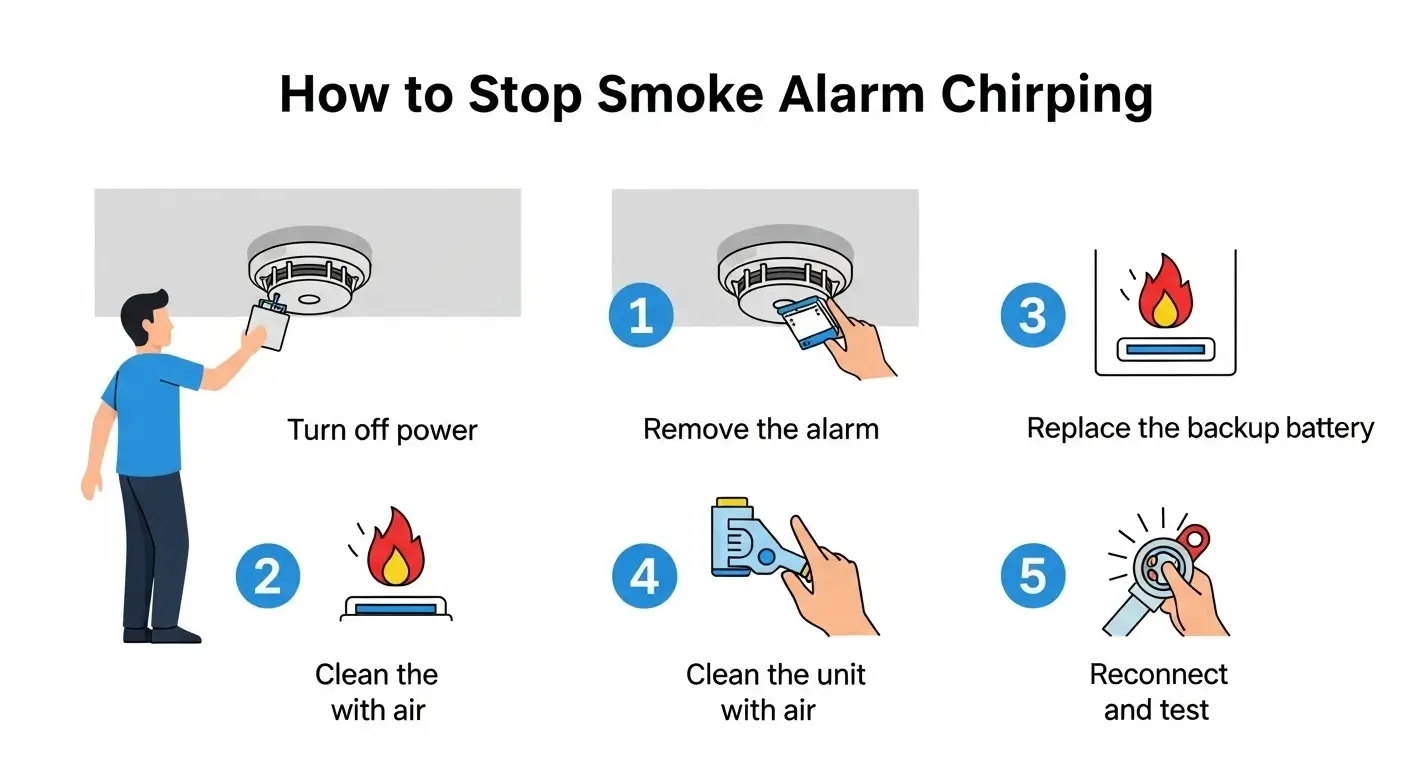
Find your circuit breaker and turn off the power to the alarm. This usually means flipping the breaker for the entire room or, if you're lucky, one specifically labeled for "smoke detectors." Don't guess. If you're unsure, flip the main breaker. Better to briefly plunge your house into darkness than become an unscheduled light show.
Once the power's off, here’s how you generally tackle the little monster:
- Twist and Shout (but mostly twist): Most hardwired alarms attach to the ceiling with a simple twist-lock mechanism. Give it a firm counter-clockwise twist. It should detach from its mounting bracket, hanging by a few wires. Don't worry, those wires are safe now because you turned off the power, right? Right.
- Locate the Battery Compartment: This is usually a small door or cover on the back or side of the unit. It might require a tiny screwdriver or just a good fingernail to pop open.
- The Big Reveal (and Replacement): Inside, you'll likely find a 9-volt battery. Sometimes it's AA or AAA, but 9V is the classic culprit. Remove the old battery (give it a dirty look, it deserves it) and snap in a fresh one. Always replace it with a new, high-quality battery. Don't cheap out here; that 3 AM wake-up call is expensive enough for your sanity.
- Reassembly and Testing: Close the compartment, re-attach the alarm to its mounting bracket (clockwise twist this time!), and then—and only then—go flip that circuit breaker back on. Now, hit the "test" button on the alarm. It should let out a loud, continuous alarm sound (which is good!) and then fall silent. If it still chirps, give it a few minutes. Sometimes it just needs to settle down, like a grumpy toddler after a sugar rush.
Beyond the Battery: When the Chirp Has Other Ideas
You’ve replaced the battery, done your victory dance, and yet… the chirp persists. Don't despair! Your smoke alarm might be trying to tell you something else. Sometimes, these little devices are more complex than they appear.
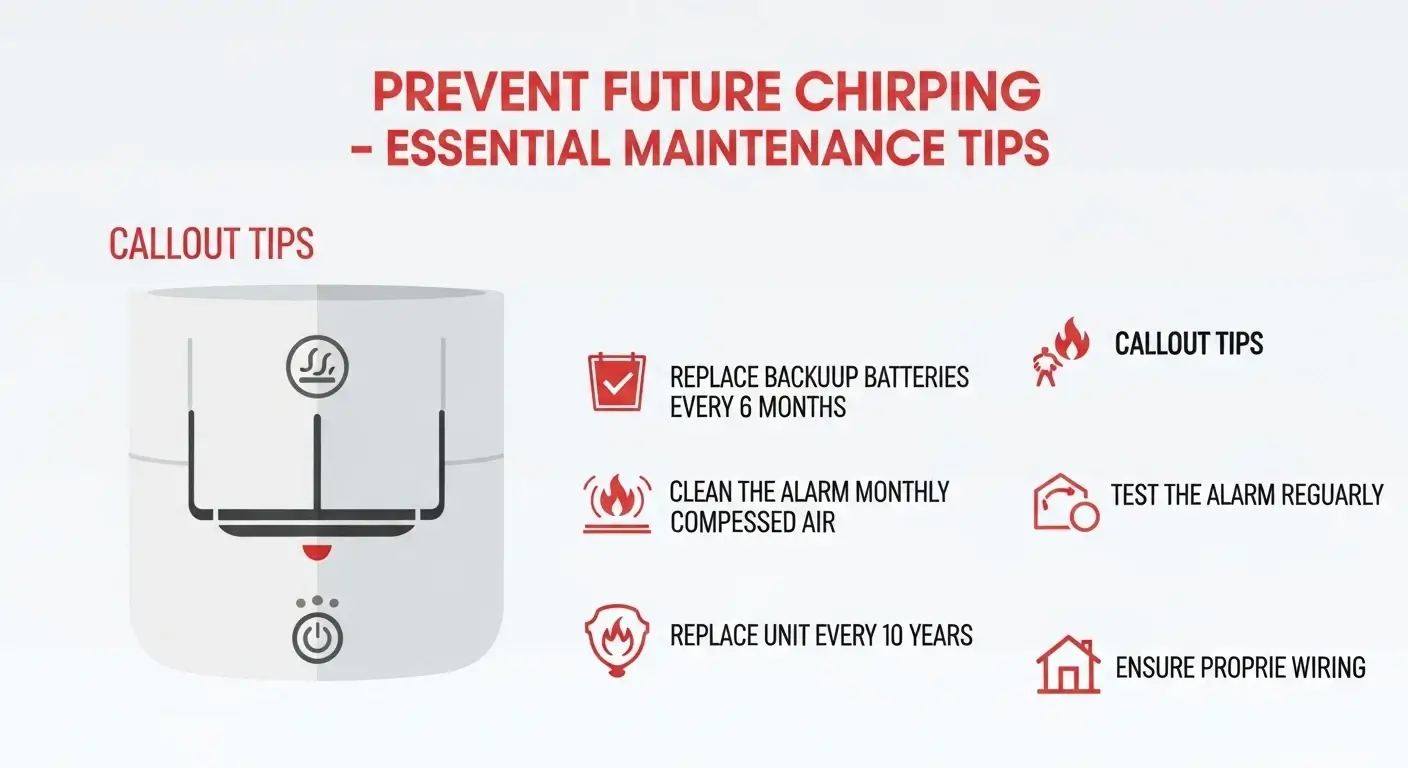
First, consider the age of your alarm. Did you know smoke alarms have a shelf life? Most manufacturers recommend replacing them every 10 years. Yes, that’s right. Your alarm might not just need a new battery; it might be retiring. It’s given its 10 years of loyal service, detecting imaginary kitchen fires and warning you when you burn toast. That recurring chirp could be its way of saying, "I'm done, folks! Time for a younger, more technologically advanced model to take over!" Check the back of the unit for a manufacturing date.
Another common culprit is dust or tiny invaders. Over time, dust, cobwebs, or even small insects (imagine a tiny spider throwing a rave in your sensor!) can accumulate in the sensing chamber, tricking the alarm into thinking there’s a problem. Gently vacuum around the vents or use a can of compressed air to give it a good clean. Just make sure it’s completely dry before reattaching power.
If you have interconnected alarms (where if one goes off, they all go off), the chirping might not even be from the alarm you're currently wrestling with! One alarm could be low on battery, and its comrades are just echoing its distress signal. You might have to play a game of "Where's Waldo?" with all your smoke detectors to find the actual source of the persistent peep. It’s a real house-wide game of telephone, but with much higher stakes for your sleep cycle.
Finally, sometimes power fluctuations can cause a hardwired alarm to chirp. If you've recently had a power outage or a brownout, the alarm might just need a good reset. After ensuring the battery is fresh, try turning off the power at the breaker for a minute or two, then turn it back on. It's like giving your alarm a mini-vacation from reality.
The Sweet Sound of Silence
There you have it. The secret life of your chirping hardwired smoke alarm, demystified. It’s rarely a ghost, almost never an alien invasion, and usually just a plea for a fresh 9-volt or a well-deserved retirement. The satisfaction you'll feel when that persistent chirping finally ceases is unparalleled. It’s not just the absence of noise; it's the return of your sanity, the reclamation of your peaceful nights. Go forth, my friend, and conquer that chirp!
