Ever dreamed of a home that just… exhales all that stuffy, stagnant heat and inhales a glorious, fresh breeze? Like your house just took a deep, refreshing breath? That’s the magic of a whole house fan! It's not just a fan; it's your home's personal air-exchange wizard, and getting the right size is like finding the perfect wand for your spell. Too small, and you’re gently wafting a feather. Too big, and you’re creating a wind tunnel where your socks mysteriously disappear. Let’s find that sweet spot, shall we?
The Grand Mission: Swap Out the Old, Bring in the New!
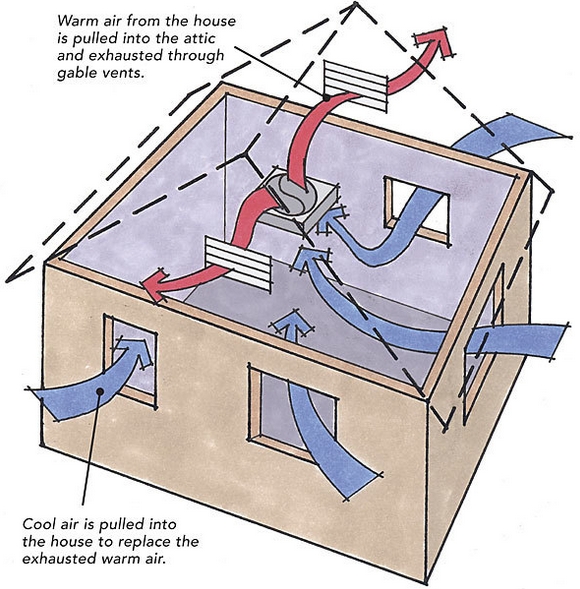
Think of your home on a hot day. It’s like a giant, slightly-too-warm thermos. What a whole house fan does is essentially open a massive, delightful window to the cool evening air outside, drawing it in through your regular windows and pushing all that trapped, stale, hot air right out through your attic vents. It’s a complete air swap, often in mere minutes! To do this job spectacularly, we need to talk about its power – measured in CFM, or Cubic Feet per Minute. This is just a fancy way of saying: “How much air can this bad boy move in one minute?”
Your Home's "Air Volume" - The First Magical Ingredient
Before we can figure out how much air we need to move, we need to know how much air is actually in your house! Don't worry, no complex geometry needed. Just grab your home's square footage – you know, that number from your real estate listing or property tax bill. Now, imagine its ceiling height. Most homes hover around 8 feet, some might boast 9 or 10-foot ceilings. If you have different ceiling heights, no sweat, just use an average or calculate sections separately if you’re feeling super precise.
Here’s the super-simple math for your home's total air volume:
Your Home's Cubic Volume = Total Square Footage x Average Ceiling Height
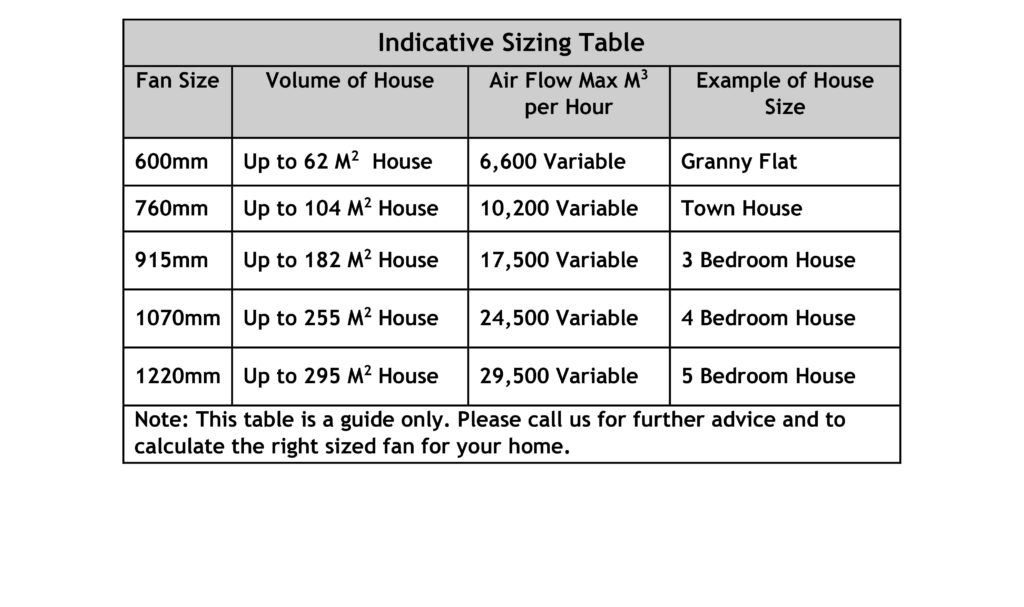
Whole House Attic Fan Sizing Whole House Fan Whole House Fan
For example, if you have a 2,000 square foot home with 8-foot ceilings, your total air volume is 2,000 x 8 = 16,000 cubic feet. Easy peasy, right?
How Many "Air Changes" Per Hour Do You Dream Of?
Now, this is where the fun part comes in – how quickly do you want that cool air rushing through your home? Do you want a gentle, refreshing sigh, or a brisk, invigorating gust? Most experts agree that for a comfy, effective cooling, you want to change the air in your house anywhere from 3 to 6 times per hour. Three changes an hour is a lovely, consistent cool-down, while six changes is like hitting the "fast-forward" button on freshness.
How to Size a Whole House Fan Correctly | Whole House Fan
3-4 Air Changes/Hour: Perfect for cooler climates, smaller homes, or if you prefer a more subtle breeze. Think of it as a nice, steady garden hose.
5-6 Air Changes/Hour: Ideal for warmer climates, larger homes, or if you just love that feeling of a truly rapid cool-down. This is your super-soaker, ready to drench your home in cool air!
Most folks aim for about 4-5 air changes per hour as a sweet, happy medium. Let’s stick with 4 for our example.
The Grand Finale: Calculating Your Perfect CFM!
Alright, you have your home's cubic volume, and you've decided on your desired air changes per hour. We're just one tiny step away from your ideal CFM number!
Here’s how we get there:
Whole House Fans | Everything You Need to Know | Attics and More
Target CFM = (Your Home's Cubic Volume x Desired Air Changes Per Hour) / 60 (minutes)
Let's use our 2,000 sq ft, 8-foot ceiling example (16,000 cubic feet) aiming for 4 air changes per hour:
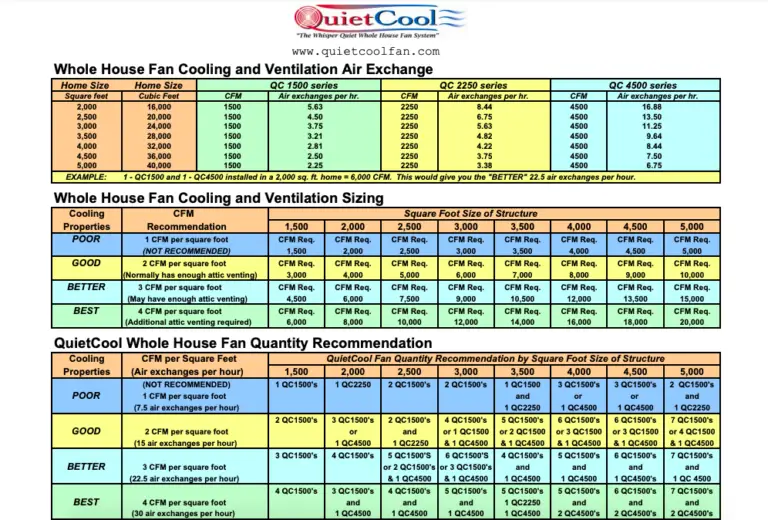
Whole house fan sizing guide - Finding the right CFM
(16,000 cubic feet x 4 air changes) = 64,000
64,000 / 60 minutes = approximately 1,067 CFM
So, for this hypothetical home, you'd be looking for a whole house fan that delivers around 1,067 CFM. See? It’s not rocket science; it's just really cool math!
A Few Fun Pointers for Peak Performance!
While the math gives you a fantastic starting point, a couple of extra thoughts can help you fine-tune your choice:
Climate is Key: Live in a super-hot, humid area where every evening is a sweaty struggle? You might lean towards the higher end of the air changes (5-6) or even size up slightly on the CFM. If your evenings are generally mild, a 3-4 change fan might be perfect.
Attic Ventilation – Don't Forget the Exit Strategy! A whole house fan pushes all that hot air into your attic. If your attic doesn't have enough vents (think soffit vents, ridge vents, gable vents), that hot air will just get stuck, and your fan won't work efficiently. Ensure your attic has ample exhaust area – usually, for every 750 CFM of fan power, you need at least 1 square foot of attic exhaust. Consult your fan manufacturer’s guidelines for specifics!
Better a Little Over Than Under: When in doubt, it’s often better to go for a fan that’s slightly more powerful than your minimum calculation. Most fans have multiple speeds, so you can always dial it down if it’s too breezy. But you can never magically make a too-small fan more powerful!
Sizing a whole house fan doesn't have to be a bewildering task. With a little enthusiastic arithmetic and these fun pointers, you’ll be well on your way to enjoying a home that feels wonderfully, naturally cool. Get ready to banish that stuffy indoor air and welcome in the glorious, fresh embrace of the outdoors!