How To Size A Central Ac Unit

Ever bought a pair of shoes that were just a little too big, causing you to shuffle awkwardly, or a shirt that was a smidge too tight, making every breath a minor athletic event? We’ve all been there, right? Well, sizing your central AC unit is a lot like that, but with much higher stakes than a fashion faux pas. Get it wrong, and you're not just uncomfortable; you're throwing money out the window faster than a squirrel with a stolen nut.
The Goldilocks Dilemma: Not Too Big, Not Too Small
You might think, "Bigger is always better, right? More power!" And bless your enthusiastic heart for thinking so, but with AC, that's a bit like trying to hammer a tiny nail with a sledgehammer. It’s overkill, and frankly, a bit clumsy.
If your AC unit is too big for your home, it's like a sprinter in a marathon – it hits its stride, cools down the house super fast, then stops. This is called "short cycling." The problem? It doesn't run long enough to properly dehumidify your air. So, you end up with a house that feels cool but still kinda clammy, like a cold, damp sponge. And guess what? Each time it kicks on, it uses a big gulp of energy. It’s inefficient, wears out your system faster, and leaves you feeling sticky. Nobody wants to feel sticky indoors!
Must Read
On the flip side, if your AC unit is too small, it’s like trying to cool down a stadium with a desk fan. It’ll run, and run, and run, constantly struggling to reach your desired temperature. It’s essentially working overtime without ever truly succeeding. Your energy bills will be astronomical, your house will never quite feel cool enough, and your poor AC unit will wear itself out trying to achieve the impossible. You'll be sweating, cursing, and wondering why you even bothered.
So, How Do We Get It Just Right?
This isn't a job for guesswork, folks. You can't just eyeball your house and say, "Yep, looks like a medium AC!" That's like trying to bake a soufflé by pouring ingredients directly from the bags. There’s a method, and it’s called a Manual J Load Calculation. Don't worry, you don't need to learn calculus; that's what the pros are for!

Think of it like a custom tailor fitting you for the perfect suit. They don't just ask your height; they measure everything. A Manual J calculation takes into account a whole symphony of factors that influence how much heat your home gains (and therefore, how much cooling it needs). Here’s a peek behind the curtain:
- Your Home’s Footprint: This is the obvious one, how many square feet need cooling. But it's just the starting point, not the whole story!
- Windows, Windows Everywhere: Those lovely panes of glass are fantastic for natural light, but they’re also like tiny heat magnets, especially if they face the sun directly. The type of glass, their size, and even which direction they face all play a role.
- Insulation Nation: How well is your house insulated? Good insulation is like your home wearing a high-performance winter coat (in winter) and sunscreen (in summer). It keeps the outside out.
- Your Roof and Walls: The materials and colors matter. A dark roof will absorb more heat than a light one, for instance.
- Ceiling Height: Taller ceilings mean more air volume to cool, naturally.
- Your Climate: Duh, right? Living in a scorching desert requires a different approach than a mild coastal town.
- People Power: Believe it or not, every human being in your house is a tiny, adorable heat source. The number of occupants is factored in!
- Appliance Heat: Ovens, computers, even that giant TV generate heat. It all adds up!
- Ductwork Integrity: Leaky ducts are like trying to drink a milkshake with a straw full of holes. You lose precious cool air before it even gets to the room.
The Magic Numbers: BTUs and Tons
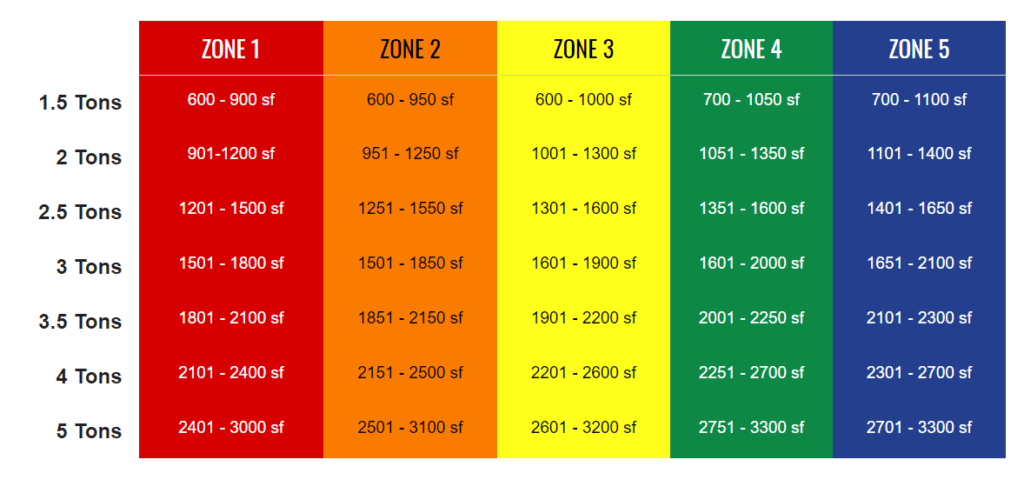
When you hear about AC units, you'll often hear "BTUs" or "tons." A BTU (British Thermal Unit) is essentially a measurement of heat energy. In AC terms, it tells you how much heat your unit can remove from your home in an hour. One "ton" of cooling is equal to 12,000 BTUs per hour. So, a 3-ton unit can remove 36,000 BTUs of heat per hour. These numbers are crucial because they directly correspond to the cooling power your home needs.
Don't Guess, Get a Pro!
Trying to size an AC unit yourself based on online calculators is like trying to diagnose your own appendicitis with WebMD. It's risky business! You'll likely end up with a system that's either overworking or underperforming, leading to discomfort, higher energy bills, and a shorter lifespan for your expensive equipment.
The moral of the story? When it comes to something as vital as keeping your home perfectly cool and comfortable, always trust a qualified HVAC professional. They'll perform that Manual J calculation, understand your unique home, and recommend the AC unit that fits your needs like a glove. You'll save money, live in blissful comfort, and your AC unit will thank you by purring along happily for years. And that, my friends, is worth more than a perfectly fitted pair of shoes!