
How To See If A Battery Is Dead
Ah, the humble battery! It powers our lives, from the mighty gaming controller to the trusty TV remote. But sometimes, these little energy capsules decide to clock out, leaving us scratching our heads and wondering, "Is it you, my little power pal, or is it me?" Fear not, fellow gadget adventurers! Unmasking a dead battery is a delightful detective game, and we're about to become master sleuths.
Get ready for some fun, easy, and super effective ways to tell if your battery has truly kicked the bucket. We're talking about feeling like a tech wizard, without needing a fancy degree or a secret lab. So, grab your investigative magnifying glass, because it's time to get to the bottom of that power mystery!
The Silent Scream of Your Gadget
This is probably the most common, and frankly, most dramatic way a battery tells you it's done. You press the power button on your beloved device, and… absolutely nothing happens. It’s like the gadget is giving you the silent treatment, a stark, unblinking refusal to acknowledge your existence.
Must Read
Imagine your TV remote, usually so responsive, now just a cold, unresponsive brick in your hand. You mash the buttons, you tap it, maybe you even give it a gentle shake (we’ve all been there!), but the screen remains dark. No flickering lights, no cheerful beeps, just the eerie silence of a device that has decided to take an unscheduled nap.
Perhaps it's your child's favorite toy, usually a cacophony of cheerful (or annoying) sounds and flashing lights. Now, despite desperate button presses, it just sits there, a lifeless plastic shell. This profound silence, this utter lack of response, is often the first and most glaring sign that your battery has packed up its energy bags and left town.
You can almost hear the tiny, defeated sigh from within the gadget. It’s a very clear signal: if nothing, absolutely nothing happens, the battery is almost certainly the culprit. It has gone from a vibrant power source to a mere placeholder, a decorative cylinder performing no function at all.
This test is less about technical analysis and more about pure, unadulterated observation. If your device refuses to even hum, blink, or give a tiny twitch of life, you've likely just witnessed the "Silent Scream" of a battery that's officially tapped out. Time to acknowledge its valiant service and consider its retirement.
The Faint Whisper of Drained Power
Sometimes, a battery isn't completely dead, but it’s definitely on its last legs, gasping for air. Your device might turn on, but it does so with a profound sense of exhaustion, almost as if it's whispering a plea for mercy. This is the "Faint Whisper" test, and it’s surprisingly common.
Think about your trusty flashlight: instead of a bright, eager beam cutting through the darkness, you get a weak, yellowy glow. It’s less of a spotlight and more of a sad, glowworm impression. The light barely reaches a few inches, clearly struggling to make any impact.
Or perhaps it's your electric toothbrush, usually a buzzing whirlwind of dental hygiene power. Now, it offers a pathetic, slow rumble, barely vibrating the bristles. It’s doing its best, bless its heart, but its best is a rather pathetic performance compared to its usual vigorous scrub.
A remote-control car might trundle along at a snail's pace, refusing to climb even the smallest imaginary hill, its little motor sounding more like a sad cough than a powerful engine. It turns on, yes, but it’s clearly operating at a fraction of its former glory. The magic is gone.
If your gadget is acting like it just ran a marathon and forgot its energy drink, limping along with diminished capacity, then the battery is probably just a breath away from becoming truly dead. It’s clinging to the last few molecules of power, offering you a courtesy glimpse of functionality before giving up the ghost entirely. This is a clear sign that a replacement is due, and soon.
The device is essentially telling you, in the most polite yet exhausted way possible, "I'm trying, but I really can't go on like this." Heed its weak plea! This faint whisper is a loud signal that new batteries are desperately needed to restore your gadget to its full, glorious potential. Don't let your electronics suffer from this sad, slow fade.
The Incredible Bouncing Battery Bonanza (Alkaline Edition!)
Alright, prepare for a party trick that’s surprisingly useful and incredibly fun! This one works best for standard AA or AAA alkaline batteries, so don't go bouncing your phone battery around. It's the legendary Bounce Test, and it’s delightfully counter-intuitive.
Grab an alkaline battery you suspect is dead and hold it about an inch or two above a hard, flat surface. Now, let it drop straight down. What happens? If it gives a sad, little bounce, a sort of deflated hop that feels strangely energetic for a dead thing, you've likely got a goner on your hands!
A fresh, fully charged alkaline battery, on the other hand, will tend to hit the surface with a satisfying, dull thud and stay put, or barely bounce at all. It's like a tiny, solid brick. The dead one, however, springs up like it's got a tiny trampoline inside!
Why does it do this? Well, without getting too bogged down in the 'why', let's just say a dead alkaline battery gets a bit… bouncy. It’s a physical change that lets you perform a quick, no-fuss diagnosis with a satisfying flourish. Imagine showing this off at a party!
So, remember the golden rule of the bounce test:
"The higher the bounce, the lower the juice!"It’s a delightful paradox, isn't it? The more lifeless the battery, the more spirited its little farewell jump. It’s almost like it's celebrating its retirement with a final, defiant leap.
If your battery takes an enthusiastic hop, almost like it’s trying to escape its fate, then congratulations! You’ve successfully identified a dead battery with flair. Just be sure to properly dispose of it afterwards. This little test is a fantastic way to quickly determine the energy status of your average household alkaline batteries, adding a touch of playful physics to your troubleshooting routine.

The Battery's Battle Scars: A Visual Inspection
Sometimes, a battery doesn't just die gracefully; it puts on a bit of a show. A visual inspection can reveal some rather alarming signs that a battery is well past its prime, and frankly, a bit gross. This is when your battery proudly displays its "Battle Scars."
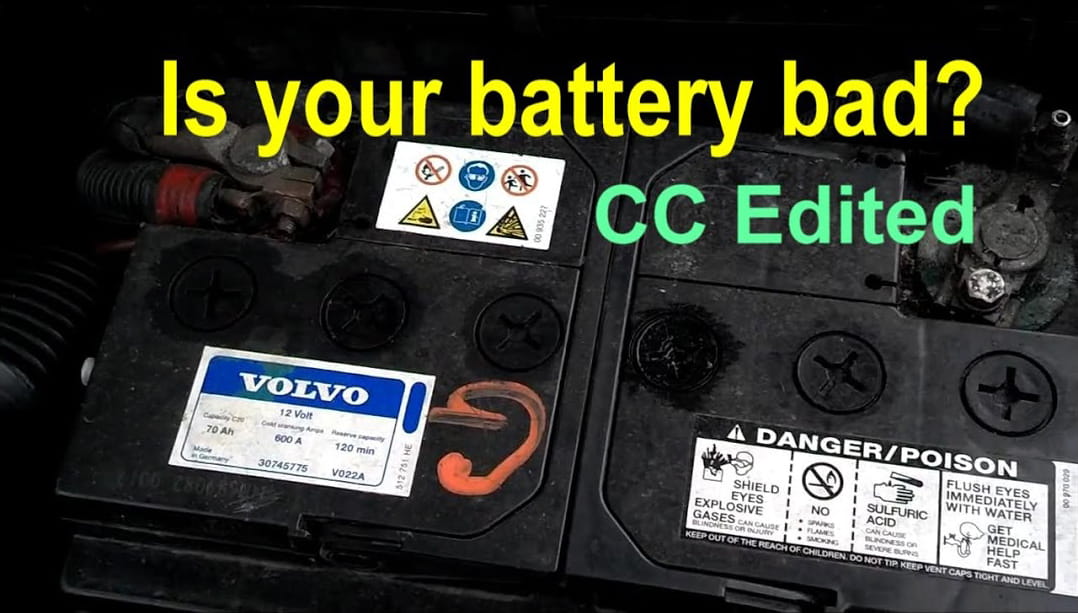
Carefully remove the battery from its compartment (always with a gentle touch, especially if it looks suspicious!). Take a good, close look. Do you see any bulging or swelling? A healthy battery is usually smooth and uniform. If it looks like it's puffed up, like a tiny, angry balloon, that's a huge red flag.
Another classic sign of a battery in distress is the dreaded corrosion. This usually manifests as a white, crusty, powdery substance, often crystallizing around the terminals. It looks like a miniature snowdrift, but it's definitely not charming winter wonderland material. It’s more like a tiny, toxic fungus.
Sometimes, you might even spot some leaks – a sticky, gooey residue around the battery. This is definitely a "Yuck! Time for a change!" moment, and usually means the battery has decided to empty its internal contents into your poor gadget. It’s messy, it’s not good, and it’s a definitive sign of battery expiration.
These visual cues are like tiny warning signals, flashing brightly for you to see. They tell a story of internal turmoil and chemical breakdown. A bulging, corroded, or leaking battery is not just dead; it’s aggressively announcing its demise, often with a hint of dramatic flair. They are essentially screaming, "I'm done! Get me out of here!"
If you see any of these battle scars, there’s no need for further tests. Your battery has very clearly and unequivocally declared its lifelessness. Not only is it dead, but it’s also potentially messy and could damage your device. So, when you spot these visual warnings, act swiftly and carefully remove the offending power source, giving it a proper farewell.
The Multimeter's Magic: For the Power Detective
Feeling a bit like a secret agent? The multimeter is your fancy gadget for the ultimate power diagnosis! Don't let the buttons and dials intimidate you; using it to check a battery is surprisingly straightforward and incredibly satisfying. It's like taking your battery's actual pulse!
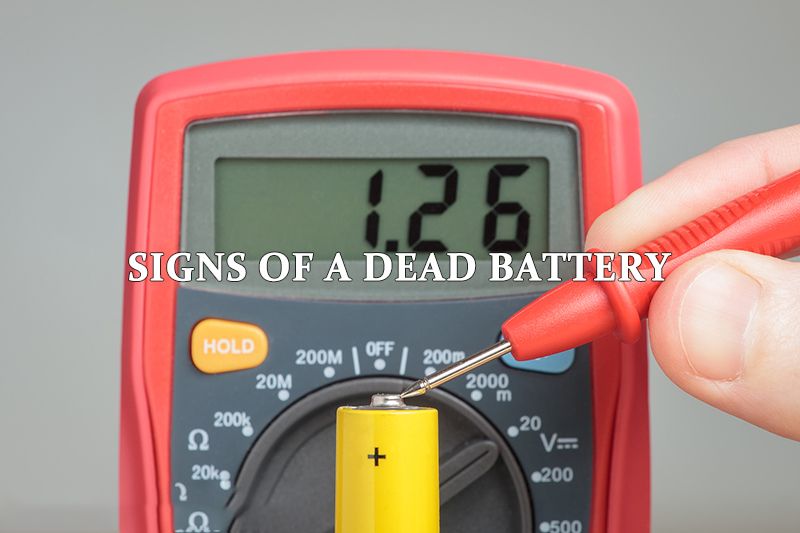
First, set your multimeter to DC voltage (usually indicated by a V with a straight line and dots above it) and select a range slightly above your battery's stated voltage. For a standard 1.5V AA battery, you might pick the 2V or 20V setting. You’re now ready to become a power diviner!

Next, grab the two probes: one red, one black. Touch the red probe to the positive (+) terminal of the battery and the black probe to the negative (-) terminal. It's usually a simple "red to red, black to black" operation. Hold them steady, and watch the display!
A fresh 1.5V battery should read very close to, or even slightly above, 1.5 volts. Perhaps 1.58V if it’s super fresh! But a dead battery? Oh, a dead battery will show you a number that's significantly lower. We're talking 1.0V, 0.5V, or even a sad, pathetic 0.0V.
That low number, sometimes even zero, is the definitive proof you've been seeking. It’s like getting a direct answer from the battery itself, straight to your digital display. There's no guesswork, just pure, unadulterated electrical truth. It’s the definitive answer for the true power detective!
The thrill of seeing that low voltage number pop up is oddly satisfying. It confirms your suspicions and gives you a clear green light to send that battery packing. So, if you're ever in doubt, and you want to feel a little bit like a science wizard, grab a multimeter and get ready to reveal the hidden truth of your battery's power levels. It's a quick, precise way to get the final word on its energy status.
The Rechargeable Resurrection (or Lack Thereof)
For those wonderful, eco-friendly rechargeable batteries, there's a unique way to test their vitality: simply try to revive them! These little warriors are designed for multiple lifecycles, but even they eventually give up the ghost. This is the "Rechargeable Resurrection" attempt.
Pop your suspicious rechargeable battery into its charger, just as you normally would. Give it a good, solid charging cycle, patiently waiting for the indicator light to tell you it's full. Now, remove it and place it back into your device. Does it spring to life with its usual gusto?
If it charges up and powers your device beautifully, then hooray! Your battery just needed a drink. But if, after a full charge, it still acts like a zombie, barely powering your device or immediately dying again, then you've likely got a truly dead rechargeable. It’s sad, but true.
A truly dead rechargeable battery will simply refuse to hold a charge. It’s like trying to fill a bucket with a giant hole in the bottom – all the energy just escapes. It becomes stubborn, refusing to come back to life, no matter how long you leave it plugged in. It has lost its ability to store that precious energy.

This refusal to revive is the tell-tale sign that your rechargeable friend has served its last purpose. It’s reached the end of its useful lifespan, and it’s time to retire it. The fact that it won't even pretend to hold a charge confirms that this particular battery has definitively given up its fight for energy retention. It's a clear signal that a truly dead rechargeable won't come back.
So, if your rechargeable battery acts like it’s been charged but still powers nothing, or if it immediately drains upon use, you've witnessed the final act of a rechargeable's life. It's time for a respectful farewell and a fresh start with a new, energetic replacement. Don't waste time trying to coax life back into something that has firmly decided to stay gone.
The Ultimate Showdown: The Great Battery Swap!
When all else fails, or if you simply prefer the most straightforward approach, there’s one undeniably foolproof method to confirm a dead battery: the mighty "Great Battery Swap!" This is the ultimate showdown, a simple act that yields undeniable results.
Find a brand-new, fresh-from-the-pack battery of the exact same type. If you suspect an AA, grab a shiny new AA. If it’s a 9V, unwrap a pristine 9V. This new battery is your champion, your undisputed contender in the battle against dead power.
Carefully remove the suspicious battery from your device and confidently insert your new, known-good battery. This is the moment of truth, the grand reveal! Cross your fingers, say a little cheer, and press that power button. What happens next will tell you everything you need to know.
If your device springs to life with a triumphant glow, a cheerful whir, or its usual energetic sounds, then victory! You've confirmed it: the old battery was indeed the culprit, a true goner. Your gadget is now back in business, thanks to the heroic efforts of its new power source. It's an instant, satisfying confirmation.
This method is fantastic because it eliminates all guesswork. You’re not just testing the battery; you’re testing the device's ability to work with a known good power source. If it still doesn't work, well, maybe your gadget has a deeper, more mysterious problem that has nothing to do with the battery after all. But usually, it's just the battery!
As the saying goes,
"Sometimes, the easiest way is the best way!"The Great Battery Swap is the ultimate tie-breaker, the definitive answer to your power puzzle. It's fast, it's efficient, and it gives you immediate, undeniable results, making you feel like a problem-solving superstar!
There you have it, folks! Your very own toolkit for becoming a master of battery diagnostics. From silent gadgets to bouncy shenanigans, you now possess the wisdom to tell a lively battery from one that’s just taking a very, very long nap. Go forth, power up your world, and may your gadgets always hum with vigorous energy!