
How To Say Uncle In Spanish
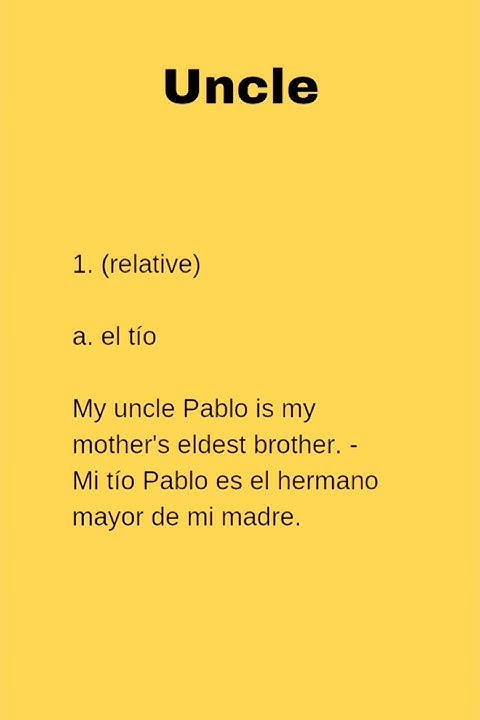
Okay, let's talk about something super important. Like, life-altering. It's how to say "uncle" in Spanish.
You might think it's simple. And you're probably right. But where's the fun in just being right?
The Obvious Answer (and Why It's Maybe Boring)
The straight-up, textbook answer is "tío." There. I said it.
Must Read
Everyone knows "tío." Your Spanish teacher drilled it into you. Your grandma probably yelled it at the TV during a soccer game. (Okay, maybe that was just my grandma.)
But let's be real. "Tío" is... fine. It's functional. But does it sparkle? Does it sing? I think not.
An Unpopular Opinion (Brace Yourselves!)
Here's where I get controversial. I don't think "tío" is always the best option.
Hear me out! Context matters, people! Think about it.

Imagine introducing your super cool, leather-jacket-wearing uncle as just... "tío." It feels a little… flat, right?
Spice It Up: Beyond Tío
Spanish is a language of nuance. Of passion! Of dramatic hand gestures! Let's use it!
Consider the "tío abuelo." That's your great-uncle. A mouthful? Yes. But also, impressive. Like, "Wow, you have a great-uncle? You must be ancient (or have a very large family)!"
Or what about nicknames? Every family has them, right?
The Nickname Game
Does your uncle have a goofy nickname? Use it! Trust me. It's way more endearing.

Maybe he’s "el oso" (the bear) because he gives great hugs. Or "el flaco" (the skinny one), even if he’s not skinny anymore. (Don’t tell him I said that!)
My point is, get creative! Let your family’s personality shine through. Ditch the textbook.
Regional Twists and Turns
Spanish isn't one-size-fits-all. What works in Madrid might not fly in Mexico City.
Different regions have different slang. Different ways of saying things. It's part of what makes the language so rich and vibrant.
So, do a little research! Ask your Spanish-speaking friends. See what they say. You might discover some hidden gems.

What About Tía? (For the Aunts Out There)
Of course, we can't forget about the aunts! The female equivalent of "tío" is "tía."
And just like with uncles, nicknames are your friend! "Tía Chuchis," "Tía Lola," anything goes!
Aunts are the best. They always slip you extra dessert when your parents aren't looking.
The Ultimate Test: Does It Feel Right?
At the end of the day, the best way to say "uncle" in Spanish is the way that feels most natural to you and your family.
Don't be afraid to experiment. To try new things. To be a little silly.

If calling your uncle "tío" feels right, then go for it! But if you want to add a little spice, a little personality, don't be afraid to go beyond the basics.
In Conclusion (and a Final Plea)
So, there you have it. My (slightly controversial) take on how to say "uncle" in Spanish.
Remember, language is about connection. About communication. About expressing yourself.
Now go forth and call your uncles and aunts by the silliest, most affectionate names you can think of! They'll love it. (Probably.)
"Language is the dress of thought." - Samuel Johnson (and a good excuse to use a blockquote)
Just kidding! It's really about having fun with language. So, embrace the weirdness. Embrace the nuance. And embrace the power of a good nickname.