
How To Run Wire Through A Wall

There's a mystical realm behind your walls. It's a secret world of studs, plaster, and sometimes, very old dust bunnies. Many people whisper about it with fear, as if daring to peek inside would summon ancient drywall spirits.
But let's be honest. That's just what the professionals want you to think. Running wire through a wall? It's not brain surgery. It's more like a friendly game of hide-and-seek with a very long ribbon.
My unpopular opinion? It's less daunting than assembling flat-pack furniture. And often, more satisfying. Let's peel back the layers of mystery, literally.
Must Read
The Grand Reconnaissance Mission
Before any major excavation, you need a plan. Not a complex blueprint, mind you. Just a good, old-fashioned tap and listen. Walk the wall. Give it a gentle knock. It's like feeling for hidden treasure.
Listen for the hollow spots. Those are your friends. They mean no pesky studs are hiding there, ready to thwart your wire-running dreams. Solid thuds mean you've found a beam, and those you want to avoid, if possible.
Sometimes, a stud finder can be your co-pilot. But often, your knuckles and common sense are just as effective. Trust your gut, and the sound of emptiness.
Making the First Breach
Now, for the big moment. The point of no return. You need to make a hole. Not a gaping maw, just a neat little entrance for your future electrical guest. Think small, neat, and precise.
Grab your drill. Choose a suitable drill bit, probably a spade bit if you're going through wood, or a hole saw for a cleaner drywall circle. Remember, the hole needs to be big enough for your wire, plus a little wiggle room.
Always remember: Measure twice, cut once. Or in this case, drill once, then realize you made it too small, and drill again. It's part of the charming DIY journey.
Place your drill. Take a deep breath. And plunge. Dust will erupt like a tiny volcanic explosion. Don't panic. It's a sign of progress, not disaster. Wipe it away with a triumphant swipe.
:max_bytes(150000):strip_icc()/running-electrical-wire-in-open-walls-4056387-04-2e247529fc22442d861efd92c216549c.jpg)
This first hole should be strategically placed. Usually near an outlet or switch, or wherever your wire needs to originate. It's the start line for your wire's grand adventure.
The Art of Internal Navigation
With your entry point established, it's time to chart the internal course. You need to get your wire from point A to point B. And point B is usually a matching hole somewhere else on the wall.
This is where the legendary fish tape makes its heroic entrance. It's a flexible, often yellow, metal tape that looks like a giant retractable measuring tape. But it's designed for one glorious purpose: snaking through walls.
Feed the fish tape into your first hole. Push it. Wiggle it. Feel it glide through the hollow space. Listen for the subtle scrapes and taps it makes against the inside of the wall. It’s like sending a tiny explorer into the unknown.
The Search for the Exit
Now, you need to find the other end of that fish tape. You've already made your second hole, right? Or at least planned its location. This is where patience becomes your superpower.
Move to your second hole. Peer inside. Sometimes, you'll see the fish tape glinting back at you, a beacon of hope. More often, you'll need to tap the wall around the hole. Listen for the faint clink of the fish tape inside.
If it's being particularly shy, you might need to try a different angle with the tape, or even use a small flashlight. Sometimes, it feels like playing a miniature game of Marco Polo with a metal ribbon.

Unpopular opinion: The satisfaction of seeing that fish tape peek out of the second hole? Pure, unadulterated joy. Better than finding a twenty-dollar bill in an old coat.
Once you see it, grab it! Use a pair of pliers if it's being stubborn. Pull it through gently, just enough so you have a good length to work with. You've now created a bridge across the internal void.
The Great Wire Hitch
Now for the actual payload. Your chosen wire. This is where you connect the wire to your trusty fish tape. But don't just loop it on there willy-nilly. That's a recipe for snags and frustration.
Take the end of your wire. Gently strip back a small section of the outer jacket, exposing the inner wires. Then, bend the wires around the hook or loop at the end of your fish tape. Twist them securely.
The trick is to make the connection as streamlined as possible. Use some good quality electrical tape to create a smooth, tapered connection. You want it to glide, not snag, on every internal surface.
Imagine it like a tiny, aerodynamic bullet. The less bulk, the better its chances of a smooth passage. A lumpy connection is your worst enemy here.
The Pull Through - A Gentle Act
Now, return to your first hole. Gently, slowly, begin to pull the fish tape back. Remember, the wire is now attached. You want a smooth, consistent pull, not a frantic yank.
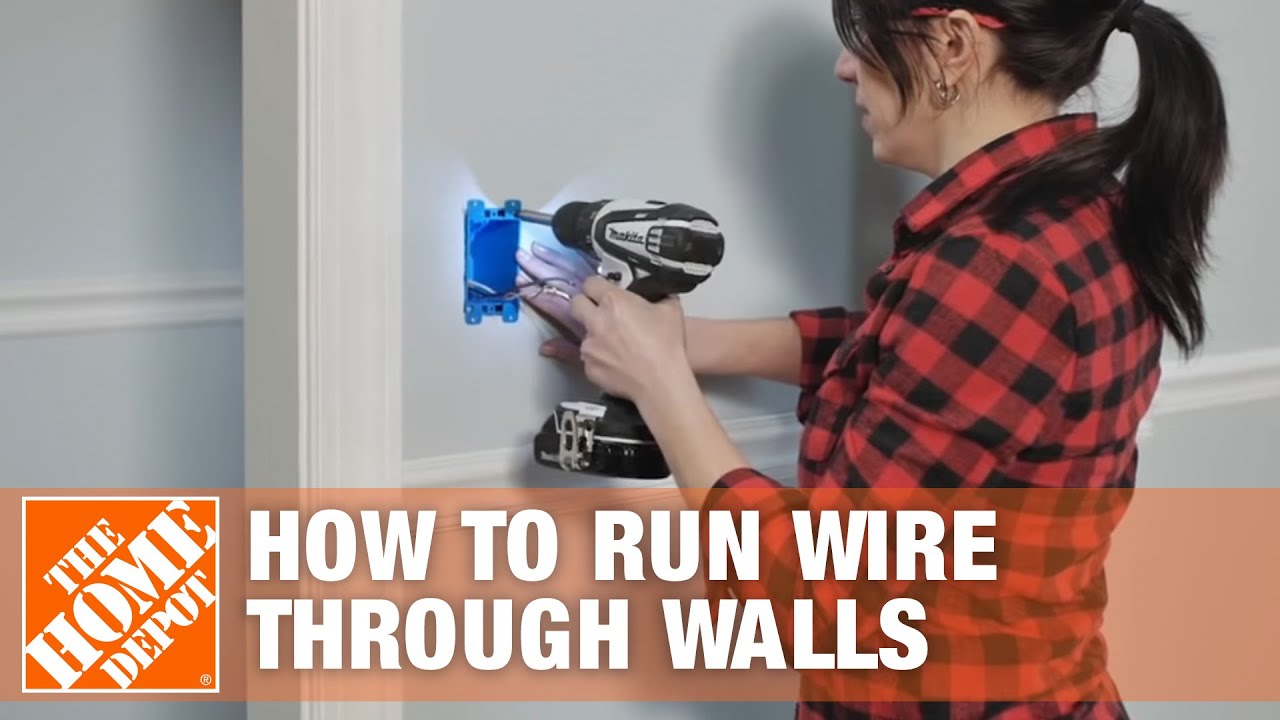
If you encounter resistance, don't force it. Try a gentle push-and-pull motion. Sometimes the wire just needs a little jiggle to get past an internal obstruction. This is where the artistry comes in.
Have a second person help if possible. One to pull, one to gently feed the wire into the first hole, guiding it. It turns a solo mission into a cooperative, wall-conquering endeavor.
This whole process is a fantastic lesson in patience. And perhaps a gentle reminder that sometimes, the simplest solutions are the most effective. No fancy gadgets needed, just grit and a fish tape.
As the wire emerges from the second hole, a sense of triumph washes over you. It's a clean run! You've successfully navigated the hidden world within your wall. Give yourself a quiet pat on the back.
Alternative Routes and Clever Tricks
Sometimes, the fish tape just won't cooperate. Maybe there's an unexpected cross-brace. Maybe the wall insulation is being particularly grabby. Don't despair. There are other heroes in the DIY toolbox.
Consider the string and weight method. Tie a small, light weight (like a nut or washer) to a strong string. Drop it down from an upper hole, hoping it falls through to a lower one. Then, grab the string and use it to pull your wire.
Or, for the truly adventurous, the vacuum cleaner trick. Feed a light string into one hole. Place the vacuum cleaner hose over the other hole, and switch it on. The suction might just pull the string through!

For horizontal runs between studs, an old coat hanger can be a surprisingly effective, if low-tech, tool. Straighten it out, bend a small hook at the end, and go fishing for your wire.
These unconventional methods are often frowned upon by purists. But in the grand scheme of getting the job done, they are the unsung heroes. My unpopular opinion? Sometimes, the janky solution is the most brilliant.
The Finishing Touches and Quiet Satisfaction
Once your wire is safely through the wall, snip it from the fish tape. Leave plenty of slack at both ends. You'll need it for making connections later. Don't be stingy with the extra length; it's always better to have too much than too little.
Now for the cleanup. If you made any larger access holes, you might need to patch them up with drywall compound. A little spackle, a little sanding, and soon your wall will look as good as new. No one will ever know the epic journey that transpired within.
Installing wall plates or covers over your new wire openings completes the illusion of effortless magic. You've tamed the wild wall, made it do your bidding, and left no trace of your adventure.
So, next time someone mentions running wire through a wall with a shudder, just give them a knowing smile. Because you, dear reader, now understand the truth. It's not a dark art. It's a charming puzzle, an exercise in patience, and a surprisingly satisfying DIY endeavor.
It’s simply about understanding the hidden pathways, choosing the right tool for the job (even if that tool is a vacuum cleaner), and enjoying the process. And that, my friends, is my truly unpopular opinion.