
How To Read A Power Meter
There it sits, on the side of your house. It's that mysterious box, often overlooked. It's usually gray, perhaps a bit dusty, and generally ignored.
Most of us treat it like a distant relative we only acknowledge at holidays. You know it’s there, but you’re not entirely sure what it does. Or, more importantly, what it’s saying.
The Unpopular Opinion: Your Power Meter is Your Home's Secret Diary
Now, here's my mildly unpopular opinion: that unassuming box isn’t just measuring. It’s silently judging. It’s keeping a meticulous record of every single watt, every surge, every forgotten light left on.
Must Read
Your power meter is essentially the nosy neighbor of your energy consumption. It sees all, knows all, and sends its findings straight to the utility company. But what if you could read its mind?
What if you could understand its cryptic language? Well, good news! You can. And it's far easier than you think.
Meet the Meter Family: Analog vs. Digital
First, let’s identify your meter's personality type. Is it a classic, old-school romantic or a sleek, modern minimalist?
You’ve got two main kinds. The first is the analog meter, a true veteran of the energy world. These have those mesmerizing, tiny spinning dials.
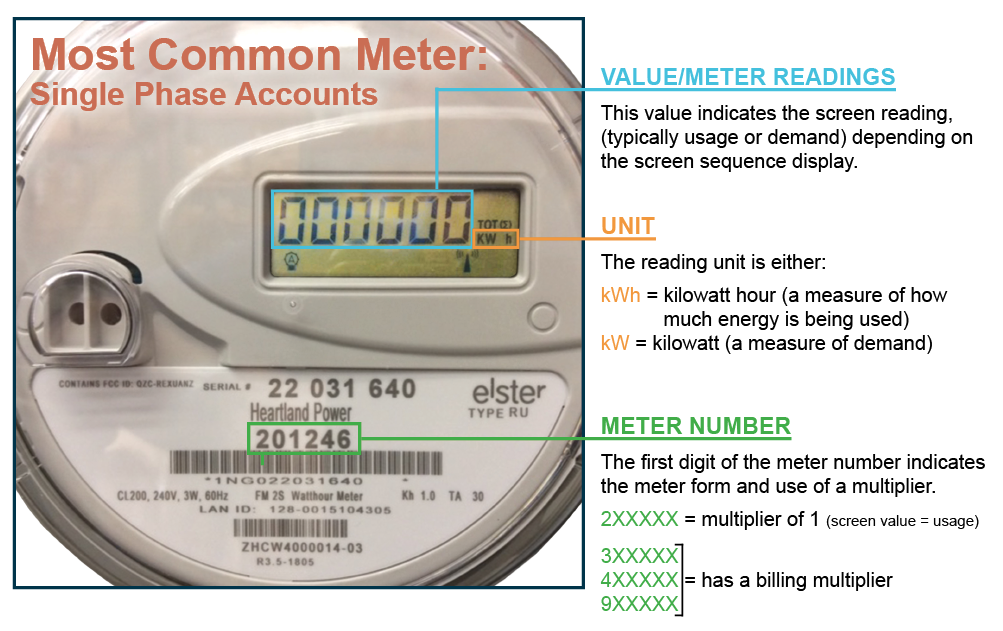
Then there’s the digital meter. These are the newer kids on the block, with a straightforward electronic display. They're less mysterious, more "just the facts."

Decoding the Dials: The Analog Adventure
Let's tackle the analog meter first. This is where most people throw their hands up in despair. They look like a tiny dashboard for a time machine.
But fear not, intrepid energy explorer! Those little dials, typically four or five of them, are not plotting against you. They're just a little shy.
Here’s the big secret: you read them like a book. From left to right. Each dial represents a digit in your total kilowatt-hour (kWh) usage.
"The power meter is not judging you, really. It's just providing data. Data you can now understand."
The trickiest part? Some dials spin clockwise, others counter-clockwise. It's almost as if they want to confuse you. But ignore their direction for a moment.
Look at where the pointer is resting. If the pointer is between two numbers, always record the lower number. For example, if it's between 7 and 8, you write down 7.
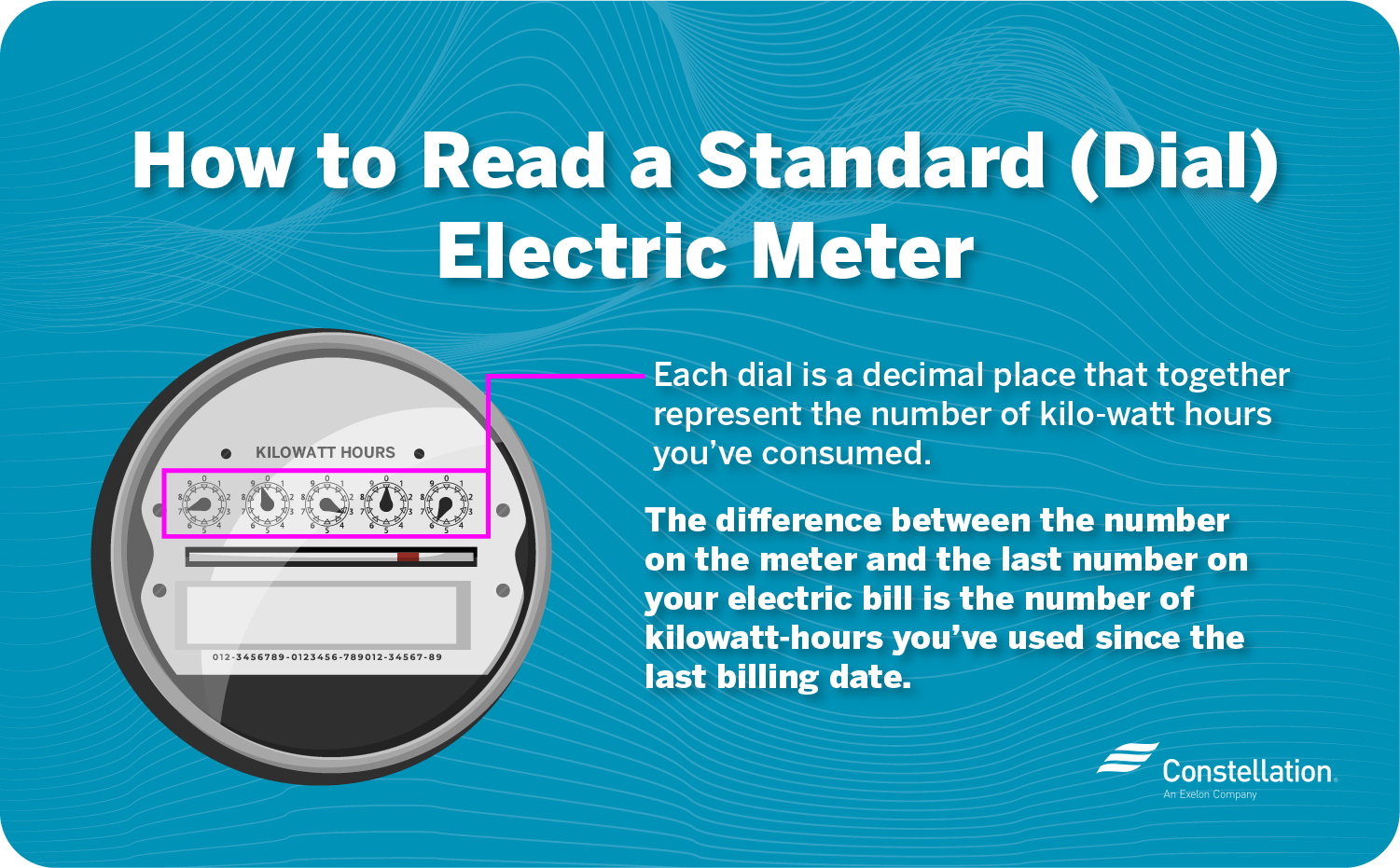
Even if it looks like it’s practically touching the higher number, if it hasn’t fully passed it, it's still the lower one. Your wallet will thank you for this conservative approach.
There's a subtle exception: if a dial's pointer is directly on a number, but the dial to its immediate right hasn't yet completed a full rotation (meaning it hasn't passed zero), then you still record the lower number for the current dial. It's a bit like waiting for the green light to fully change.
Let’s try an example. Imagine five dials showing these positions:
- First dial (far left): Pointer between 3 and 4. You write 3.
- Second dial: Pointer between 8 and 9. You write 8.
- Third dial: Pointer between 0 and 1. You write 0.
- Fourth dial: Pointer between 5 and 6. You write 5.
- Fifth dial (far right): Pointer between 2 and 3. You write 2.
Your reading for that moment would be 38052 kWh. Boom! You just cracked the code. You're officially a power meter whisperer.
The Digital Delight: A Breeze to Read
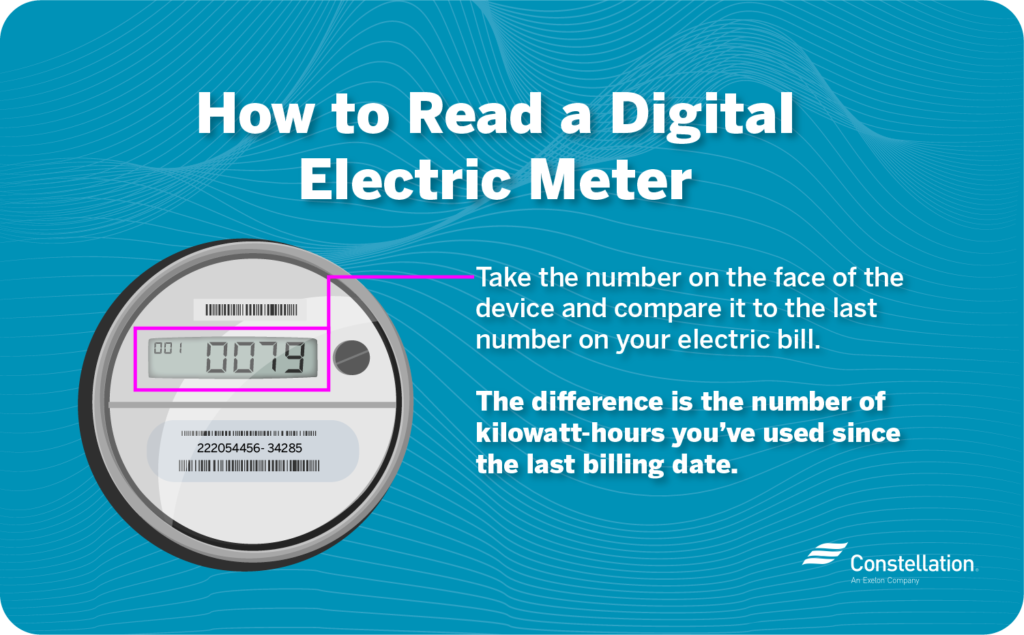
If you have a digital meter, congratulations! You've got the easy mode. These meters are designed for instant gratification.
You’ll see a series of numbers displayed electronically. This is your total usage. Sometimes, the display will cycle through various readings.
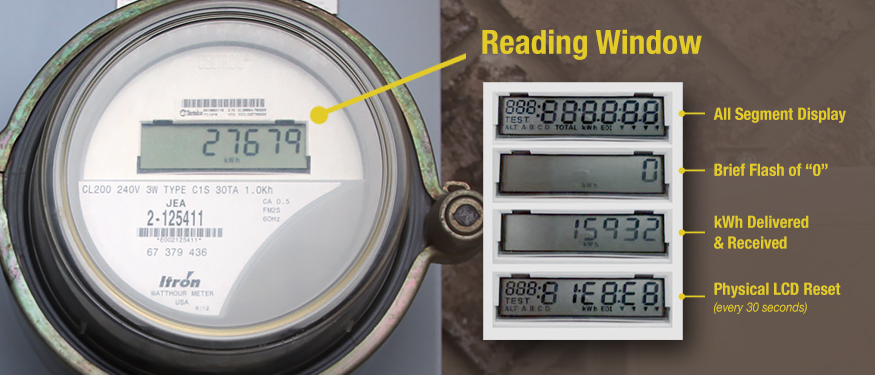
Just wait for the number that clearly indicates "kWh" or "Total Usage." Write that down. It’s usually a consistent stream of digits, no guessing needed.
It’s like comparing a vintage record player to Spotify. Both deliver music, but one is a bit more hands-on. Your digital meter is the Spotify of power readings.
Why Bother? The Perks of Being a Power Pro
So, why go to all this effort? Why peek at that seemingly boring box?
Firstly, it makes you an energy detective. You can track your usage between bill cycles. See a spike? You can investigate what caused it.
Secondly, you can spot those sneaky energy vampires. These are devices that suck power even when turned off or in standby mode. Your meter will rat them out.
Thirdly, understanding your meter empowers you. No more bill shock! You'll know exactly what to expect. You can even challenge your utility company if something looks wildly off.
Finally, it gives you control. Knowing your energy habits helps you make smarter choices. It’s like having a personal trainer for your electricity consumption.
The Final Verdict: Your Meter, Your Storyteller
So, the next time you glance at that box on the side of your house, don’t just walk by. Give it a nod of respect.
It's not just a meter. It's the silent chronicler of your home's daily life. It knows how many times you reheat your coffee. It knows about your late-night gaming sessions.
It's not judging you, really. It's just providing data. Data you can now understand and use to your advantage. Go on, take a look. You might just learn a lot about yourself and your home.
You might even find that you've gained a new, if inanimate, ally in the quest for lower energy bills. And that, my friends, is a truly empowering, and perhaps, not so unpopular, opinion after all.