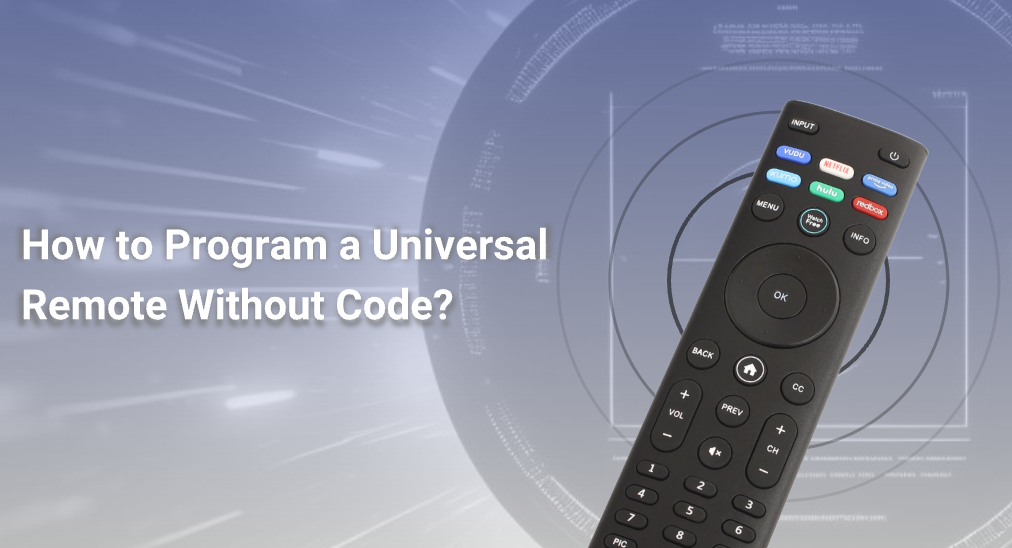
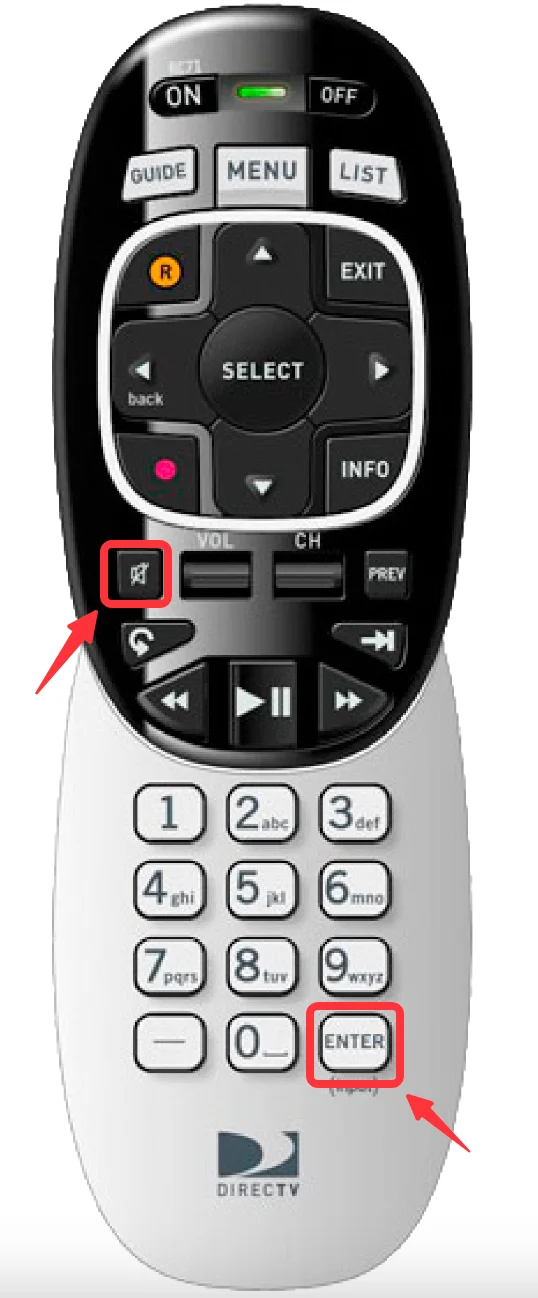
How To Program Remote Without Code
Ever dreamt of controlling the digital world with a flick of your wrist, like a tech-savvy sorcerer? The idea of programming, with its lines of cryptic code, might seem daunting. But what if I told you there's a way to program a remote, to bring your ideas to life, without writing a single line of code? It's called visual programming, and it's making waves in creative fields and beyond!
Forget staring at complex syntax. Visual programming uses a drag-and-drop interface, allowing you to connect pre-built blocks or nodes to create complex behaviors. Think of it as building with digital LEGOs. For artists, this opens a world of interactive installations where gestures control visuals or sound. Hobbyists can build custom game controllers or automate tasks around the house. And for casual learners, it's a fantastic introduction to programming logic without the initial intimidation of coding languages.
The possibilities are endless! Imagine an interactive art installation where waving your hand changes the color and pattern of a projected image – that's visual programming. Think of a personalized remote control for your smart home, where a button press triggers a sequence of actions: dimming the lights, playing your favorite music, and starting a diffuser. Or consider a simple game where tilting your phone steers a character, all built without writing a single "if/then" statement in traditional code. You can create motion-controlled art, responsive light displays, automated presentations, and interactive musical instruments. The limitation is only your imagination!
Must Read
Ready to give it a try at home? There are several user-friendly platforms available. Scratch, developed by MIT, is excellent for beginners, especially kids, and allows you to build interactive stories, games, and animations. Blockly, used in many educational contexts, is another popular option with a similar drag-and-drop interface. Node-RED is more advanced but incredibly powerful for connecting different devices and APIs, perfect for home automation projects. Many robotics kits, like those using Arduino, also offer visual programming environments. Start with a simple project, like making an LED blink with a button press, and gradually work your way up to more complex creations.
The key is to experiment and have fun! Don't be afraid to try different blocks and see what happens. Most platforms have excellent tutorials and supportive online communities. Visual programming isn't just about achieving a specific outcome; it's about the journey of discovery, the satisfaction of building something functional, and the joy of seeing your ideas come to life in a tangible, interactive way. It proves that programming doesn't have to be intimidating – it can be a playful and empowering experience for everyone.