How To Measure Room Size For Air Conditioner
:max_bytes(150000):strip_icc()/air-conditioning-chart-1152654_final-02-c37c8b4fdf08432baf378e8f0cb9d8e0.jpg)
Let's talk air conditioners! Maybe you're sweating through another summer, dreaming of cool relief. Or perhaps you're a DIY enthusiast prepping your home for maximum comfort. Either way, figuring out the right size AC unit is surprisingly fun – think of it as a mini-math puzzle that unlocks icy bliss. Choosing the right size air conditioner is crucial, and it all starts with knowing your room's dimensions.
Why is this important? Well, for beginners, an undersized AC will run constantly and still not cool your space effectively. You'll be wasting energy and money. Over-sizing isn't better, either! An overpowered AC will cool too quickly, leading to short cycling. This means it turns on and off frequently, which is also inefficient and can damage the unit over time. For families, finding the perfect balance means comfortable living for everyone. No more fighting over the thermostat! And for you hobbyists, this is another chance to flex your measurement muscles and ensure your home projects are perfectly executed.
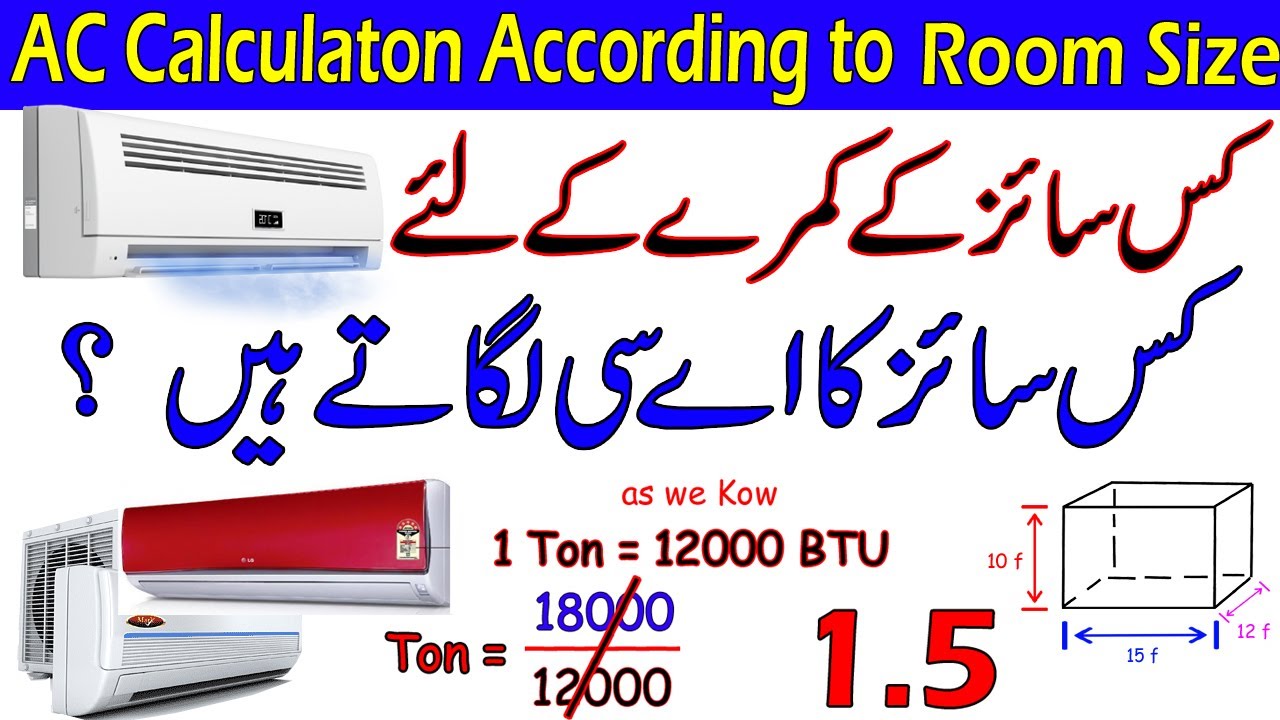
So, how do we tackle this measurement mission? It's simpler than you think. Grab a reliable measuring tape – the longer the better. Then, measure the length and width of the room in feet. Make sure you're measuring the actual floor space, avoiding any large furniture that's hugging the walls. Once you have those numbers, multiply them together to get the area in square feet. That's your key number!
Must Read
Now, for variations. Most AC sizing guides use a basic formula of BTU (British Thermal Units) per square foot. A common recommendation is 20 BTU per square foot. So, if your room is 200 square feet, you'd need an AC with approximately 4,000 BTU. However, this is a general guideline. Other factors can influence your BTU needs. For example, rooms with high ceilings might need a bit more power. Also, if the room gets a lot of direct sunlight, or has poor insulation, consider increasing the BTU rating slightly. Conversely, a well-insulated room in a shady spot might need a little less.
What about non-square rooms? No problem! Divide the room into smaller, more manageable rectangles or squares. Measure each section separately, calculate the square footage for each, and then add them together. Don’t forget about doorways and large openings into other rooms! These can impact the cooling load, especially if those adjacent spaces aren't air-conditioned.

Practical Tips to Get Started:
- Double-check your measurements! Accuracy is key.
- Write everything down. Don't trust your memory.
- Consider the room's purpose. A kitchen might need a higher BTU rating due to cooking heat.
- Use an online BTU calculator. Many websites offer free calculators that take into account various factors like ceiling height, window size, and insulation.
- Consult with an HVAC professional. For complex situations or whole-house cooling, a professional can provide personalized recommendations.
Measuring for your AC doesn't have to be a chore. It's a straightforward process that empowers you to make informed decisions, save money on energy bills, and, most importantly, stay cool and comfortable. So, grab that measuring tape, embrace your inner engineer, and enjoy the satisfaction of a perfectly sized AC unit bringing refreshing air to your home!