
How To Measure Amps In A Circuit

Ever wonder what makes your lights glow or your phone charge with that satisfying buzz? It's all thanks to the invisible magic of electricity. And while we don't need to become certified electricians overnight, understanding a little bit about our home's electrical "circulatory system" can be incredibly empowering. Today, we're diving into a fun, fascinating, and surprisingly simple concept: How to measure amps in a circuit. Think of it as peeking under the hood of your home's power-up routine!
What's an Amp, Anyway? Let's Break It Down!
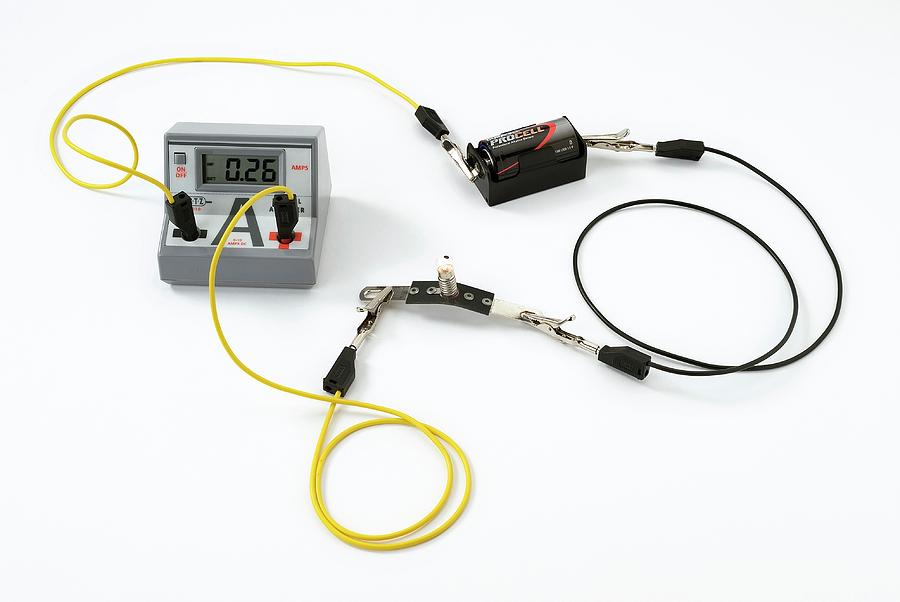
Forget the scary jargon for a second. Imagine electricity flowing through wires like water through a pipe. If voltage (volts) is the "pressure" pushing the water, and resistance (ohms) is how narrow or wide the pipe is, then amperage (amps) is the actual volume of water flowing past a certain point per second. Simply put, amps measure the rate of flow of electric current. A high-amp device, like a hair dryer or a microwave, is basically a wide-open faucet, letting a lot of "water" flow to get its job done.
Why care? Well, understanding amps helps you avoid tripped breakers (the electrical equivalent of a sudden traffic jam!), optimize energy use, and even troubleshoot why that vintage lamp isn't quite as bright as it used to be. It’s like knowing your car needs the right fuel – crucial for smooth operation!
Must Read
Your New Best Friend: The Clamp Meter
Measuring amps might sound intimidating, like something out of a sci-fi movie with sparks flying. But fear not! For the DIY enthusiast, there's a fantastic tool called a clamp meter. Unlike traditional multimeters that require you to break into the circuit, a clamp meter lets you measure current non-invasively. It simply "claws" around a single wire and detects the magnetic field created by the flowing current. Voila! Instant insight!
Think of it as a super-smart metal detector for electrons, but way more precise. It's safe, relatively easy to use, and a total game-changer for understanding your home's electrical appetite.
Safety First, Always! (Seriously, Read This)
Before we even touch a tool, let's have a chat about safety. Electricity is incredible, but it demands respect. Always remember:
- Never work on live wires if you're unsure. When in doubt, call a professional.
- Ensure your hands are dry. Water and electricity are not friends.
- Don't stick fingers or objects into outlets.
- This article is for general knowledge. For anything beyond basic readings on safely accessible cables, always consult a qualified electrician. Your safety is paramount!
Let's Get Clamping: A Quick How-To
Alright, armed with your trusty clamp meter and a healthy respect for electricity, let's measure some amps!

Step 1: Prep Your Meter
Turn on your clamp meter. Most modern meters are auto-ranging. If yours isn't, select the 'A' (Amps) setting, ensuring it's set for AC (Alternating Current). This is what almost all household devices use. (DC Amps are for things like car batteries.)
Step 2: Isolate Your Target
Identify the device or circuit you want to measure. Maybe it's your trusty coffee maker, or a specific outlet. Make sure the device is plugged in and running. No current flow, no reading!

Step 3: Clamp It! (The Cool Part)
Here's the trick: You need to clamp around only ONE of the current-carrying wires. Most power cords have two or three wires bundled inside the outer insulation. If you clamp around the entire cord (all wires together), the magnetic fields will cancel out, giving you a zero reading. You need to carefully separate one of the individual 'hot' or 'neutral' wires and clamp around just that one. This might involve using a specialized extension cord designed for this, or finding a point where individual wires are exposed (always safely, power off if needed!).
Step 4: Read and Interpret
Once clamped correctly, your meter will display the current in amps. This number tells you exactly how much electricity that device is drawing. Compare it to the device's label (often on the back, listing voltage and wattage/amperage) or your circuit breaker's rating. If a circuit breaker is rated for 15 amps, you definitely don't want to be consistently drawing more than that!
Fun Facts & Practical Takeaways
- Did you know that just 1 amp can be lethal if it passes through the heart? It’s not the voltage that kills, but the current! Respect the flow.
- Your home's main breaker panel usually has breakers rated for 15A or 20A for general circuits. Higher ratings (30A-50A) are for large appliances like stoves. Knowing these limits prevents overloads.
- Measuring amps can help you spot "phantom load" – devices drawing power even when turned off (like your TV's standby mode). Every little bit adds up!
So there you have it! From understanding the "flow" to safely using a clamp meter, you're now equipped with a new superpower: electrical insight. It's not just about wires and numbers; it's about being more informed about your home, more conscious of your energy footprint, and a little bit more of a modern-day MacGyver. Go forth, measure, and amp up your knowledge!
