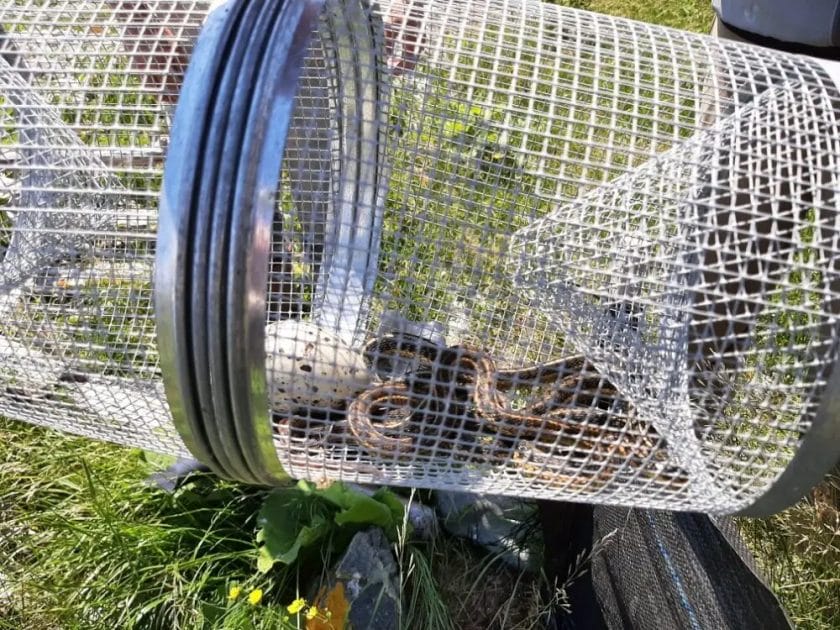
How To Make A Garter Snake Trap

Ever wondered how nature enthusiasts and even some educators get a closer look at those fascinating, harmless little reptiles, garter snakes? It's not about catching them to keep as pets, but rather about observation, learning, and sometimes, relocating them from places where they might not be safe. One clever trick is making a simple garter snake trap. It's a fun and educational project, perfect for a sunny afternoon and sparking curiosity about the natural world right in your backyard!
The purpose of a garter snake trap is simple: to temporarily and safely capture garter snakes for observation or relocation. These traps are designed to be harmless to the snakes. Think of it like a temporary, cozy little shelter they wander into out of curiosity or for a bit of shade. The benefits are numerous. You get to observe these amazing creatures up close, learn about their behavior, and even contribute to citizen science projects by documenting their presence in your area. For educators, it’s an invaluable hands-on learning tool, bringing textbook lessons to life. And for homeowners, it can be a humane way to move a snake from, say, your garden shed to a more suitable habitat away from the house.
So, how does this magical trap work? The basic design is incredibly simple. Take a bucket – a clean, plastic bucket works perfectly. Bury it in the ground so the rim is level with the surrounding soil. This makes it easy for the snakes to wander in. Now comes the secret ingredient: bait. But not the kind that harms them! Garter snakes are attracted to cool, damp places. So, place a damp towel or a few crumpled, damp newspapers in the bottom of the bucket. This creates an irresistible, snake-friendly environment. You can also add a few leaves or a small rock for extra appeal. The snakes will slither in, looking for a cool, sheltered spot, and find themselves temporarily trapped.
Must Read
You might be thinking, "Where would I even use this?" Consider a school project. Students could build and monitor traps in a school garden, documenting the snakes they find and learning about their role in the ecosystem. Or, perhaps you've noticed a few garter snakes venturing a little too close to your pet's food bowl. You could use the trap to gently relocate them to a safer part of your yard. In daily life, it’s a great way to educate children about responsible interaction with wildlife and the importance of conservation.
Ready to give it a try? Here are a few practical tips: First, always check your trap regularly, ideally twice a day, to ensure the snakes aren't trapped for too long. Second, wear gloves when handling the snakes, not because they're dangerous, but to avoid transferring any oils or scents from your hands to them. Third, if you’re relocating a snake, choose a suitable habitat nearby – a wooded area, a field, or a stream bank. And most importantly, respect the snakes and their environment. This is about learning and observing, not about causing harm. Start small, experiment with different placements and baits, and enjoy the process of discovery. You might be surprised at what you learn about these fascinating creatures and the world around you!