
How To Hook A Portable Generator To Your House

Alright, folks, let's talk power! You know, that magical stuff that makes your coffee maker hum and keeps your fridge from becoming a sad, warm box of regrets. But then, poof! The lights go out, the Wi-Fi dies, and suddenly, we're all squinting at each other in the dark, wondering how our ancestors ever survived. Enter the hero of our story: the portable generator.
Having a generator is awesome. It's like having a superpower tucked away in your garage, ready to swoop in and save dinner. But here’s the thing, hooking it up to your house isn't quite as simple as just plugging in your phone. We're talking about electricity, after all, and electricity, while fantastic, can be a real jerk if you don't treat it with respect. So, let’s grab a virtual coffee and chat about how to do this the right way, without accidentally turning your house into a disco ball… or worse.
First Up: The Big, Fat, Dangerous NO-NO!
Okay, listen up, because this is the most important part: NEVER, EVER, EVER plug your generator directly into a wall outlet in your house. Seriously. Like, put a giant, flashing red light on that one. This is called "backfeeding," and it’s basically an invitation for disaster. Why?
Must Read
- It can send power back down the utility lines, potentially electrocuting unsuspecting utility workers trying to restore power. Yeah, we don’t want that on our conscience.
- It can absolutely fry your house's electrical system, which is way more expensive than a new generator.
- It’s a massive fire hazard.
So, we're clear? No plugging a generator into a wall outlet. Good. Moving on!
The Right Way: Transfer Switches & Interlock Kits
There are two main, safe, and approved ways to connect your portable generator to your home’s electrical system. Both essentially create a safe "handshake" between your generator and your house, ensuring that utility power and generator power are never on at the same time. It’s like a bouncer at a club, making sure only one VIP gets in at a time.

Method 1: The Transfer Switch (The Gold Standard)
This is probably the most common and arguably the easiest to use option once installed. A transfer switch is a dedicated electrical panel, often smaller than your main breaker panel, that’s wired directly into your house’s electrical system. It allows you to select which specific circuits (like your fridge, a few lights, maybe the furnace fan) you want to power with your generator.
When the power goes out, you simply:
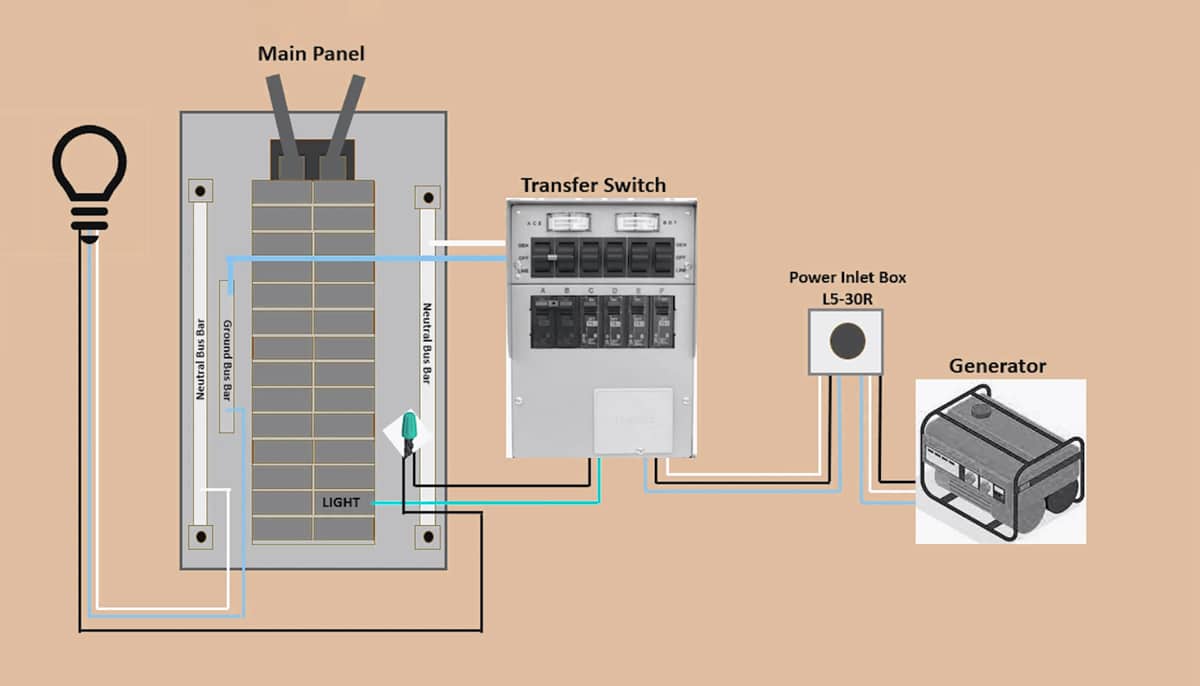
- Start your generator outside.
- Flip a switch on the transfer panel from "utility" to "generator."
- Turn on the individual circuits you want to power.
Boom! Instant, safe power to your chosen appliances. The big plus here? You’re physically preventing any dangerous backfeeding. The big downside? It usually requires a licensed electrician to install, and it can be a bit pricier. But hey, peace of mind (and not zapping a lineman) is priceless, right?
Method 2: The Interlock Kit (The Clever Cousin)
An interlock kit is a mechanical device that attaches to your existing main electrical panel. It physically prevents you from turning on your main utility breaker and your generator breaker at the same time. Think of it like a puzzle piece: when one is "on," the other simply cannot be "on."
This method usually involves installing a dedicated generator inlet box on the exterior of your house (more on that in a sec), which is then wired to a new breaker in your main panel. When the power drops, you:
- Plug your generator into the inlet box outside.
- Flip off your main utility breaker.
- Slide the interlock plate to allow you to turn on the new generator breaker.
- Start your generator.
- Turn on the individual circuits you want to power.
It's often a bit more affordable than a full transfer switch and uses your existing panel. However, just like with the transfer switch, professional installation is strongly recommended. An interlock kit needs to be specific to your breaker panel, so make sure it's compatible before you buy!
Key Components You'll Need (No Matter What)
Whether you go transfer switch or interlock, you're definitely going to need these two buddies:

The Generator Inlet Box: This little gem lives on the outside of your house. It’s a dedicated, weatherproof receptacle where you plug in your generator cord. It’s the safe gateway for your generator’s power to enter your home’s electrical system.
The Heavy-Duty Generator Cord: This isn't your average extension cord, my friend. We're talking a thick, burly cable with special twist-lock plugs designed for high amperage. It connects your generator to that fancy new inlet box. Do not skimp here! Get the right gauge and length for your generator's output and your house's needs.
A Few Words of Wisdom Before You Start Powering Up
- Generator Placement is EVERYTHING: Your generator MUST be placed outdoors, at least 15-20 feet away from your house, and away from any windows, doors, or vents. We're talking serious carbon monoxide (CO) here, folks. CO is odorless, invisible, and deadly. So, outside! Seriously.
- CO Detectors: Speaking of CO, make sure you have working carbon monoxide detectors in your home, especially if you’re running a generator. It's a non-negotiable safety item.
- Fuel Up: Have plenty of fresh fuel on hand! Generators are thirsty beasts. And store that fuel safely, away from living spaces.
- Prioritize: Know what you're going to power. A portable generator typically won't run your whole house, especially big power hogs like central AC, electric water heaters, or electric stoves. Think fridge, freezer, some lights, phone chargers, maybe a TV, and a fan.
- Read the Manuals: Yes, those thick books you usually ignore. Your generator's manual, and the instructions for your transfer switch or interlock kit, contain vital information specific to your equipment.
The Big Picture: Staying Cozy When the Lights Go Out
So, there you have it! Hooking up a portable generator safely means investing in the right equipment (a transfer switch or interlock kit, an inlet box, and a proper generator cord) and, often, bringing in a professional electrician for installation. It might seem like a bit of a hassle upfront, but trust me, when the next big storm hits and your neighbors are shivering in the dark, you’ll be the one with a warm cup of coffee, a fully charged phone, and a fridge full of un-spoiled food. And that, my friend, is a beautiful thing. Stay safe, stay powered!