How To Find The Value Of An Angle

Let's face it, angles. They might seem like dusty remnants from high school geometry, but understanding them is surprisingly useful and even a little satisfying. Think of it like this: Have you ever perfectly angled a picture frame, built a shelf that's actually level, or even sliced a pizza into even(ish) slices? Congratulations, you've already dabbled in the art of angle appreciation! While you might not be consciously calculating them, knowing how angles work can empower you to solve everyday problems and understand the world around you a bit better.
So, why bother figuring out the value of an angle? The benefits extend far beyond acing your math exam. In everyday life, angle awareness helps with everything from home improvement projects (ensuring things are straight and structurally sound) to cooking (slicing things evenly for aesthetic appeal and even cooking). Builders rely on angles to create stable and visually appealing structures. Artists use angles for perspective and composition. Even gamers unconsciously use angles to aim and strategize. The purpose, ultimately, is to gain a better understanding of spatial relationships and use that knowledge to achieve desired outcomes. It's about making the world work for you, not against you.
Common examples of angle application are everywhere. Consider the sloped roof of a house, designed to efficiently shed rain and snow. That slope is an angle! Look at the recline of a comfortable chair, carefully calculated for optimal relaxation. That's an angle too! Think about how a satellite dish is positioned to receive signals. You guessed it – angles are key! In architecture, you'll see acute, obtuse, and right angles used in arches, doorways, and the overall design of buildings. Mechanics use angles when working on engines and other machinery. Carpentry, engineering, navigation… the list goes on and on. Angles are the unsung heroes of many professions.
Must Read
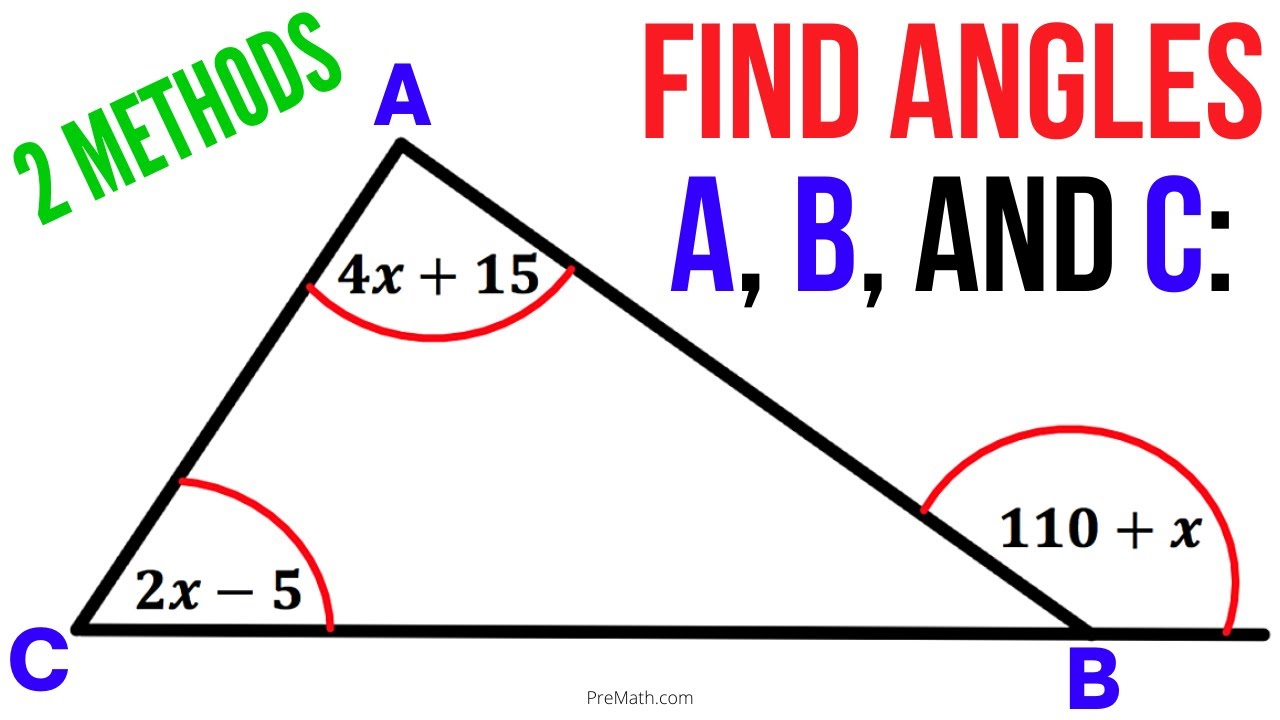
Now, let's get practical. How can you find the value of an angle and, more importantly, how can you enjoy the process more? Firstly, embrace the tools! A protractor is your best friend for directly measuring angles. Download a free protractor app on your smartphone if you don't have a physical one. Secondly, remember your basic geometry. Understanding concepts like complementary angles (angles that add up to 90 degrees), supplementary angles (angles that add up to 180 degrees), and the angles within a triangle (which always add up to 180 degrees) is crucial. There are tons of free resources online to brush up on these concepts.
To enjoy it more effectively, try to gamify the process. Look around your environment and estimate the angles you see. Then, use a protractor (or app) to check your accuracy. Start with simple shapes and angles and gradually move on to more complex ones. Another tip is to apply your knowledge to real-world projects. Building a birdhouse, hanging a picture frame, or even just rearranging furniture can give you practical experience and a sense of accomplishment. Don't be afraid to experiment! Learning about angles shouldn't be a chore. It should be a fun exploration of the geometry that shapes our world.