
How To Find The Residual On A Ti 84 Plus

Ever felt like your calculator is a magic box, capable of unlocking secrets hidden within numbers? Well, you're not entirely wrong! Let's dive into a fun little trick your TI-84 Plus can do: finding the residual.
Get ready, it's easier than you think, and way more entertaining than balancing your checkbook (probably!).
First Things First: Stats On!
Before we unleash the power of residuals, we need some data. Input your data into lists L1 and L2. Think of it like feeding your calculator a delicious numerical snack.
Must Read
Go to STAT, then EDIT. Now carefully type your x-values into L1. Next, enter your corresponding y-values into L2.
Time to Calculate!
Now for the exciting part! We need to tell the calculator to work its magic. Press STAT again, then move over to CALC.
See all those options? Choose LinReg(ax+b). This tells the calculator we want a linear regression.
Enter "L1,L2,Y1" and press ENTER. "L1" and "L2" specify where to find our data. "Y1" stores the regression equation. You can access Y1 through VARS, then Y-VARS, then Function.

Unveiling the Residuals
The residual is basically the difference between what your data actually is and what the linear model predicts. Think of it as a numerical detective, finding the slight imperfections in our model.
Go to STAT again, then EDIT. Look what's new! You should see a list called "RESID." This is where your calculator has stashed all the residuals for you.
Isn't that neat? Your TI-84 Plus did all the hard work for you.
Accessing the Residual List
Need to see that sweet RESID list again? No problem! It's always there, waiting to be explored.
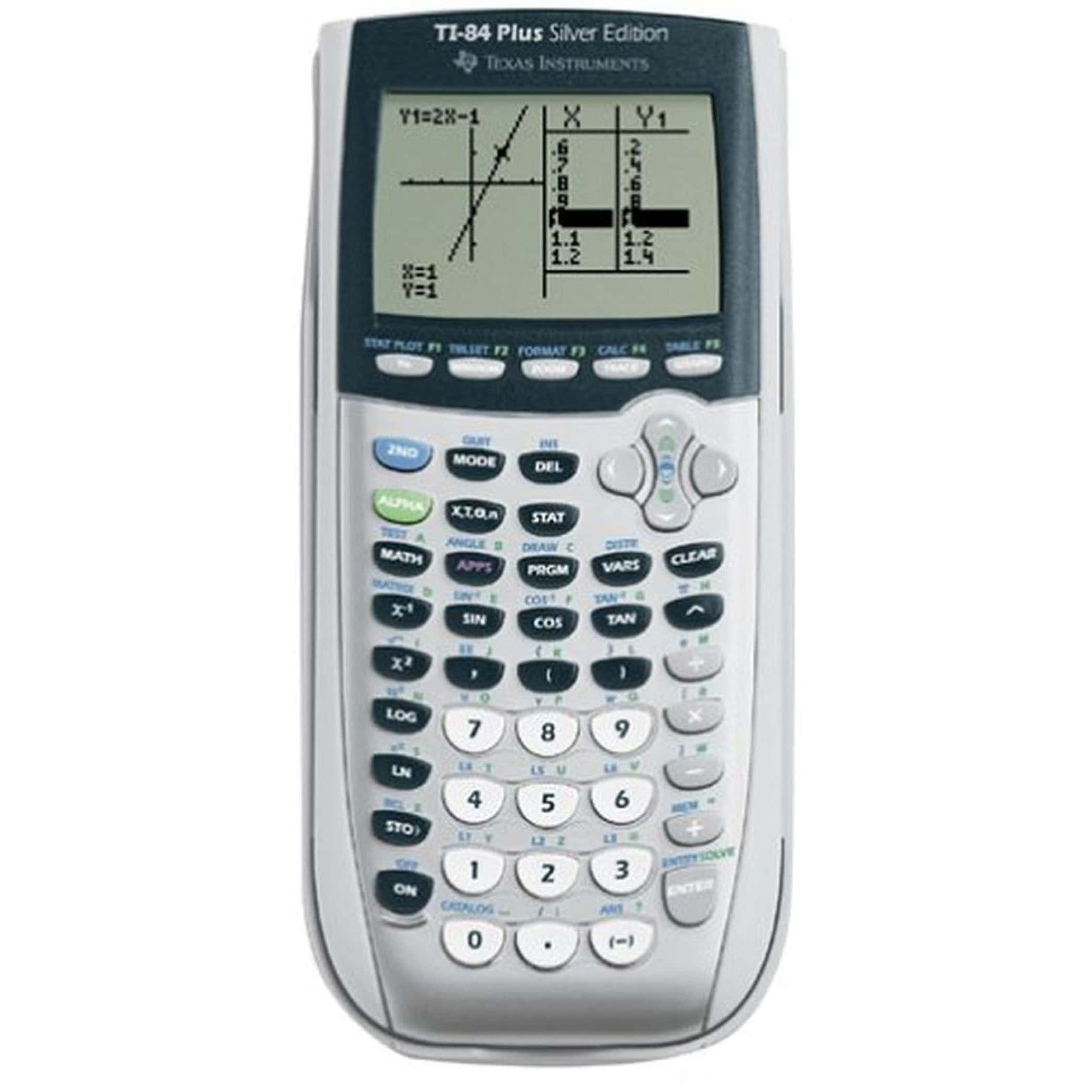
You can find it by simply going back to STAT, then EDIT. Scroll to the right until you see RESID.
Or, if you prefer a shortcut, you can access it through the LIST menu (2nd + STAT). Just scroll down until you find RESID.
Plotting the Residuals: Visual Magic!
Ready to take things to the next level? Let's visualize those residuals! This is where things get really interesting.
First, we need to set up a scatter plot. Press 2nd, then Y= (STAT PLOT).

Choose Plot1 and turn it ON. Select the scatter plot icon. For Xlist, choose L1. For Ylist, choose RESID.
Now, hit ZOOM, then ZoomStat (Zoom 9). Behold! A scatter plot of your residuals!
What Does the Plot Tell Us?
This plot is like a secret decoder ring for your data. A random scatter of points suggests a good linear model. A pattern suggests something else might be going on.
Are the points randomly scattered above and below the x-axis? Great! It seems that a linear model might be a good fit to the data.

But if you see a curve, a funnel shape, or any other distinct pattern, it might mean that a linear model isn't the best choice. Perhaps a quadratic or exponential model would be a better fit.
Residuals: Your Data's Detective
Finding residuals on your TI-84 Plus is more than just a mathematical exercise. It's a way to dig deeper into your data. It's a way to see if your assumptions hold true.
It's like being a data detective, using your calculator to solve the mystery of your numbers!
So, grab your TI-84 Plus, some data, and get ready to explore the fascinating world of residuals. Who knows what secrets you'll uncover?
Remember, math doesn't have to be scary! It can be fun, engaging, and even a little bit magical. So, go ahead, explore, and see what your calculator can do!