How To Change The Direction Of Your Ceiling Fan
Ever felt a little too warm in the summer, even with the AC blasting? Or maybe a chill creeping in during the winter months, despite turning up the heat? The answer to your temperature woes might be right above your head – your ceiling fan! We often take these trusty appliances for granted, but did you know they have a secret power? They can change direction, and understanding how to do this can significantly improve your comfort and even save you money!
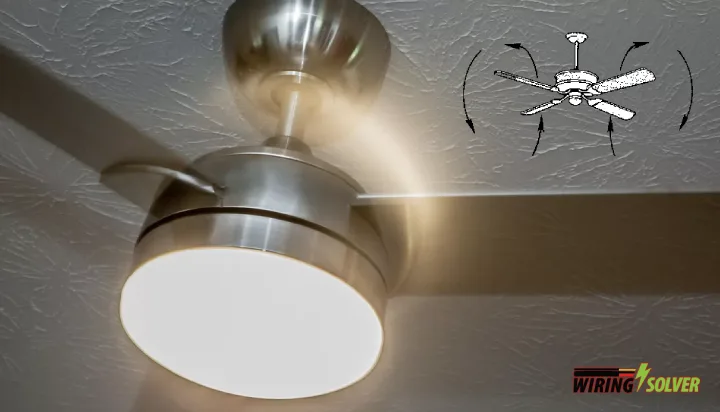
The basic purpose of changing your ceiling fan's direction is to optimize airflow for the current season. In the summer, you want a downdraft. This creates a cooling breeze that helps evaporate sweat and makes you feel cooler. Think of it as a personal, energy-efficient air conditioner booster! The direction the blades should spin is counter-clockwise, when looking up at the fan.
In the winter, the magic happens in reverse. You want an updraft. This gently pulls the warm air that naturally rises to the ceiling back down into the room. Warm air rises because it's less dense than cool air. By reversing the fan direction (clockwise, when looking up), you're essentially redistributing that trapped warmth, making the room feel more comfortable without cranking up the thermostat. This can lead to real energy savings!
Must Read
Beyond personal comfort, understanding airflow dynamics and how ceiling fans play a role can be surprisingly educational. Imagine a science class exploring convection currents. A simple demonstration with a ceiling fan showing how it distributes warm and cool air can make the concept much more tangible for students. They could even use thermometers at different heights in the room to measure the temperature difference with the fan on in each direction! This hands-on activity helps them visualize and understand abstract scientific principles.
In daily life, the benefits are clear. Think about it: you're hosting a summer barbecue and want to keep your guests comfortable on the patio. Ensuring the ceiling fan above the seating area is spinning counter-clockwise will provide a welcome breeze. Or, picture a cozy winter evening reading a book. Reversing the fan direction will help circulate the warm air and eliminate those chilly spots near the floor.
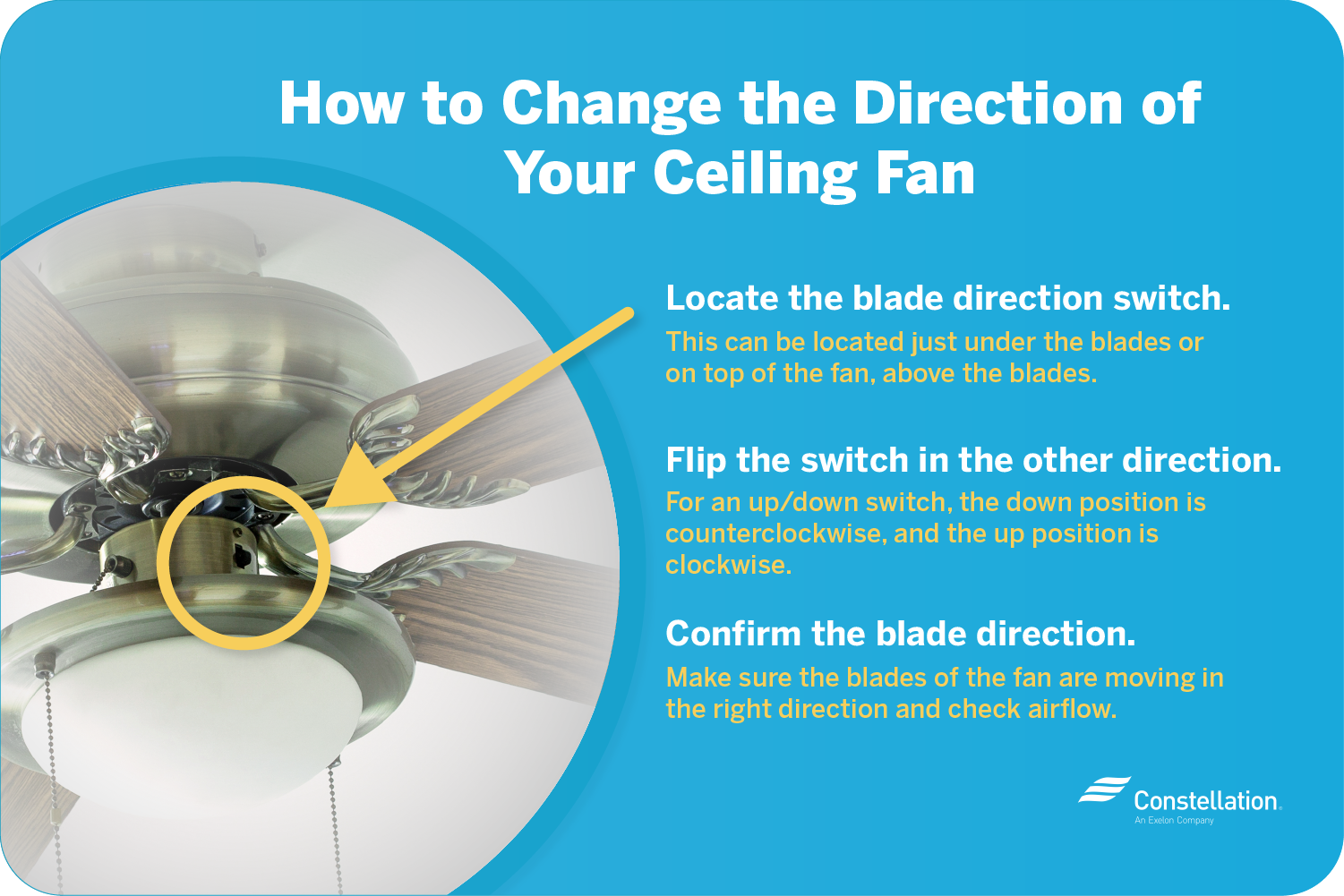
So, how do you actually change the direction? It's usually incredibly simple. Most ceiling fans have a small switch located on the motor housing. It's often a slider switch labeled with arrows indicating the direction of airflow. Before you flip the switch, make sure the fan is completely stopped. This is crucial for safety and to prevent damage to the motor. Once the fan is stopped, flip the switch to the desired direction, and then turn the fan back on.
Here's a practical tip: Make it a habit to check your ceiling fan direction when you switch from summer to winter and vice-versa. It's a small task that can make a big difference in your comfort and energy bill. To explore this further, try experimenting with different fan speeds in each direction. You might find that a lower speed in winter is sufficient to circulate the warm air effectively, further maximizing your energy savings. And don't be afraid to observe how the air is moving in the room – you can often feel the difference! So, go ahead, take control of your climate and unlock the hidden potential of your ceiling fan!