
How To Calculate Total Amps In A Breaker Panel

Alright, buckle up buttercup, because we're about to dive into the electrifying world of calculating total amps in your breaker panel! Now, I know what you're thinking: "Electricity? Math? Sounds like a snoozefest!" But trust me, this is easier than making toast (and less likely to burn your house down, if you do it right).
We're gonna break it down into bite-sized, totally digestible chunks. Think of it like this: your breaker panel is the heart of your home's electrical system, and amps are like the little blood cells pumping power to all your gadgets. Let's get pumping!
Step 1: Meet Your Breakers
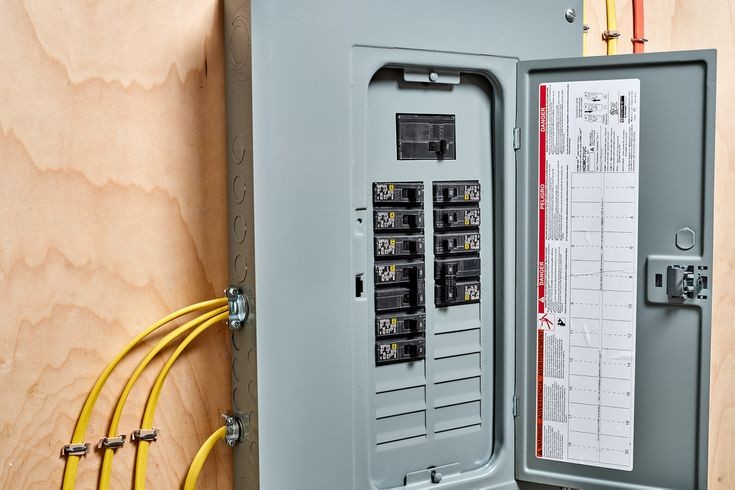
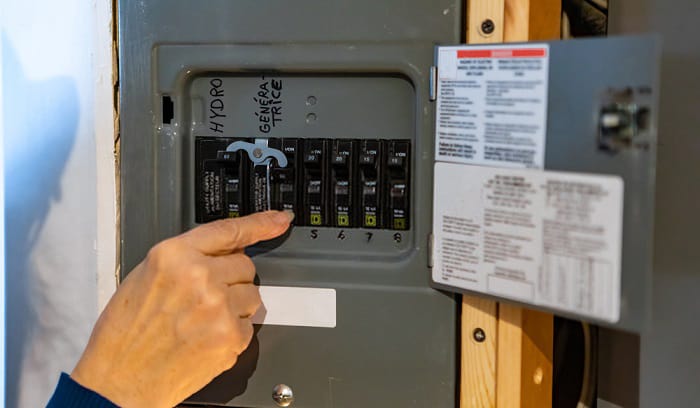
First things first, you gotta get acquainted with your breakers. These are those little switches in your panel, usually labeled with numbers like 15, 20, 30, and so on. These numbers are your new best friends, because they tell you the amperage of each circuit.
Must Read
Imagine each breaker as a bouncer at a club, only letting a certain amount of electrical "people" (amps) into the party. If too many try to get in, the bouncer (breaker) throws the switch and shuts everything down (trips!).
Example Time!
Let's say you've got a breaker labeled "15". That means that circuit can handle 15 amps of electrical current. A "20" means 20 amps, and so on. Simple, right?
These breakers supply electricity to different areas of your home. You might see one for "Living Room Lights," another for "Kitchen Outlets," and yet another for "That Weird Outlet Behind the Couch That Nobody Uses."
Step 2: Sum Up the Single Poles
Now, for the fun part: adding things up! We're gonna start with the single-pole breakers. These are the ones that take up only one slot in your breaker panel. They're usually the ones labeled 15 or 20 amps.
Just go down the line and write down the amperage of each single-pole breaker. Don't skip any! Treat it like a treasure hunt, but instead of gold, you're finding electrical power.
Once you've written them all down, add them all together. This is your total single-pole amperage. Woohoo!

A Little Trick (Because Why Not?)
To make this even easier, group the breakers by amperage. For example, if you have five 15-amp breakers, just do 5 x 15 = 75. Then add that to the sum of all the other breakers. Bam! Efficiency!
This method avoids adding so many numbers, which reduces error. Trust me, your brain will thank you.
Step 3: Taming the Double Poles (The Big Kahunas!)
Next up, we've got the double-pole breakers. These are the ones that take up two slots in your breaker panel. They're usually used for big appliances like your stove, dryer, or water heater.
These guys are a little different because they provide 240 volts of power instead of the usual 120 volts. Think of it as a double dose of electrical energy! And since they are using two slots they can handle a large amount of amps.
The most common values you'll see are 30, 40, or even 50 amps. But don't let those big numbers scare you!
The Double-Pole Secret
Here's the key thing to remember: you don't just add these numbers directly to your total single-pole amperage. I know, I know, it seems unfair. But trust me, this is important.
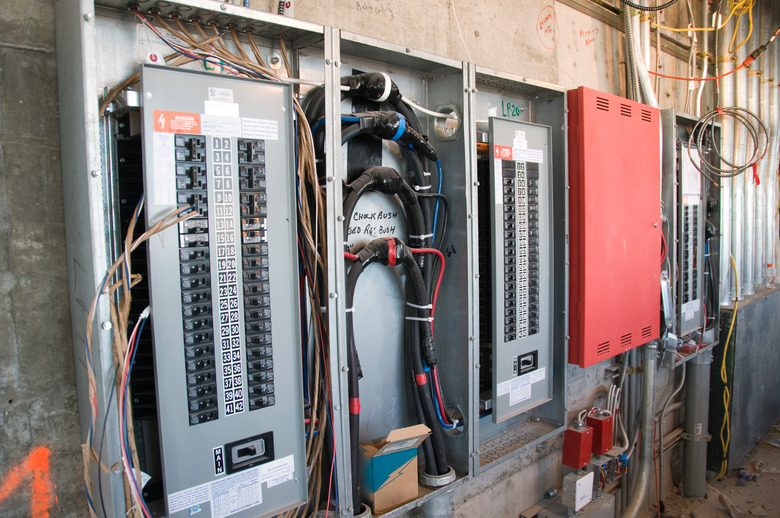
Instead, you need to figure out the total amperage available in your panel. This number is usually printed right on the panel itself, often near the main breaker. It's typically something like 100, 125, 150, or 200 amps.
The total amperage available is the maximum amount of electrical current your panel can safely handle. It's like the total capacity of a water pipe. If you try to pump too much water through it, it'll burst!
Step 4: The Grand Finale (Calculating the Used Amperage)
Okay, here comes the moment of truth! We're going to figure out how much of your panel's capacity you're actually using.
Remember that total single-pole amperage you calculated earlier? Write that down. This is the amount of amps already being used by the single-pole breakers. Write it down as this number is very important!
Now, for each double-pole breaker, you need to divide its amperage in half. For example, if you have a 30-amp double-pole breaker, divide it by 2 to get 15 amps. A 40-amp breaker becomes 20 amps, and so on. Trust me, this is the real formula.
Why Do We Divide by Two?
This is because double-pole breakers are providing 240 volts of power, which is essentially like running two 120-volt circuits at the same time. So, each "pole" is only using half of the breaker's total amperage.
Once you've divided the amperage of each double-pole breaker in half, add those numbers to your total single-pole amperage. This gives you your total estimated amperage usage.
Step 5: Are You Overloaded? (The Moment of Truth)
Alright, drumroll please! Now compare your total estimated amperage usage to the total amperage available in your panel.
If your usage is less than the available amperage, congratulations! You're good to go. Your electrical system is happy and healthy. You can even add a few more gadgets without worry (within reason, of course!).
But if your usage is close to or exceeds the available amperage, Houston, we have a problem! You're potentially overloading your panel, which can be a fire hazard. Time to call in a professional electrician.
Example Time Again!
Let's say your panel has a total capacity of 100 amps. You've calculated that your single-pole breakers add up to 60 amps. You also have one 30-amp double-pole breaker (which counts as 15 amps). So, your total estimated usage is 60 + 15 = 75 amps. You're in the clear!
But if your single-pole breakers added up to 90 amps, and you still had that 30-amp double-pole breaker, your total usage would be 90 + 15 = 105 amps. Uh oh! You're exceeding your panel's capacity by 5 amps. Not good!
Important Considerations (Because Safety First!)
This calculation is just an estimate. It doesn't take into account everything that might be running at the same time. For example, you might not always have your hair dryer, microwave, and air conditioner running simultaneously.
However, it's always better to err on the side of caution. If you're unsure about anything, consult a qualified electrician. They can perform a more thorough load calculation and ensure your electrical system is safe and up to code. They can also help you install a larger panel if you need more capacity.
Messing with electricity can be dangerous if you don't know what you're doing. So, please, be careful and don't be afraid to ask for help!
The Final Spark!
So, there you have it! You've successfully navigated the world of calculating total amps in your breaker panel. You're practically an electrician now (just kidding... mostly!).
Now go forth and conquer your electrical system! Just remember to be safe, be smart, and don't forget to call a professional if you're ever in doubt. And remember, this is just the basics. Understanding amps and volts is a much larger field.
You've got this! Now go reward yourself with a nice, safe, electrically-powered treat!