
How To Calculate The Consumption Of Electricity
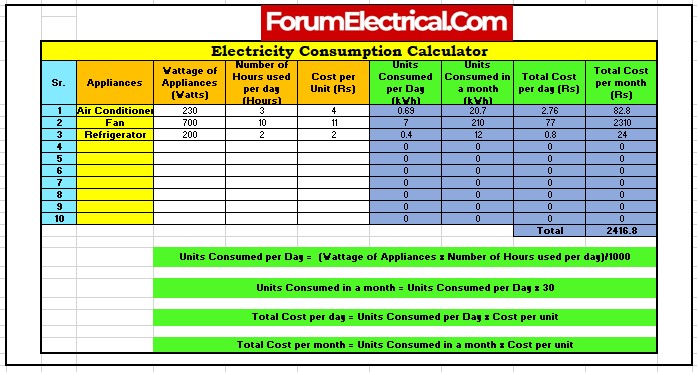
Ever wonder how much that beloved, slightly-too-loud hairdryer is costing you? Or maybe you're just curious if your gaming addiction is financially crippling your household. Well, fret no more! Figuring out your electricity consumption is surprisingly easy and, dare I say, kind of fun.
The Watt's Up Basics
First, let's talk about watts. Think of a watt as a tiny energy packet. Every appliance has a watt rating, usually printed right on it or in its user manual.
It's like the nutritional information for your energy guzzlers, except instead of calories, it's all about power.
Must Read
Finding the Wattage
Look for a sticker, label, or imprinted text on the appliance. It might say something like "120V 5A," which means 120 volts and 5 amps.
To get the wattage, multiply volts by amps: 120 x 5 = 600 watts! If only math in school were this practical.
If you only see the wattage directly, congratulations! You've bypassed a step.
From Watts to Kilowatts: A Conversion Story
Watts are small, like the individual grains of sand on a beach. We need something bigger to measure our energy consumption more realistically, so enter the kilowatt.
One kilowatt (kW) is equal to 1000 watts. Think of it as a thousand tiny energy packets bundled together for easier handling.
To convert watts to kilowatts, simply divide the wattage by 1000. So, our 600-watt hairdryer becomes 0.6 kilowatts. Easy peasy!
Time is Money (and Electricity)
Now we know how much power an appliance uses at any given moment. But what about over time? That's where hours come in.

If you run that 0.6 kW hairdryer for one hour, you've used 0.6 kilowatt-hours (kWh). It's that simple!
Kilowatt-hours are the units your electricity bill uses.
Calculating Usage Over Time
Let's say you use that hairdryer every morning for 15 minutes (0.25 hours). To find the total kWh used per day, multiply the kilowatt rating by the number of hours: 0.6 kW x 0.25 hours = 0.15 kWh.
Now, multiply that by the number of days in a month (say, 30): 0.15 kWh/day x 30 days = 4.5 kWh per month. You're practically an energy consumption expert now!
The Bill, Please! Understanding Your Electricity Rates
Your electricity bill probably lists the price you pay per kWh. Let's pretend it's $0.20 per kWh.
To calculate the total cost of running your hairdryer for a month, multiply the kWh used by the price per kWh: 4.5 kWh x $0.20/kWh = $0.90.
Less than a dollar to keep your hair looking fabulous? A bargain!
Putting It All Together: The Grand Finale
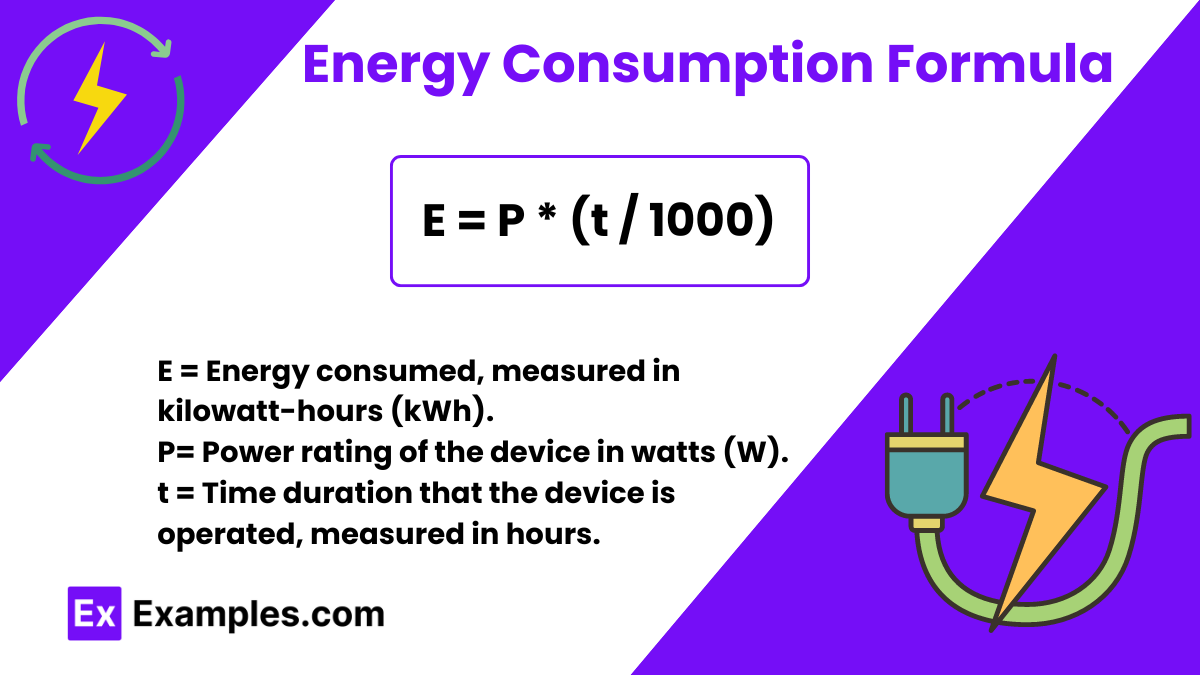
So, here's the complete formula for calculating electricity consumption:
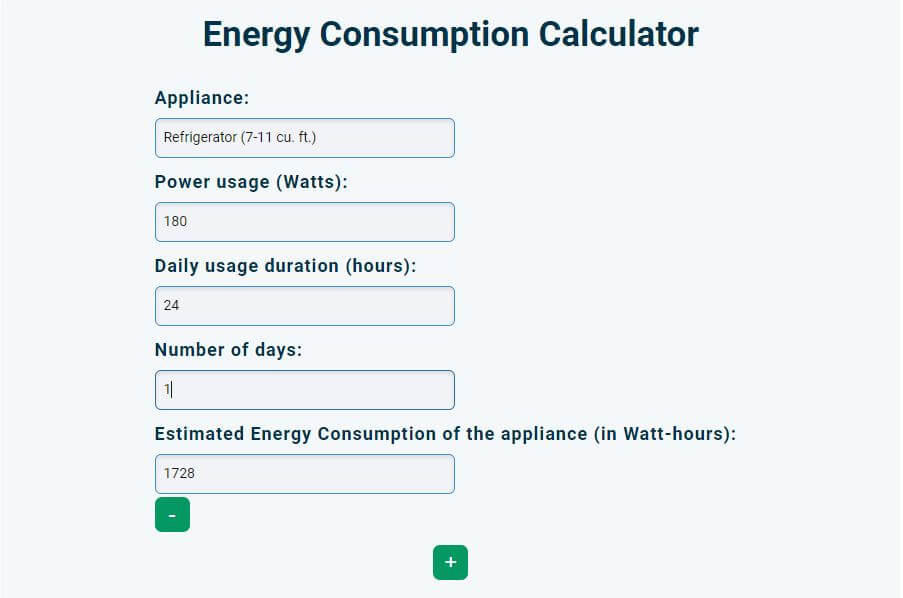
(Wattage / 1000) x Hours Used = Kilowatt-Hours (kWh)
kWh x Price per kWh = Total Cost
Now you can calculate the electricity consumption of anything from your refrigerator to your lava lamp!
Real-World Examples: Let's Get Practical
The Refrigerator: The Silent Energy Vampire
Refrigerators run constantly, but they don't always draw the same amount of power. Let's say your fridge uses 150 watts (0.15 kW) and runs for an average of 12 hours per day.
That's 0.15 kW x 12 hours/day = 1.8 kWh per day. Over a month, that's 1.8 kWh/day x 30 days = 54 kWh. At $0.20/kWh, your fridge costs you $10.80 per month. Food storage comes at a price!
The Gaming PC: Power to the Pixels!

A gaming PC can be a real energy hog. Let's say it uses 400 watts (0.4 kW) while gaming and you play for 3 hours a day. That's 0.4 kW x 3 hours/day = 1.2 kWh per day.
Over a month, that's 1.2 kWh/day x 30 days = 36 kWh. At $0.20/kWh, your gaming habit costs you $7.20 per month. Worth it for those sweet, sweet victories?
The Incandescent Light Bulb: A Retro Energy Drain
Remember those old-fashioned incandescent light bulbs? Let's say you have a 60-watt bulb (0.06 kW) and you leave it on for 4 hours a day.
That's 0.06 kW x 4 hours/day = 0.24 kWh per day. Over a month, that's 0.24 kWh/day x 30 days = 7.2 kWh. At $0.20/kWh, that one bulb costs you $1.44 per month. Small potatoes, but it adds up!
Surprising Discoveries and Energy Saving Tips
You might be surprised by which appliances are the biggest energy consumers in your home. Often, it's the ones we use most frequently, like refrigerators and air conditioners.
Unplugging Phantom Loads: The Sneaky Energy Suckers
Many appliances continue to draw power even when they're turned off. These are called "phantom loads" or "vampire power." Unplug chargers, TVs, and other electronics when not in use to save energy. Those sneaky devils!
Switching to LEDs: A Bright Idea
LED light bulbs use significantly less energy than incandescent bulbs. Replacing your old bulbs with LEDs can save you a surprising amount of money over time. Plus, they last longer!
Smart Power Strips: The Tech-Savvy Solution
Smart power strips can detect when a device is not in use and automatically cut off power to it. This is a great way to eliminate phantom loads without having to unplug everything manually. Tech to the rescue!
Beyond the Numbers: A Story of Conservation
Understanding your electricity consumption isn't just about saving money; it's also about making informed choices that benefit the environment.
By being mindful of how much energy we use, we can reduce our carbon footprint and contribute to a more sustainable future. Every little bit helps!
Plus, knowing the cost of running your appliances might encourage you to turn off the lights when you leave a room or take shorter showers. Guilt can be a powerful motivator!
So, go forth and calculate! Uncover the hidden costs of your electronic companions, and embark on a quest to become an energy-saving superhero. The planet (and your wallet) will thank you!