
How To Become A Marine Welder
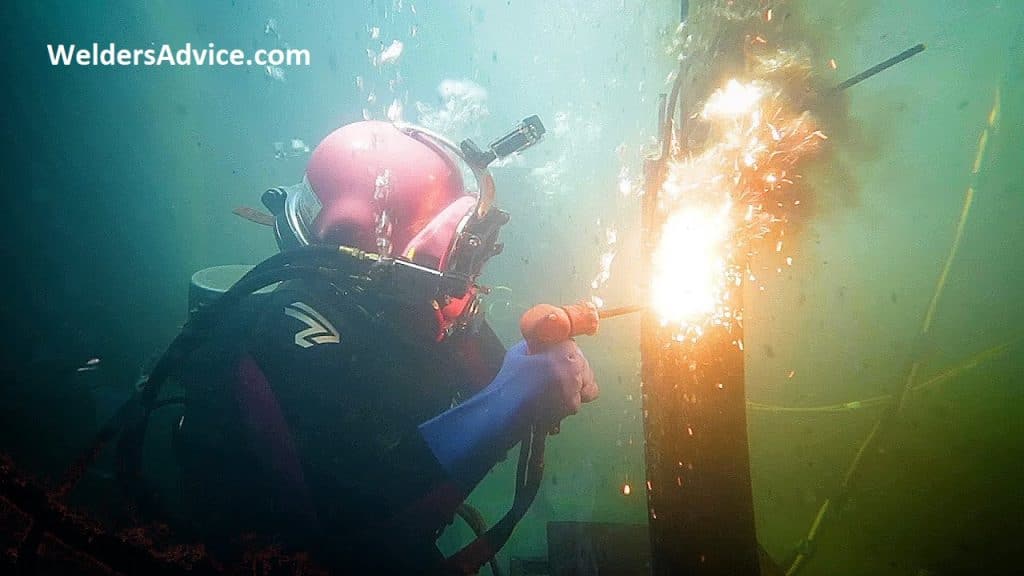
Ever gazed at the vast, shimmering ocean and thought, "You know what this needs? Someone to go down there and fix stuff with a giant sparkler!" No? Just me? Well, good news, you magnificent landlubber, because today we’re diving headfirst (pun absolutely intended) into the dazzling, dangerous, and surprisingly lucrative world of how to become a Marine Welder. Or, as I like to call them, underwater superheroes with really cool tools.
Forget your desk job, your bland cubicle, and your stapler. We're talking about a career where your office is the ocean floor, your colleagues are fish (hopefully not piranhas), and your main adversary is usually rust or, you know, just the crushing pressure of the deep. It’s a job that sounds like it was invented by an eight-year-old on an adrenaline high, and frankly, it’s pretty darn awesome.
Why on Earth would anyone want to do this?
Okay, let’s be real. It sounds utterly insane. But before you dismiss it as something only a mythical sea-god with a welding torch would attempt, let me drop a few truth bombs. First, the pay. We're talking serious moolah. Like, "buy a yacht...or at least a very nice jet ski" kind of money. Second, the bragging rights are off the charts. "What do you do?" "Oh, I just weld critical structural components on oil rigs under the ocean. You?" Mic drop. And third, the sheer adventure. If your current biggest thrill is finding a matching pair of socks, buckle up, buttercup.
Must Read
Marine welders are the unsung heroes who keep our ships afloat, our oil and gas flowing, and our underwater infrastructure from crumbling faster than a day-old donut. They’re the troubleshooters, the fixers, and the ones who can turn a leaking hull into a watertight marvel, all while trying not to get nibbled by curious octopuses.
Step 1: Become a Land-Dwelling Welding Wizard
You can't just strap on some flippers and a snorkel and declare yourself an "ocean sparker." No, my friend, you first need to master the art of welding on dry land. This is your foundation, your bedrock, your "I can stick two pieces of metal together without setting myself on fire" phase.

Enroll in a reputable welding program or vocational school. You’ll spend countless hours perfecting your technique with various welding processes like Stick (SMAW), MIG (GMAW), and TIG (GTAW). Think of it as learning to draw before you attempt a Sistine Chapel ceiling fresco. Your first welds might look like a pigeon sneezed on a metal plate, but with practice, you'll be laying down beads that look like perfect, metallic stitches. Precision and patience are your best friends here.
You’ll need certifications – lots of 'em. The American Welding Society (AWS) certifications are like gold stars in this industry. They prove you’re not just a guy who found a torch in his garage. Get as many as you can, especially for structural welding. The more versatile you are on land, the better prepared you'll be for the unique challenges of the deep.
Step 2: Take the Plunge – Commercial Diving School
This is where things get really interesting. Remember how I said "underwater superheroes"? Well, now you need to learn how to be an actual underwater person. This means attending an accredited commercial diving school. And no, your PADI recreational certification won't cut it. We’re talking about serious, heavy-duty, "don't mess with me, I'm wearing a giant helmet" diving.
Commercial diving school is no joke. You'll learn physics, physiology, dive medicine, saturation diving, rigging, hydraulics, underwater tools, and, of course, how to breathe underwater without panicking. You’ll be wearing gear that weighs more than a small car and learning to work in conditions ranging from zero visibility to bone-chilling cold. It’s physically demanding, mentally taxing, and absolutely essential.
There are two main types of underwater welding you'll encounter:

- Wet Welding: This is literally welding underwater, in the water, with specially designed electrodes. It's often used for temporary repairs or less critical structures. Imagine trying to weld in a bathtub while someone squirts you with a hose. Except, you know, with thousands of pounds of pressure.
- Hyperbaric Welding (Dry Chamber): This is the crème de la crème. A dry habitat is sealed around the area to be welded, and the water is displaced, creating a dry, pressurized environment for the welder. It’s like having a temporary, tiny submarine office at the bottom of the ocean. This allows for higher quality welds, comparable to those done on the surface, and it’s where the really big bucks are. This is the holy grail for many marine welders.
Step 3: Develop Your Superhero Skills (Beyond the Torch)
Being able to weld a perfect bead underwater is only half the battle. You need a suite of other skills:
- Physical Fitness: You'll be lugging heavy gear, fighting currents, and working in demanding conditions. You need to be strong, agile, and have the stamina of a caffeinated badger.
- Problem-Solving Prowess: Things go wrong underwater. Tools get stuck, currents shift, visibility drops. You need to be able to think on your feet (or fins) and adapt.
- Mental Fortitude: Long hours, isolation, working in dangerous environments, and the constant pressure (pun intended) can take a toll. You need to be calm under pressure, resilient, and possess a healthy respect for the ocean.
- Teamwork: You’re part of a dive team. Your life, and the lives of your buddies, depend on clear communication and trust. There’s no "I" in "underwater welding team," just a whole lot of "we need to not drown."
The Payoff: Adventure, Acclaim, and a Hefty Paycheck
So, you’ve put in the time, faced your fears, and emerged as a certified, bad-to-the-bone marine welder. What now?
Your career could take you to exotic locales – oil rigs in the North Sea, shipyards in Dubai, or salvage operations off the coast of Australia. You'll be in high demand for shipbuilding, offshore construction, pipeline repair, and even military projects. The opportunities are as vast as the ocean itself.
You’ll face challenges that most people only see in movies, solve problems that few even understand, and literally build and repair the very foundations of our maritime world. And yes, you’ll be compensated handsomely for your unique skillset. It's a job that demands the best, and it rewards them generously.
Is it for everyone? Absolutely not. It’s dangerous, dirty, and incredibly demanding. But if you’re looking for a career that’s anything but ordinary, that promises adventure, high pay, and the chance to be a true unsung hero of the deep, then perhaps it’s time to start practicing your breathing exercises and dreaming of sparks beneath the waves. Go forth, future marine welders, and may your beads be perfect, and your air tanks full!