
How Much Wattage Does A Tv Use

Ever settled down for a cozy evening, remote in hand, ready to dive into your favorite show, and found yourself wondering, just for a split second, "How much juice is this thing actually pulling?" You're not alone! It's one of those everyday mysteries we rarely think about, but it’s actually pretty fun to demystify. Let's chat about how much wattage your TV uses, why it matters, and how you can be a little bit smarter about it – all without feeling like you're studying for an exam!
What Even Is Wattage, Anyway?
Think of wattage like a TV's appetite. It's the measure of how much electrical power your TV munches on at any given moment to do its job. A higher wattage means it's taking a bigger bite out of the electrical pie. It's not quite like calories for us, but it’s the same basic idea: more power, more 'fuel' needed.
Most of the time, we talk about how many watts something uses per hour. This is where your electricity bill comes in, but we'll get to that delicious topic in a bit!
Must Read
So, How Many Watts Does a TV Use? (The "It Depends" Part)
Alright, if you were hoping for one magic number, I’m afraid it’s a bit like asking "How much does a car cost?" – it really depends! But don't worry, we can totally narrow it down. Several things play a role:
- Screen Size: This is probably the biggest factor. A tiny 32-inch TV needs way less power than a whopping 75-inch behemoth. Think of it like comparing a bicycle to a monster truck.
- TV Technology:
- Old LCD/Plasma TVs: These older models were often quite power-hungry. They're like that friend who always orders extra fries.
- Modern LED TVs: These are much more efficient. They're usually the energy-sippers of the bunch.
- OLED/QLED TVs: These fancy new screens can be very efficient, especially when displaying darker scenes, because they can turn off individual pixels. But when showing bright, colorful scenes, they can sometimes use a bit more than an LED.
- Brightness and Settings: Got your TV cranked up to maximum brightness all the time? It's like flooring the gas pedal in your car. Dimming it down makes a big difference.
- What You're Watching: A dark, moody movie might use less power than a super bright, action-packed cartoon.
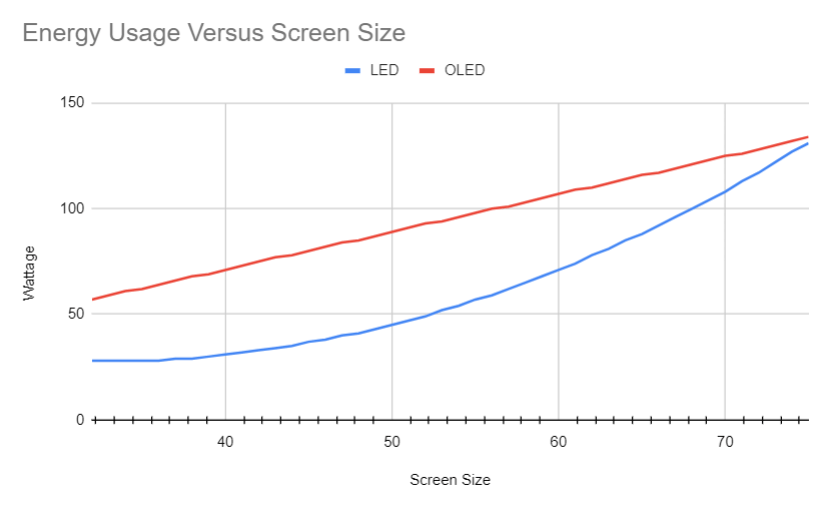
Generally speaking, a modern LED TV will likely use somewhere between 50 to 150 watts while it's on. For example:
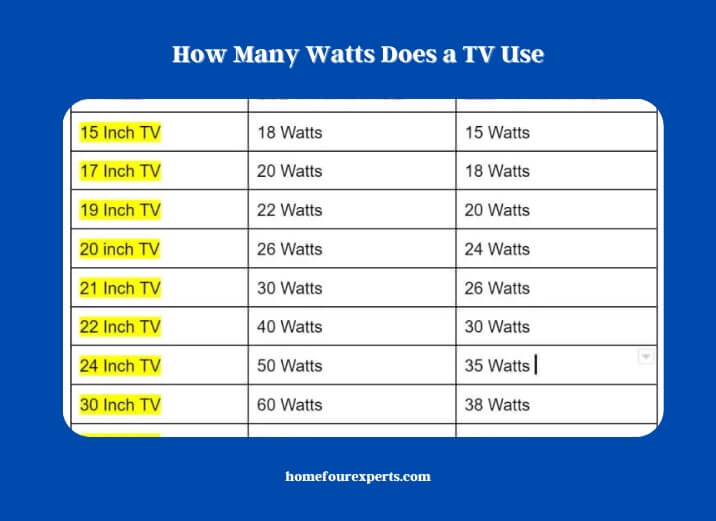
- A 32-inch LED TV might use around 30-50 watts. That's less than a single old-school light bulb!
- A 50-inch LED TV could be in the range of 60-80 watts.
- A larger 65-inch LED TV might use 80-120 watts.
- A massive 75-inch or 85-inch LED TV could hit 150-200 watts, especially when cranked up.
Older TVs or very large, high-end OLEDs displaying bright content can sometimes go higher, but these are good ballpark figures.
Why Should You Even Care About This? (The Fun Bits!)
Okay, so now you know a bit about the numbers. But why should you, a lovely everyday reader, actually give a hoot about your TV's wattage? Well, there are a couple of pretty cool reasons:
1. Your Wallet Will Thank You! (Hello, Smaller Bills!)
This is probably the most relatable reason. Every watt your TV uses adds up on your electricity bill. While a TV isn't usually the biggest power hog in your house (that honor often goes to your fridge, AC, or water heater), every little bit helps!
Think of it like this: if your TV uses 100 watts for 5 hours a day, that's 500 watt-hours. Over a month, that's a decent chunk of energy. Being mindful means those pennies stay in your pocket, ready for that extra scoop of ice cream or a fancy coffee. It's not going to make your electricity meter spin like a hamster on a caffeine high, but every little bit of savvy saving adds up.
2. Giving Mother Earth a Little Hug!
Using less electricity doesn't just save you money; it also helps the environment. Less energy consumed means less demand on power plants, which often translates to fewer greenhouse gas emissions. So, by being a little more energy-conscious with your TV, you're doing a tiny, but mighty, part for our beautiful planet. It's like giving Mother Earth a gentle high-five!
3. Your TV Might Live Longer (A Happy TV is a Long-Lasting TV!)
While not a direct cause and effect, running your TV at super high brightness all the time can sometimes generate more heat and potentially shorten its lifespan. A TV that's not constantly working its hardest tends to be a happier, longer-lasting TV. Just like we sometimes need to chill out, so does our electronics!
Smart Habits for Smart People (You!)
Ready to be a wattage wizard? Here are some super simple, smart habits:
- Turn it Off: The most obvious one! If no one's watching, turn the TV off. Don't let it be background noise to an empty room.
- Adjust Brightness: This is a biggie! Most TVs come with a "standard" or "vivid" mode that's often too bright for typical home viewing, especially in a dimly lit room. Go into your TV settings and switch to a "movie" or "cinema" mode, or simply dial down the brightness. Your eyes (and your wallet) will thank you.
- Use "Eco" or "Power Saving" Modes: Many modern TVs have these built-in. They automatically adjust settings to be more energy-efficient. It's like your TV's personal "low power mode."
- Unplug for Vacations: Going away for a while? Unplugging your TV (and other electronics) means they won't draw any "phantom" or "vampire" power, those tiny sips of electricity even when they're off but still plugged in.
The Bottom Line
Your TV isn't usually the biggest energy guzzler in your home, but being aware of its wattage and adopting a few smart habits can make a difference. It’s about being mindful, saving a few pennies, and giving our planet a little love. So, next time you settle in for a binge-watching session, give a little wink to your TV, knowing you're a savvy, energy-smart viewer!
