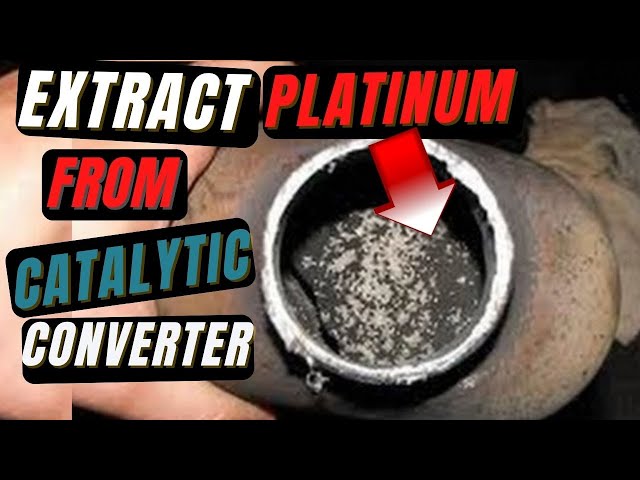
How Much Platinum Is In Catalytic Converter

Hey there, curious cat! Ever wondered about the shiny stuff inside your car's catalytic converter? We're talking about platinum, palladium, and rhodium – the precious metals that help clean up your car's exhaust. Today, we're diving specifically into the world of platinum and how much of it actually hangs out in those converters. Buckle up; it's more interesting than you might think! (Unless you really love car parts. Then, it's probably less interesting than your average Tuesday.)
So, let's get right to it. How much platinum are we talking about? Well, it's not like car manufacturers are lining converters with solid bars of the stuff! That would be… expensive. And kinda pointless. Instead, these metals are used as a very thin coating on a ceramic honeycomb structure. Think of it like a super-efficient air filter... that's also really, really good at chemistry.
The Great Platinum Estimate Game
Figuring out the exact amount of platinum in a catalytic converter is a bit like trying to guess how many jellybeans are in a jar. There's no one-size-fits-all answer. Several factors influence the platinum content:
Must Read
- Vehicle Type: A big ol' truck? Expect more platinum than in a tiny hatchback. Bigger engine, bigger exhaust, bigger need for cleanin'.
- Engine Size: Similar to the above, larger engines generally require more precious metals. Makes sense, right? More power, more emissions to scrub.
- Converter Age and Condition: Over time, catalytic converters degrade. The platinum can get "poisoned" by contaminants or simply wear away. A super-old converter probably won't have as much platinum as a brand-new one. Think of it like your favorite pair of jeans; they get worn out eventually!
- Manufacturer: Different manufacturers use different formulations and amounts of each metal. It's a closely guarded secret sauce, you see.
Bearing all of this in mind, a typical catalytic converter might contain anywhere from 3 to 7 grams of platinum. That's not a lot, you might think. And you're right, it isn't! But remember, platinum is incredibly effective at catalyzing (speeding up) chemical reactions. A little goes a long way!
Why Platinum Is So Important (And Expensive!)
Platinum, along with palladium and rhodium, acts as a catalyst to convert harmful pollutants like hydrocarbons (unburned fuel), carbon monoxide, and nitrogen oxides into less harmful substances like carbon dioxide, water, and nitrogen. Basically, it's like a tiny chemical referee, making sure everything plays nicely and cleans up its act.
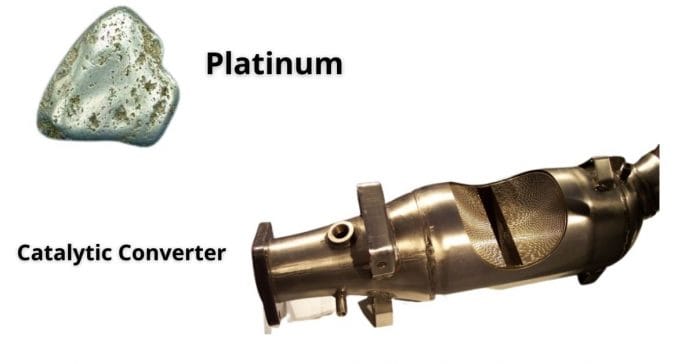
Because platinum is rare and has so many vital industrial uses (not just in cars!), it's also quite pricey. This is why catalytic converter theft is a problem in many areas. Thieves are after those precious metals! So, maybe don't leave your car parked in a sketchy alley overnight. Just a friendly tip!
So, You're Thinking of Extracting the Platinum Yourself?
Woah there, slow down, MacGyver! While technically possible, extracting platinum from a catalytic converter is a complex, dangerous, and environmentally unfriendly process. It involves harsh chemicals and specialized equipment. Plus, it's often illegal if you don't have the proper permits. Honestly, it's best left to the professionals who have the expertise and safety measures in place.

Think of it this way: you wouldn't try to perform brain surgery on yourself, would you? (Please say no!). Similarly, leave the platinum extraction to the experts. They'll thank you. Your local environment will thank you. And probably your neighbors will thank you, too, since you won't be accidentally creating a toxic chemical cloud. Win-win-win!
The Bottom Line: A Little Platinum Makes a Big Difference
Even though the amount of platinum in a catalytic converter may seem small, it plays a crucial role in reducing harmful emissions from vehicles. It's a tiny hero working tirelessly to make our air cleaner and our planet a little bit healthier. So, next time you hop in your car, take a moment to appreciate the little bit of platinum (and palladium and rhodium!) doing its job under the hood. It's a small part doing a big service!
And remember, even small actions, like keeping your car well-maintained and ensuring your catalytic converter is functioning properly, can contribute to a cleaner environment. So, go forth and be a champion of clean air! You've got this!