
How Much Nuclear Energy Does The United States Use
Okay, so picture this: you're at a café, right? Sipping your latte, maybe judging someone's questionable fashion choices. And I lean in and ask, all conspiratorially, "Hey, wanna talk about nuclear energy?" Most people would probably fake a sudden, urgent phone call. But you, dear reader, are different. You're intrigued. You want to know: just how much of this atom-splitting stuff is powering our toasters and TikTok binges here in the good ol' US of A?
Well, buckle up, buttercup, because it's more than you think! We're not quite living in a Jetsons-esque nuclear utopia (flying cars are still tragically absent), but nuclear power is a pretty big deal.
The Numbers Game (Don't Panic!)
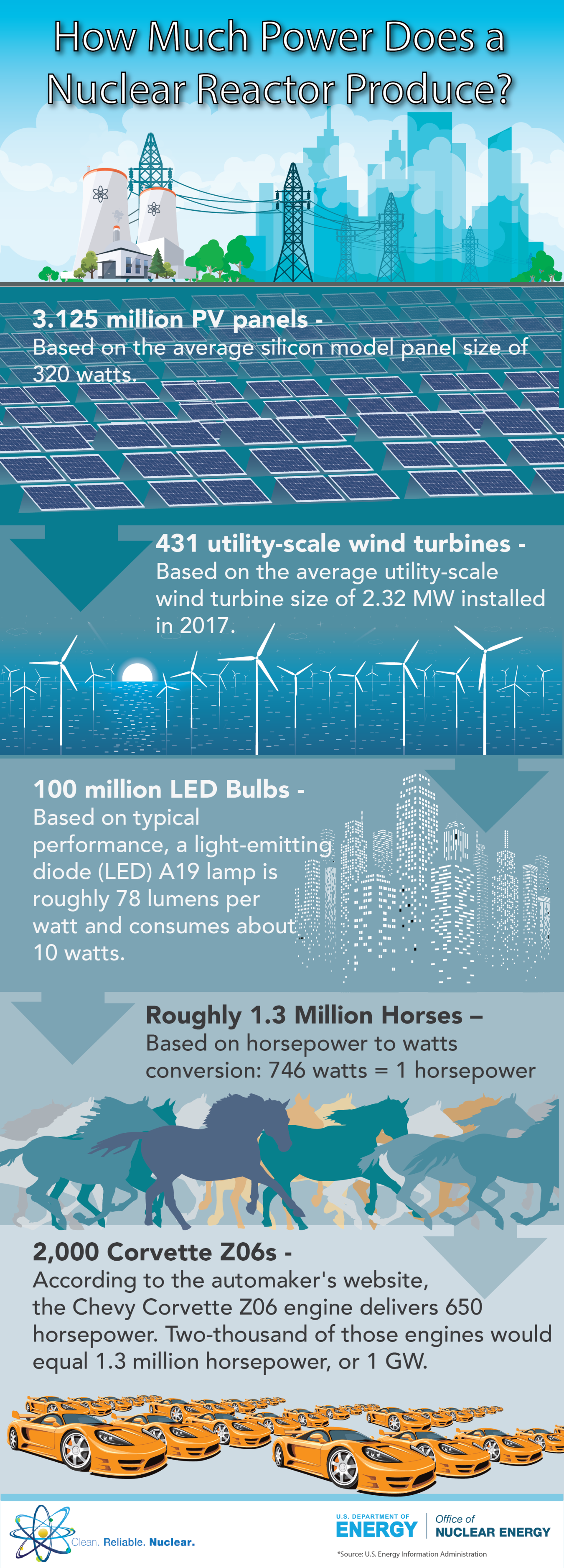
Alright, let's get down to brass tacks. We're talking about around 20% of the United States' electricity coming from nuclear power plants. Yeah, you read that right. One-fifth of the juice that keeps your refrigerator humming and your Netflix streaming is the product of carefully controlled, miniature atomic explosions. Think about that next time you're microwaving popcorn. It's basically fueled by stars...sort of.
Must Read
Now, 20% might not sound like a massive amount, but consider this: nuclear energy is a powerhouse. It’s like the bodybuilder of electricity generation. Wind and solar are great (the yoga instructors of the grid!), but they can be a bit…temperamental. Nuclear, on the other hand, is pretty reliable, chugging away 24/7, rain or shine, unless, you know, something goes drastically wrong (we're looking at you, Chernobyl and Fukushima!).
To put that 20% in perspective, it's more than all the renewable energy sources combined, excluding hydro. So, wind, solar, geothermal, biomass, the whole gang – nuclear is still ahead. Shocking, right? (Pun intended. I'm here all week.)

Where are all these Atomic Coffee Makers?
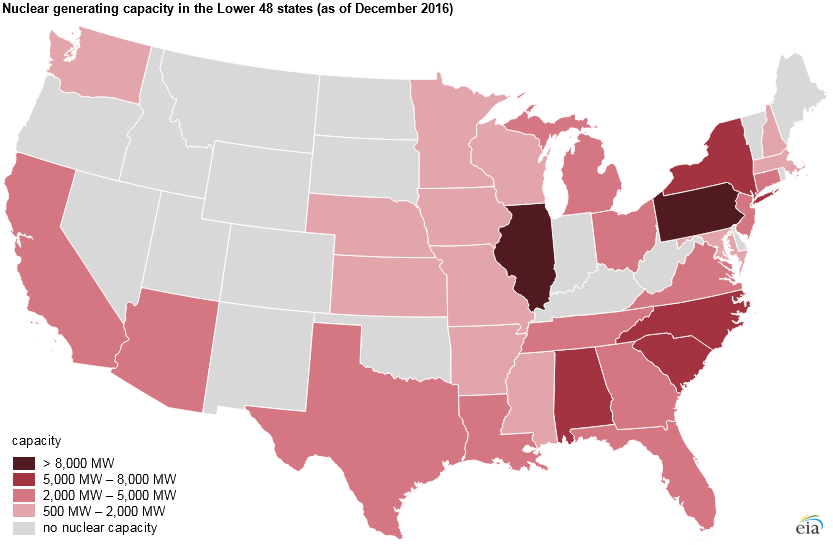
So, where does all this nuclear goodness come from? Well, the United States currently has about 93 operating nuclear reactors spread across 30 states. Think of them as giant, heavily guarded tea kettles, except instead of boiling water with fire, they're using the awesome power of nuclear fission. And instead of making tea, they're powering entire cities. Slightly more impressive than your average cuppa.
These reactors are like the grandparents of the energy grid. They've been around for a while, churning out electricity like it's going out of style. In fact, the average age of a nuclear reactor in the US is something like 40 years! That's practically ancient in tech terms. But hey, they're still kicking! They're the Keith Richards of power plants.
The Good, the Bad, and the Radioactive
Of course, no discussion about nuclear energy is complete without addressing the elephant in the room: nuclear waste. It's the energy source's dirty little secret, the embarrassing uncle you try to avoid at family gatherings. Dealing with the spent nuclear fuel is a huge challenge, and there's no easy solution in sight. It's like having a winning lottery ticket that you can't cash. It's valuable, but also a massive headache.
However, nuclear power also has some serious advantages. First off, it's a low-carbon source of energy. No burning fossil fuels means no greenhouse gas emissions, which is a big win for the planet. Think of it as the environmentally conscious bodybuilder, pumping iron without contributing to climate change. Secondly, it provides a reliable baseload power, meaning it’s always on, unlike solar and wind which depend on the weather.

And finally, a fun fact: Did you know that bananas are slightly radioactive? Seriously! They contain potassium-40, a naturally occurring radioactive isotope. So, next time you eat a banana, you're technically engaging in a small amount of nuclear consumption. Mind. Blown.
The Future is...Atomic?
So, what does the future hold for nuclear energy in the United States? That's a million-dollar question (or maybe a multi-billion-dollar question, given the costs involved). Some argue that it's a crucial part of a clean energy future, a bridge to a fully renewable grid. Others see it as a dangerous relic of the past, a technology that's too risky and too expensive.
New technologies, like small modular reactors (SMRs), are being developed, promising to be safer, more efficient, and cheaper than traditional reactors. These are like the mini-vans of nuclear power – smaller, more manageable, and hopefully less prone to catastrophic meltdowns. The hope is that they could revitalize the industry and make nuclear power more accessible and palatable to the public.
Ultimately, the future of nuclear energy in the US is uncertain. But one thing's for sure: it's a powerful and complex technology with the potential to play a significant role in shaping our energy landscape. Just try not to think about the radioactive waste too much while you're enjoying your next Netflix binge.
Now, if you'll excuse me, I'm going to go eat a banana. For science!