
How Much Is A Kw Of Power
Ever stared at your electricity bill, a little bead of sweat forming, and thought, "What on earth is a kW, and why is it costing me so much?!" You're not alone, my friend. For many of us, the language of power bills feels like ancient hieroglyphs. But guess what? It’s actually pretty straightforward, and once you get it, you might just unlock a secret superpower: understanding your energy use!
Let's ditch the confusion and dive into the wonderful world of watts, kilowatts, and kilowatt-hours. Don’t worry, there won’t be a pop quiz, just some friendly insights that might just make you smile (and save a few pennies!).
What in the world is a kW, anyway?
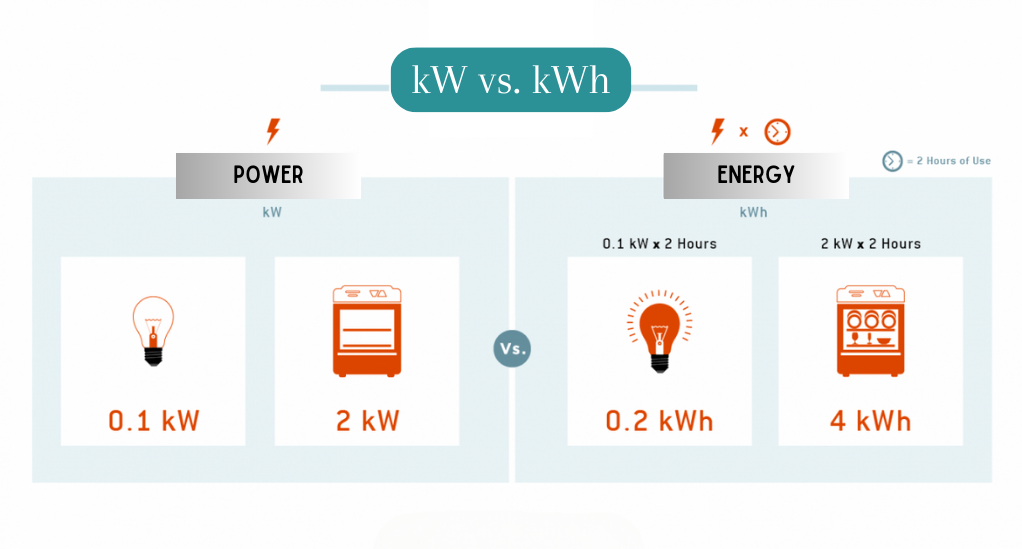
Okay, let's start with the basics. A "watt" (W) is a unit of power. Think of it like this: if you’re lifting weights, a watt is a measure of how strong you are, or how much "oomph" an appliance has at any given moment. A "kilowatt" (kW) is just a bigger watt, specifically 1,000 watts. The "kilo" part just means a thousand, like a kilometer is 1,000 meters. Simple, right?
Must Read
Imagine your kettle. When it’s furiously boiling water for your morning tea, it might be using, say, 2,000 watts of power. That’s 2 kW. Your hairdryer, blasting hot air, might be 1.5 kW. Your little bedside lamp? Probably only 0.06 kW (or 60 watts). So, a kW tells you how much power something uses right now if it were running at full tilt.
It’s like knowing the horsepower of a car. A sports car has a lot of horsepower (kW), while a golf cart has a lot less. Both move, but one uses more grunt! This measure tells you how powerful an appliance is.
Ah, but the bill charges you for kWh!
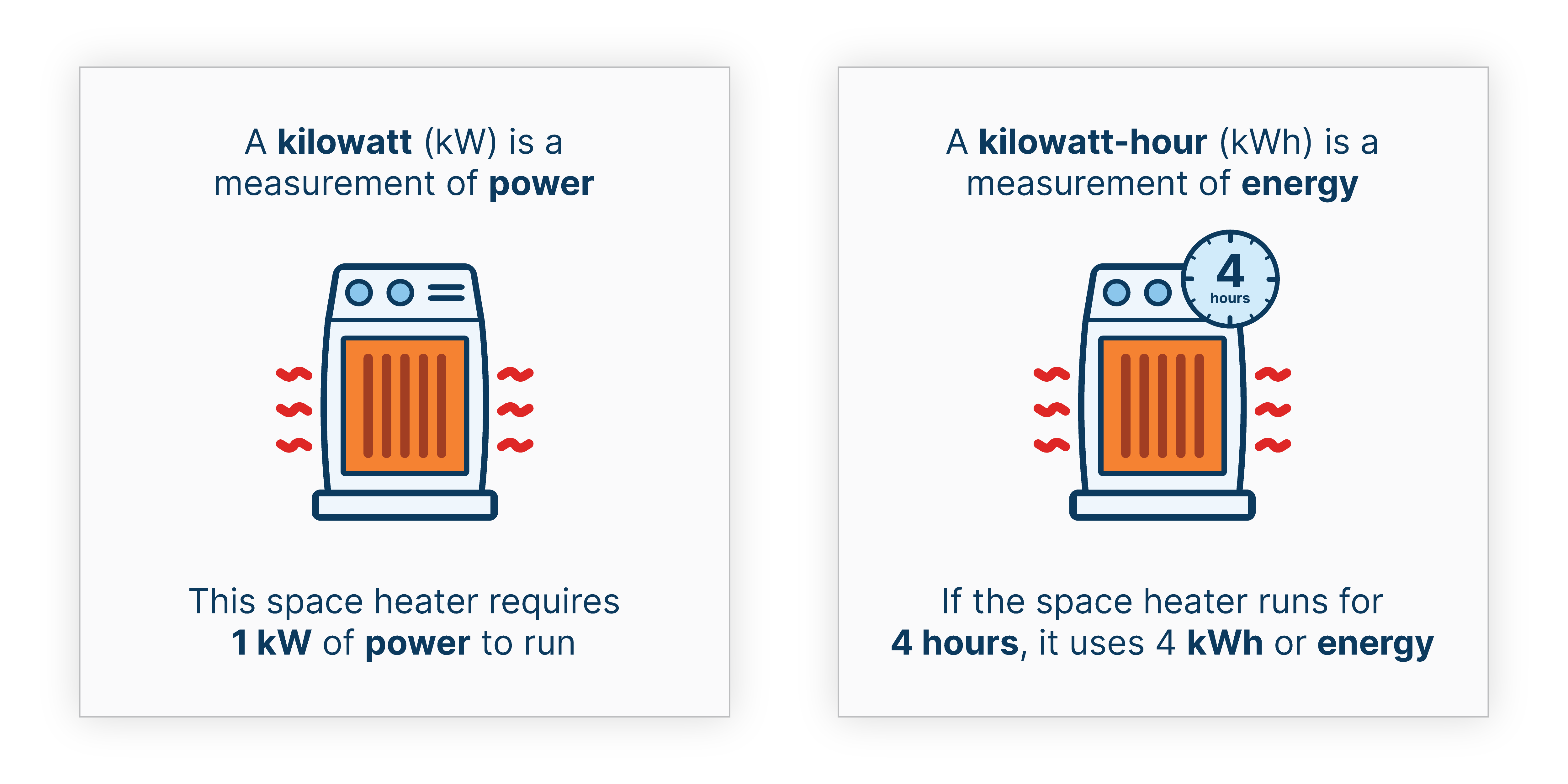
Here’s where it gets interesting, and where your wallet comes into play. While a kW measures power, your electricity bill actually charges you for something called a "kilowatt-hour" (kWh). Don't let the extra "h" scare you; it just means "per hour."
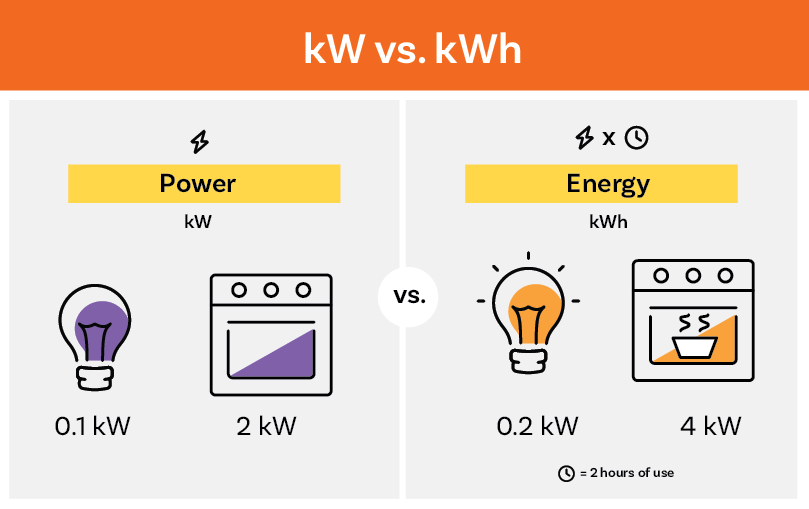
So, a kWh is a measure of energy. It’s how much power (kW) an appliance uses over a certain amount of time (h). Think of it like this: if a kW is how fast your car can go, a kWh is how far you actually drove that car for an hour. Or, if a kW is how much water you can pour at any moment, a kWh is how much water you’ve poured over an hour. It’s the consumption.
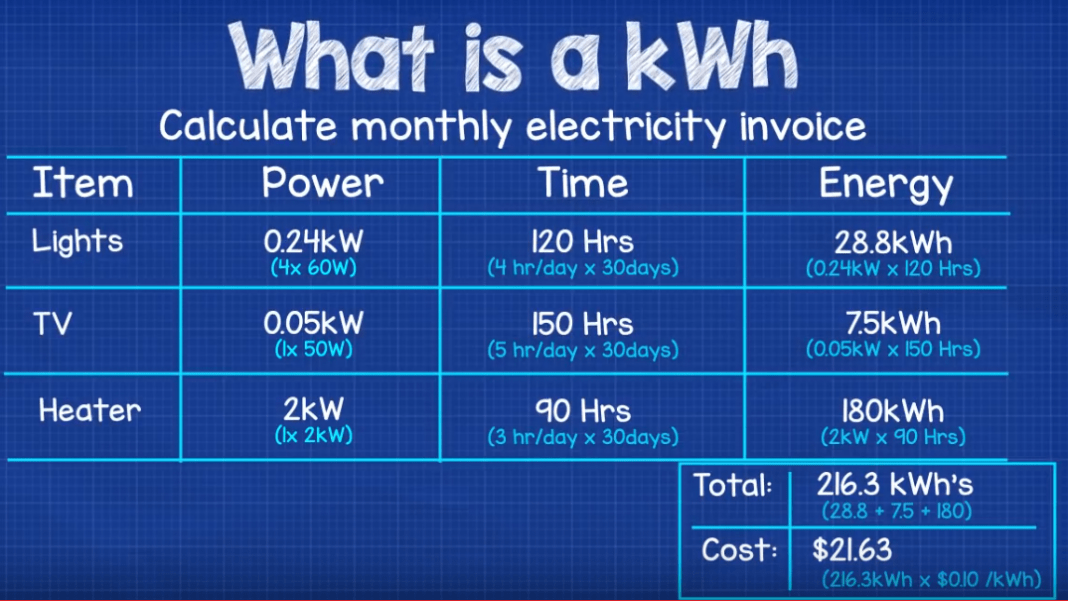
This is the magic number. When your electricity company says they charge, for example, "25 cents per kWh," they're saying for every kilowatt-hour of energy your household uses, you'll pay 25 cents. It's the currency of your consumption, the little price tag on every unit of energy you use.
So, why should you care about this K-word business?
Because understanding kWh is like having a secret decoder ring for your electricity bill! It empowers you to see exactly where your money is going and, more importantly, where you might be able to save some. Knowledge is power, and in this case, it literally means understanding your power!
Let's play detective with your appliances!
Grab a quick mental note of our fictional 25 cents per kWh rate. Now, let’s look at a few common culprits:
-
The Hairdryer Hero: Let's say your hairdryer is 1.5 kW. If you blast it for a speedy 10 minutes (which is 1/6th of an hour), you've used 1.5 kW * (10/60) h = 0.25 kWh. At 25 cents/kWh, that’s about 6 cents. Not bad for a good hair day, right?
-
The Kettle King: Your powerful 2 kW kettle, boiling water for two minutes (which is 1/30th of an hour) uses 2 kW * (2/60) h = 0.067 kWh. That’s about 1.7 cents per boil. My friend Barry loves to make just one cup of tea but fills his massive kettle to the brim. If he boils it five times a day, that adds up! Imagine if he only boiled the water he needed.
-
The Oven Overlord: Your oven, baking a delicious cake, might be running at 2.5 kW. If it’s on for an hour, that’s a full 2.5 kWh! At 25 cents/kWh, that's 62.5 cents for one hour of baking. A little more significant, eh?
.png)
What is a kWh? kW and kilowatt hour electricity costs explained -
The TV Time-waster: Most modern TVs are quite efficient, maybe around 0.1 kW (100 watts). If you binge-watch your favorite show for 3 hours, that's 0.1 kW * 3 h = 0.3 kWh. Only about 7.5 cents. Phew! Binge-watching guilt slightly reduced.
See how it works? The power (kW) and the time you use it for really dictate the energy (kWh) you consume, and thus, what you pay.
Small changes, big smiles (and savings)!
Now that you're a kWh wizard, you can start making smarter choices:
-
Unplug the "Vampires": Even when off, many electronics (like phone chargers, TVs, and gaming consoles) still draw a tiny amount of power – "phantom load" or "vampire drain." It's not a lot per item, but over a month, for many devices, it adds up to sneaky kWhs!
Kilowatt Hours kWh Explained - The Engineering Mindset -
LEDs are Your Besties: Swapping old incandescent bulbs for LED ones is one of the quickest wins. An old 60-watt bulb (0.06 kW) might run for 5 hours for 0.3 kWh. An equivalent LED uses maybe 8 watts (0.008 kW), using only 0.04 kWh for the same 5 hours! Huge difference!
-
Be Mindful of Hot Stuff: Appliances that heat (like kettles, ovens, dryers, and electric water heaters) tend to be the biggest energy guzzlers. Think before you boil a full kettle for one cup, or run a half-empty dishwasher. My friend Lisa started hanging her laundry outside on sunny days, and her dryer use (and bill!) plummeted.
-
Temperature Tango: Adjusting your thermostat by even a degree or two can make a surprising difference over time, especially with heating and cooling being big energy users.
So, the next time your electricity bill arrives, take a moment to look at that kWh number. You'll know exactly what it means and how it’s calculated. It's not just a number anymore; it's a reflection of your daily choices, and you now have the power to influence it. Go forth and conquer your energy bill!