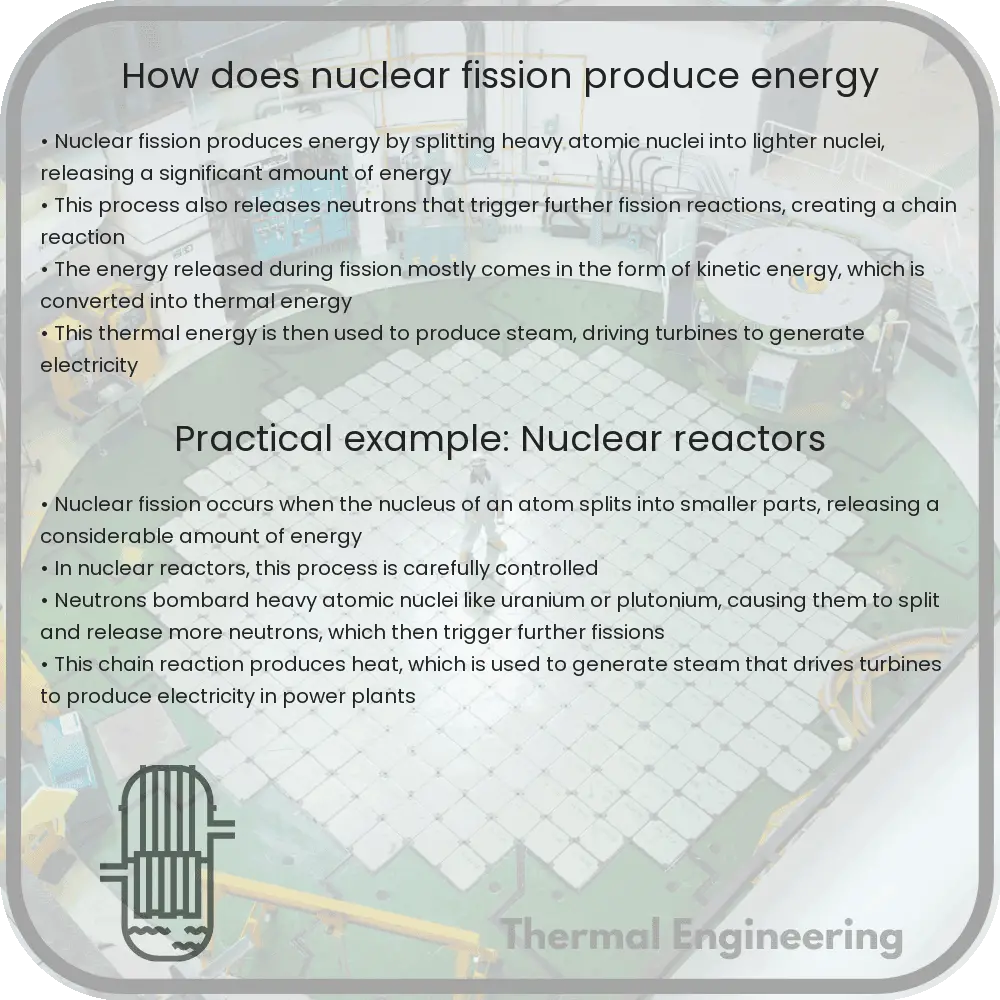
How Much Energy Does Nuclear Fission Produce
Ever wonder about the universe's ultimate power snack? Like, what's the most bang-for-your-buck energy source out there? Forget your triple-shot espresso; we're talking about something far, far more intense. We're diving into the ridiculously cool world of nuclear fission, and trust me, it’s a total blast (in a good, controlled way, of course!).
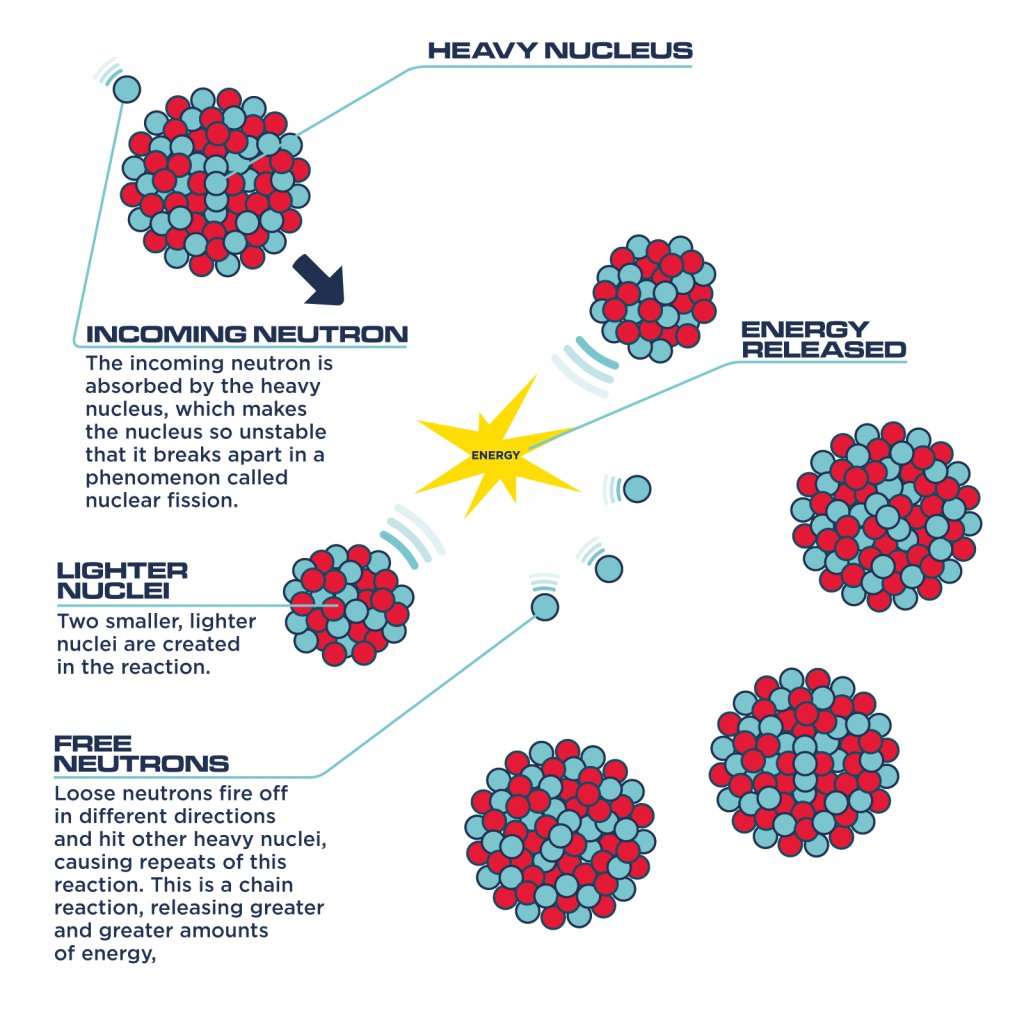
So, what even is nuclear fission? Imagine you've got a really big, slightly grumpy atom, usually uranium or plutonium. Now, imagine you give it a tiny poke with a neutron. What happens? BLAM! Not like an explosion, more like a high-five that breaks the atom into two smaller atoms, and guess what else pops out? More neutrons, and a truly mind-boggling amount of energy. It's like unzipping a cosmic jacket and finding a treasure chest inside!
The Tiny Pellet That Could
Here’s where it gets truly wild. How much energy are we actually talking about? Picture this: one small pellet of uranium fuel, no bigger than the tip of your pinky finger. Got it? Now, imagine how much coal, oil, or natural gas you'd need to create the same amount of electricity. Are you ready?
Must Read
That single, unassuming uranium pellet can generate as much energy as 17,000 cubic feet of natural gas. Or 1,780 pounds of coal, which is like a small car made purely of fuel. Or even 149 gallons of oil, a drum that would tower over you! Let that sink in. A piece of material you could hold between two fingers vs. a literal mountain of coal or a small swimming pool of oil. It's like comparing a hamster to a blue whale in terms of energetic punch. Absolutely bonkers, right?
Einstein's Superstar Equation: E=mc²
Why such a colossal difference? Blame (or rather, praise!) the genius, curly-haired dude, Albert Einstein. His most famous equation, E=mc², isn't just a cool tattoo idea; it’s the secret sauce. It basically tells us that energy (E) and mass (m) are two sides of the same coin, with 'c' (the speed of light) being the cosmic exchange rate. And that exchange rate? It's huge, literally squared! So even a whisper of mass can shout a roar of energy.
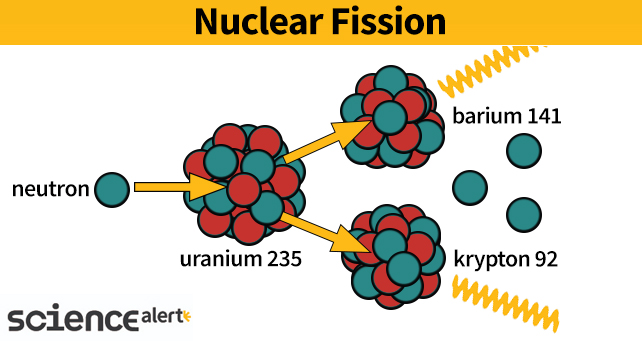
When an atom splits in fission, a tiny, tiny fraction of its mass actually vanishes. Poof! Gone. But where does it go? It gets converted directly into pure, unadulterated energy. Even the smallest loss of mass unleashes a spectacular flood of energy because 'c' squared is an astronomically large number. It’s the ultimate magic trick where mass turns into light and heat.
Powering Your Life, Quietly
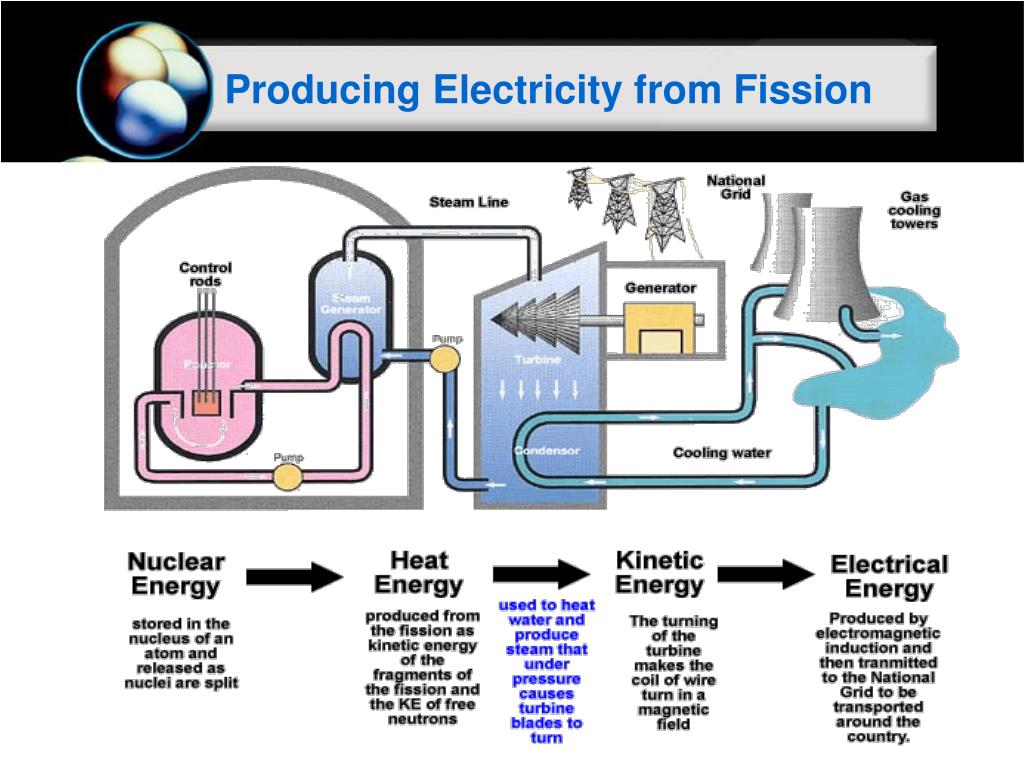
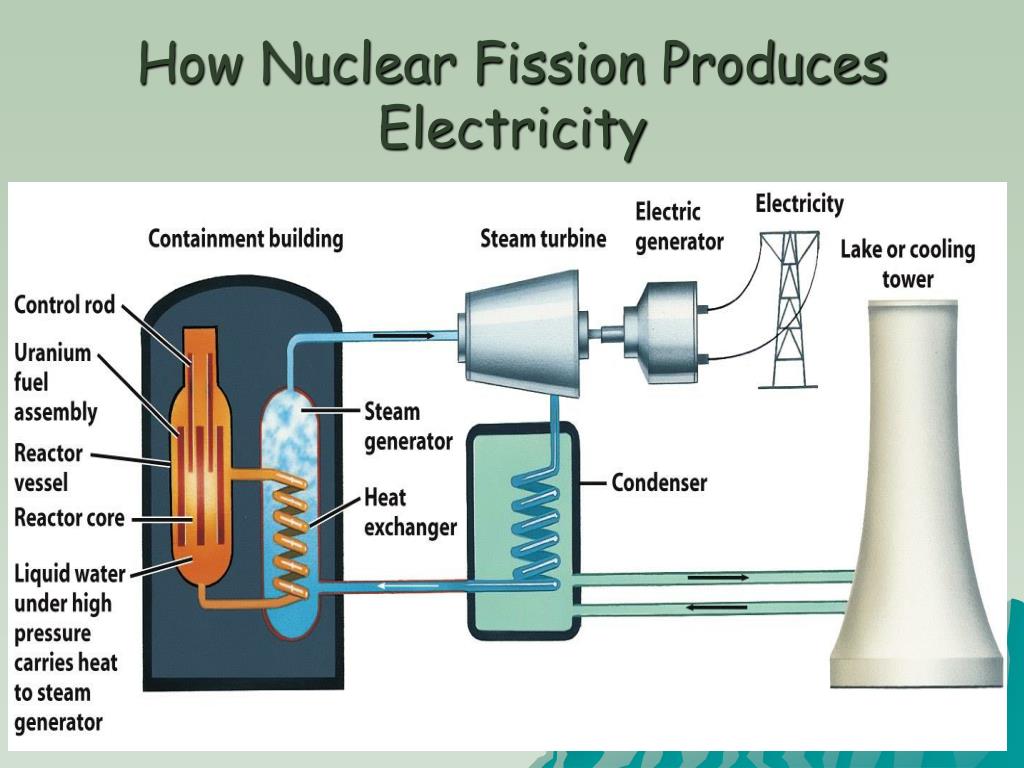
So, where does all this awesome energy go? Mostly into making electricity, of course! Nuclear power plants use this controlled fission to heat water, create steam, and spin turbines, just like coal or gas plants, but with zero carbon emissions during operation. It's like having a miniature, super-efficient sun trapped in a reactor core, quietly keeping your lights on and your Netflix streaming.
And it's not just cities. Ever heard of nuclear submarines? These underwater behemoths can cruise the oceans for decades without needing to refuel. DECADES! Imagine filling up your car once and driving it for fifty years, maybe even passing it down to your grandkids, all on one tank. That’s the kind of long-lasting, relentless power we're talking about. It’s absolutely mind-bending.
Is It a Giant Explosion? Nope!
Now, hold up. When you hear "nuclear," sometimes the brain goes straight to "bomb." But nuclear fission in a power plant is about as far from a bomb as a gentle campfire is from a raging forest fire. It's a precisely engineered, carefully controlled chain reaction. Think of it less as an uncontrolled explosion and more like a very, very efficient, very hot teapot. We don't want a sudden burst; we want a steady, reliable simmer.
Even the "waste" part, which often gets a bad rap, is a fascinating detail. The amount of high-level waste produced by nuclear power is incredibly small compared to other energy sources. All the used fuel from every nuclear power plant in the U.S. over the last 60 years would fit on a single football field, stacked about 20 feet high. It’s tiny, concentrated, and very carefully managed.
The Bottom Line: Pure Energy Magic!
So, the next time you flip a light switch, take a moment to appreciate the humble atom. The amount of energy locked within its core is truly staggering. Nuclear fission isn't just a scientific concept; it's a testament to the incredible forces at play in the universe, harnessed (very carefully!) by human ingenuity.
It's quirky, it's powerful, and it's a fantastic reminder that sometimes the smallest things hold the biggest secrets. And honestly, isn't that just a super fun thing to ponder? Go tell a friend about the magic pinky-finger pellet; they'll thank you for the mind-blown moment!