How Much Energy Does A Fan Use

Ever find yourself staring at a whirring fan on a sweltering day, wondering about its secret life? We plug them in, they do their breezy thing, and we mostly just enjoy the relief. But have you ever paused to think, "Hey, how much energy is this little helper actually using?" It's a super valid question, and honestly, the answer is pretty fascinating!
In our modern world, we're surrounded by gadgets that guzzle power, from our giant TVs to our perpetually charging phones. So, it's natural to assume that anything that moves air with such gusto must be, well, a bit of an energy hog, right? Prepare to be pleasantly surprised!
The Big Reveal: Fans are Energy Superheroes!
Okay, let's cut to the chase. How much juice does your typical fan really suck? The truth is, not much at all! Compared to many other household appliances, fans are incredibly efficient. They're like the quiet, humble heroes of your home, working hard without demanding a huge energy paycheck.
Must Read
To give you a clearer picture, let's talk numbers, but don't worry, we're keeping it casual. Most common household fans operate on a relatively low wattage. Think about it this way:
- A small desk fan might only use around 10-25 watts. That's tiny!
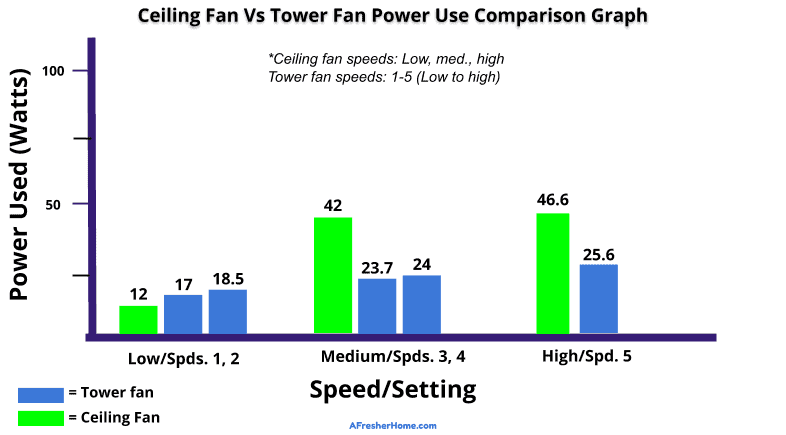
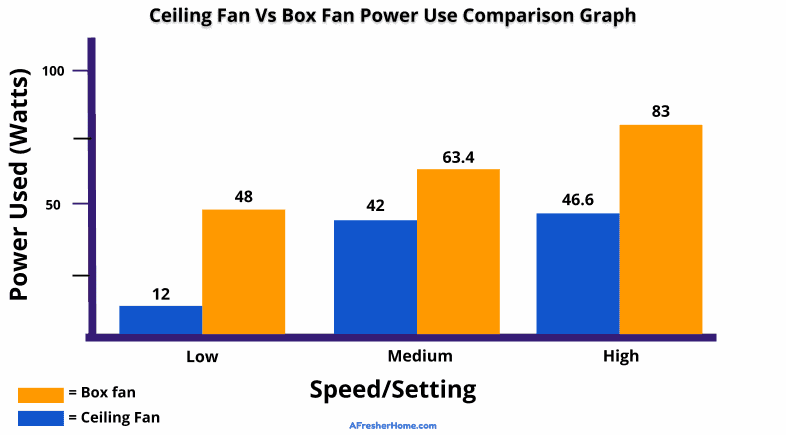
- A standard pedestal or box fan, the kind you probably have tucked away in a closet, typically runs between 50-100 watts.
- Even a ceiling fan, with its larger blades and more powerful motor, often stays within the 15-75 watt range, depending on its speed setting.
Fun Comparisons: What Does That Even Mean?
So, 50 watts. Is that a lot? Not really! Let's put it into perspective with some fun comparisons:

- Your average incandescent light bulb, the old-school kind, can use 60-100 watts. So, in many cases, running a medium-sized fan uses less energy than a single light bulb!
- An energy-efficient LED bulb might only use 8-12 watts. So, a small desk fan is roughly equivalent to running two to three LED bulbs.
- Consider charging your laptop for an hour or two. That's likely using similar or even more power than your fan.
Still not convinced? Think about the king of cooling: air conditioning. A central AC unit can easily consume thousands of watts – we're talking 3,000 to 5,000 watts or even more! Suddenly, your little 75-watt fan looks like an absolute minimalist, doesn't it?
Why So Efficient? The Fan's Secret Power!
Why are fans such energy sippers? It comes down to their fundamental purpose. A fan doesn't actually cool the air in a room. Read that again! It doesn't use refrigerants or complex cooling cycles like an air conditioner. Instead, a fan simply moves air.
When that air moves across your skin, it helps evaporate sweat, which is what makes you feel cooler. The energy it uses goes into spinning a motor, overcoming friction, and pushing those air molecules around. It's a much simpler, less energy-intensive job than changing the actual temperature of all the air in a space.
The Cost-Effective Cool Down
So, what does this mean for your wallet? Good news! Running a fan is incredibly cheap. Let's do a quick, rough calculation:
If you run a 75-watt fan for 24 hours straight, that's 75 watts x 24 hours = 1,800 watt-hours, or 1.8 kilowatt-hours (kWh). If your electricity costs, say, $0.15 per kWh, then running that fan all day and night would cost you a grand total of about $0.27!
That's less than a single coffee for a full day of breezy comfort! Over a month, that's only around $8. Compare that to the hundreds of dollars an AC unit can add to your bill in the summer, and you really start to appreciate the humble fan.
Beyond the Bill: The Eco-Friendly Choice
It's not just about saving money; it's also about being kind to our planet. Because fans use so little energy, their carbon footprint is significantly smaller than that of air conditioning. Opting for a fan when the temperature isn't insanely high, or using one in conjunction with AC (to allow you to set the AC thermostat a few degrees higher), is a wonderful way to reduce your environmental impact.
So, next time you feel a gentle breeze from your desk fan or watch the slow, comforting rotation of your ceiling fan, give it a little nod of appreciation. These simple machines are truly wonders of efficiency, providing comfort and relief without demanding much in return. They're a brilliant reminder that sometimes, the simplest solutions are the most effective, and the most energy-conscious, too!