
How Much Electricity Does A Refrigerator Use Per Month
Let's talk about the unsung hero of your kitchen: the refrigerator. It stands there, humming softly, day in and day out, keeping our precious snacks and leftovers safe. But how much does this constant coolness actually cost us?
The Refrigerator's Appetite: A Monthly Bill Deep Dive
Figuring out a refrigerator's electricity consumption isn't rocket science, but it's more like figuring out how many cookies your toddler sneaks in a day – a bit of detective work is required. We are going to figure out, roughly, how much juice this chilly box is sucking from the wall.
The Wattage Wonders
First, let’s peek behind the curtain and understand the basics. Every refrigerator has a wattage rating. This magic number tells you how much electricity it uses when it's actively cooling.
Must Read
You can usually find this number on a sticker inside the fridge, often near the lightbulb or on the back. Think of it like finding the secret ingredient on your grandma’s famous pie recipe. Consider this wattage to be the key to unraveling the mystery of monthly energy consumption.
The Daily Grind (and Chill)
Now, refrigerators don't run full-throttle 24/7. Imagine if they did! Everything would be frozen solid, and your electricity bill would resemble the national debt. Thankfully, they cycle on and off, maintaining the perfect temperature.
A refrigerator typically runs for about 8-12 hours a day. This depends on factors like how often you open the door (especially if you have kids!), the room temperature, and how well-sealed the fridge is. Each time you open the door, warm air rushes in, triggering the compressor to kick on and work harder.
Crunching the Numbers (Without a Headache)
Here's a simple way to estimate your refrigerator's daily energy use. Multiply the wattage by the number of hours it runs per day. Then, divide by 1000 to convert it to kilowatt-hours (kWh). Don't worry, we're almost done with the math!
So, if your fridge is rated at 150 watts and runs for 10 hours a day, the calculation looks like this: (150 watts x 10 hours) / 1000 = 1.5 kWh per day. It's like baking a simple cake – a few ingredients and you're golden.

Monthly Mayhem (Or Not!)
To get the monthly usage, simply multiply the daily kWh by the number of days in the month. So, 1.5 kWh per day x 30 days = 45 kWh per month. We did it! We've cracked the code.
Now, let's talk about the cost. Check your electricity bill to find out how much you pay per kWh. Multiply your refrigerator's monthly kWh usage by that rate to get your estimated monthly cost. For example, if you pay $0.15 per kWh, your refrigerator costs you approximately 45 kWh x $0.15 = $6.75 per month. Not bad, eh?
Factors That Fridge Up Your Bill
Okay, so we've got a rough estimate, but a few sneaky things can influence your refrigerator's energy consumption. Think of them as little gremlins trying to sabotage your energy efficiency.
The Age-Old Question (Of Your Fridge)
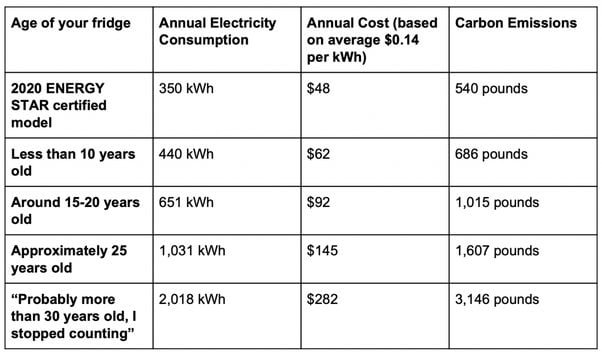
Older refrigerators are notorious energy hogs. They lack the efficient compressors and insulation of modern models. Consider upgrading to an Energy Star certified refrigerator. They're like the eco-friendly superheroes of the appliance world. A new energy efficient refrigerator can save money in the long run.
Sealing the Deal (Literally)
A worn-out door seal lets cold air escape, forcing the refrigerator to work harder. Check the seal regularly for cracks or gaps. A simple test is to close a piece of paper in the door. If you can easily pull it out, the seal needs attention. Think of it as giving your fridge a cozy hug to keep all the cold air inside.

Temperature Tango
Setting your refrigerator too cold wastes energy. The ideal temperature is between 37°F and 40°F (3°C and 4°C). Using a thermometer will help you make sure the thermostat is set correctly. Your lettuce will thank you, and your wallet will too!
The Overstuffing Situation
Believe it or not, an overly full refrigerator can actually be less efficient. It restricts airflow, making it harder for the fridge to maintain a consistent temperature. Think of it as trying to squeeze into your skinny jeans after Thanksgiving dinner. Space is needed!
Location, Location, Location
Placing your refrigerator next to a heat source, like an oven or direct sunlight, makes it work harder. Keep it away from heat sources and give it some breathing room. Imagine it as finding the perfect spot on the beach – not too hot, not too crowded, just right.
Beyond the Numbers: A Refrigerator Love Story
Okay, so we've dived into the data and discovered the secrets of refrigerator energy consumption. But let's not forget the emotional connection we have with this trusty appliance.
The Midnight Snack Sanctuary
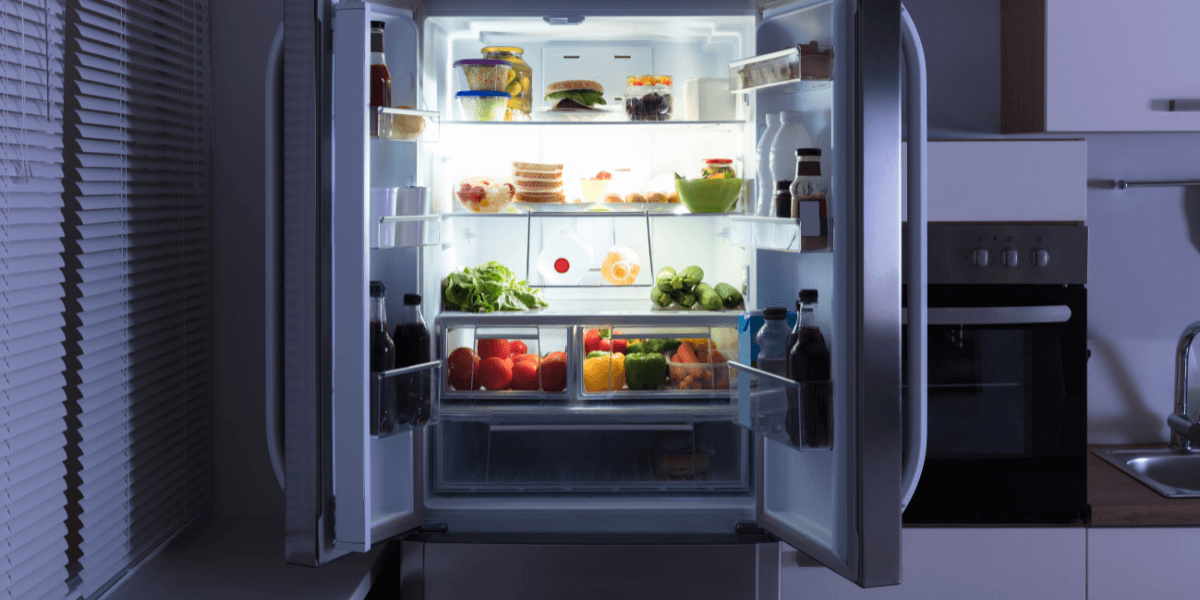
Let's be real, the refrigerator is the destination for midnight snacks. That cool, comforting glow when you open the door, revealing a world of possibilities. It's a safe haven for cravings and a source of culinary inspiration.
The Leftover Guardian
The refrigerator faithfully preserves our leftovers. Think about it: the meticulously wrapped piece of birthday cake, the half-eaten casserole from Grandma, the carefully portioned lunches for the week. It's a monument to meal planning and resourcefulness.
The Family Fridge Door Gallery
Many refrigerators are decorated with family photos, children’s artwork, and magnets collected from vacations. It becomes a visual representation of our lives, a constantly evolving gallery of memories. It's a place where we celebrate milestones, share dreams, and simply connect with each other.
Tips and Tricks for a Thrifty Fridge
Want to keep your refrigerator running efficiently and save some money in the process? Here are a few simple tricks to try. These are little life-hacks to show your refrigerator some love and appreciation.
Defrost Like a Boss
If you have an older refrigerator without automatic defrost, manually defrost it regularly. Excess ice buildup makes the fridge work harder. Think of it as giving your fridge a spa day to keep it feeling refreshed and revitalized.
Keep it Clean (Inside and Out)
Clean the refrigerator coils regularly to improve efficiency. Dust and debris can accumulate, making the refrigerator work harder to dissipate heat. It's like giving your fridge a spring cleaning, leaving it sparkling and efficient.

Plan Your Attacks (On the Fridge)
Minimize the amount of time the door is open. Decide what you need before you open it, and grab everything at once. Less door opening equals less energy wasted! Think of it as a strategic raid on the pantry, with a clear mission and swift execution.
The Water Jug Trick
If your refrigerator is not usually full, filling a few empty water jugs and placing them inside can help maintain a more stable temperature. The water helps to absorb temperature fluctuations. Imagine it as giving your fridge a little extra help staying cool and calm.
Consider a Smart Plug
For those who want to get really serious about monitoring energy usage, consider using a smart plug. These devices track how much electricity your refrigerator is using. This will help you identify opportunities for improvement. It's like having a personal energy advisor for your kitchen.
The Cool Conclusion
So, there you have it! The refrigerator: a humble appliance with a big job. By understanding its energy consumption and implementing a few simple tips, you can keep your food fresh, your bill low, and your refrigerator happy. You can even have a better appreciation for this quiet giant in the corner of your kitchen.
Remember, every little bit helps when it comes to conserving energy and saving money. And who knows, maybe you'll even start to see your refrigerator in a whole new light, as more than just a cold box, but as a valuable part of your home and family. Give your fridge a pat on the side next time you see it and let it know you appreciate it!