
How Much Does It Cost To Charge Electric Vehicles

So, you're thinking about joining the electric car revolution? Awesome! Maybe you're tired of those gas station visits? Or maybe you just love the idea of zipping around silently. But a big question probably looms: How much does it actually cost to charge one of these electric beauties?
Let's dive in and uncover the secrets of EV charging costs. Get ready for some electrifying insights!
Home Sweet Charging Station
Imagine this: You pull into your garage, plug in your car, and wake up to a fully charged battery. Sounds pretty dreamy, right? Charging at home is usually the cheapest and most convenient option. Think of it like charging your phone, but on a slightly larger scale. Okay, much larger.
Must Read
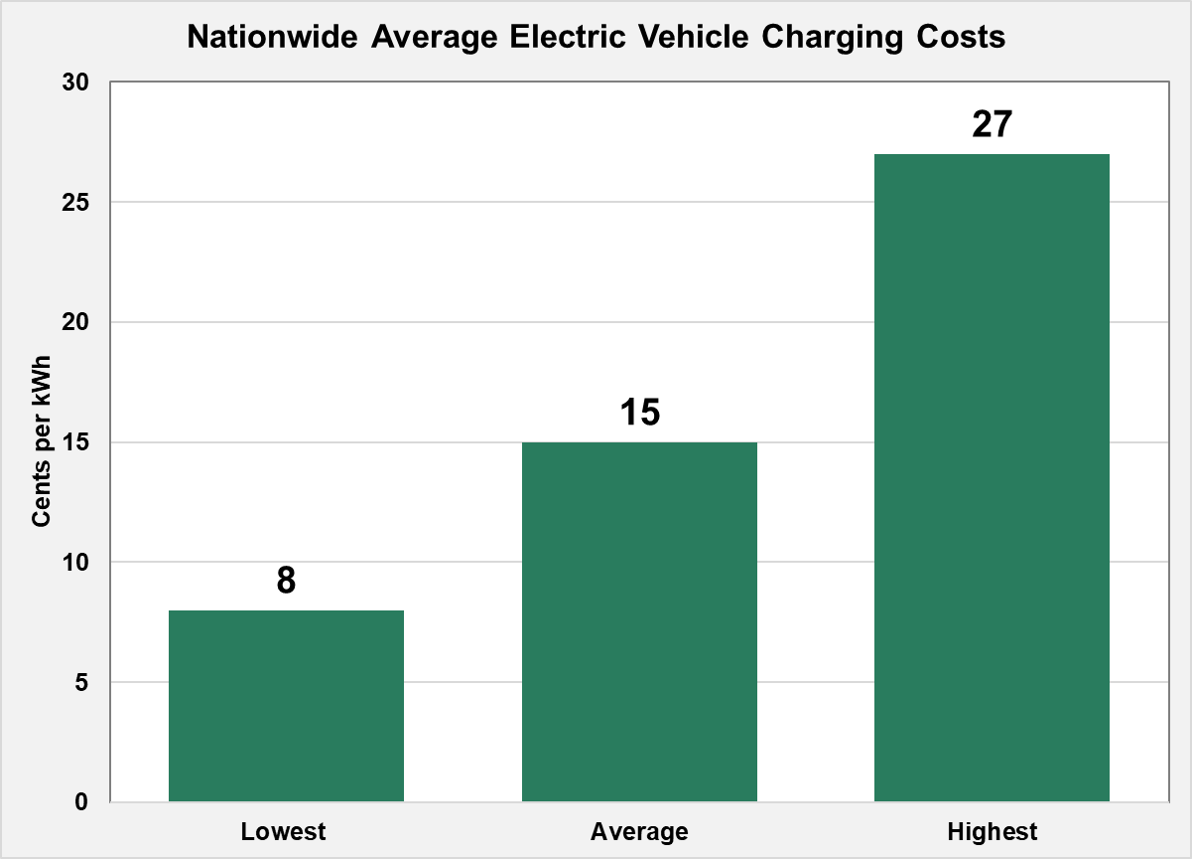
The biggest factor in home charging cost is your electricity rate. Check your electricity bill. You'll see a price per kilowatt-hour (kWh). This is the magic number we need. Prices change by area, so make sure you find your local rate!
Let's say your rate is $0.20 per kWh. A typical EV battery might need 60 kWh to fully charge. That means a full charge at home would cost you around $12! Compare that to filling up a gas tank. Electric is usually a winner!
Many electric companies offer special off-peak rates. This means charging at night is cheaper. It's like a happy hour for your car! Imagine saving even more money while you sleep. It's a win-win.
Public Charging Adventures
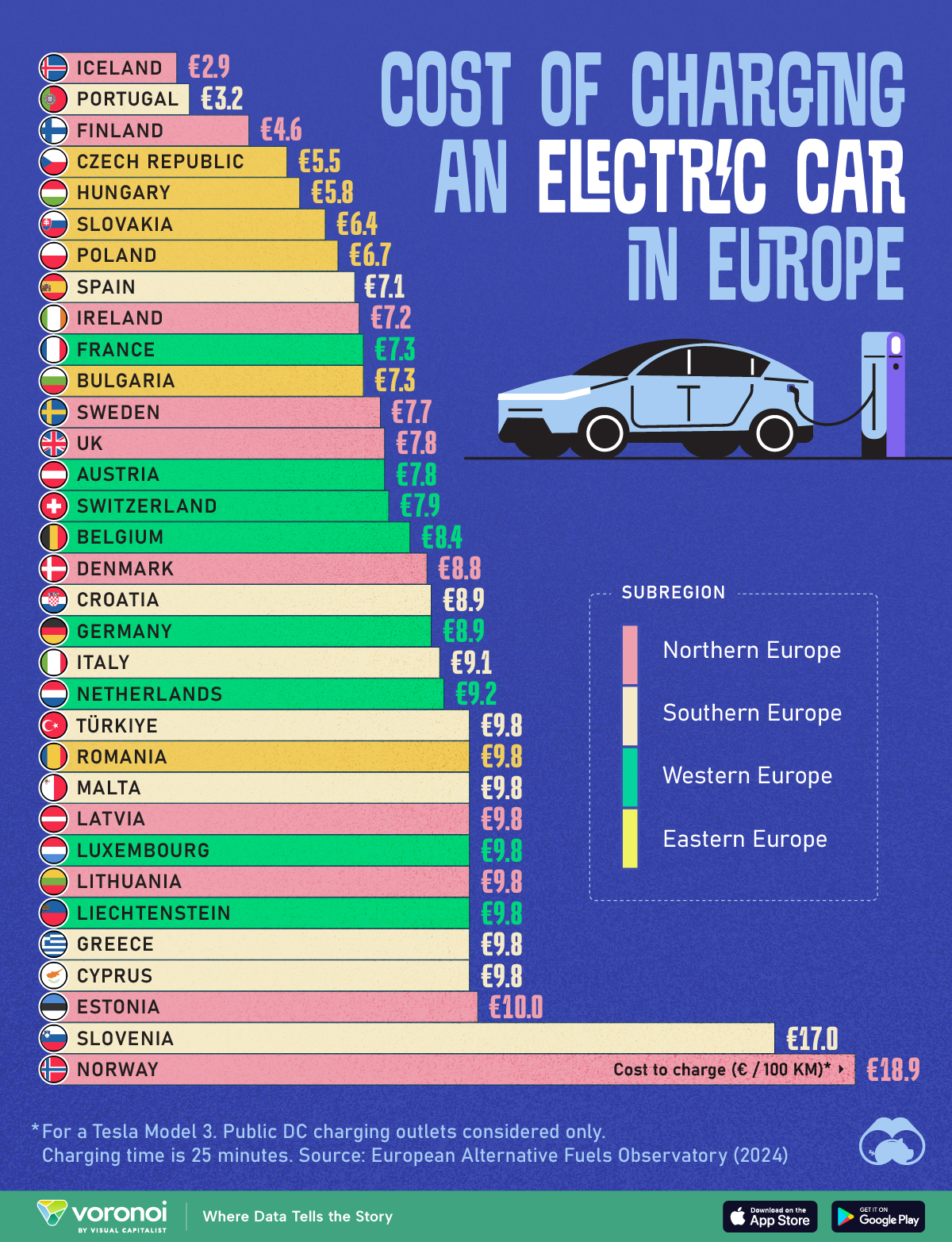
Sometimes, you need a jolt while you're out and about. That's where public charging stations come in. These are like gas stations, but for electrons! They're popping up everywhere these days - shopping malls, grocery stores, even rest stops.
Public charging costs vary. There are typically two types of charging: Level 2 and DC fast charging. Level 2 is slower, like charging at home, but faster than a standard wall outlet. DC fast charging is super speedy. This adds significant range in a short amount of time.
Level 2 charging costs can range from free (yes, free!) to a few dollars per hour. DC fast charging usually costs more per kWh than home charging. Think of it as paying for the convenience of speed. Rates are usually based on the kWh you use, or sometimes per minute.
Keep an eye out for different charging networks like ChargePoint, Electrify America, and Tesla Supercharger. Each network has its own pricing structure. Some may require membership fees.
The Amazing Math Behind It All
Want to get a little nerdy with the numbers? Let's break down how to calculate charging costs.
First, find out your car's battery capacity (in kWh). Then, figure out your local electricity rate (in dollars per kWh). Multiply them together to estimate the cost of a full charge at home.

Example: 75 kWh battery * $0.15/kWh = $11.25 for a full charge.
To figure out the cost per mile, divide the cost of a full charge by your car's range. For example, if your car gets 300 miles on a full charge, your cost per mile would be $11.25 / 300 miles = $0.0375 per mile. Not bad, right?
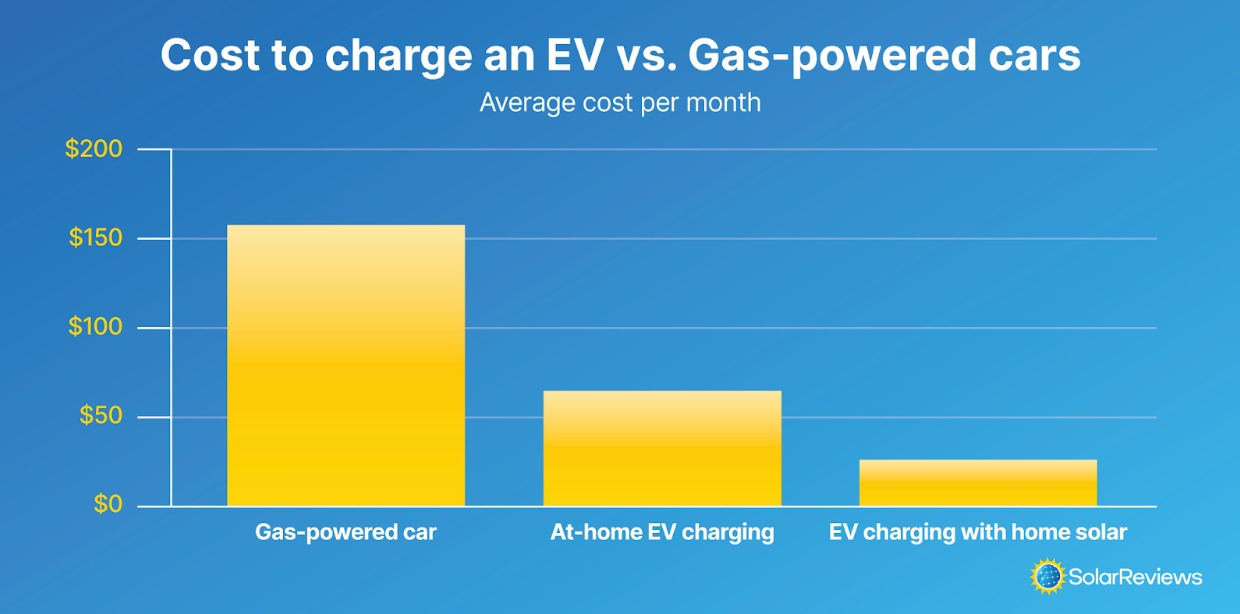
"The cost of charging an EV is often significantly lower than fueling a gasoline car."
Factors That Throw a Wrench in the Works
Of course, real-world charging costs aren't always perfect. Several factors can influence the final price.
- Driving Style: Just like with gas cars, aggressive driving eats up more energy.
- Weather: Cold weather can reduce battery range and increase charging time.
- Battery Health: As batteries age, their capacity may decrease.
- Charging Efficiency: Some energy is lost during the charging process.
Is It Worth It?
So, is switching to an electric car worth it? The answer depends on your specific situation. However, in most cases, the cost of charging an EV is significantly lower than fueling a gasoline car. Plus, you get to enjoy other benefits like lower maintenance costs, government incentives, and the satisfaction of driving a cleaner vehicle.
Consider the long-term savings. No more oil changes! No more spark plugs! Just smooth, silent, and electric driving.
Ready to embrace the electric future? Research your local electricity rates, explore different charging options, and get ready for a thrilling and cost-effective ride!
Don't be afraid to jump in! The EV world is exciting, and it's getting more affordable every day.