How Many Watts To Run A Fridge

Okay, so picture this: I was once caught in one of those unexpectedly long power outages. You know, the kind where you initially think, "Oh, five minutes, tops," and then suddenly you're staring at a rapidly warming fridge, calculating just how many hours until the contents become a science experiment. My mind, naturally, raced to the generator I’d been eyeing for ages. But then the big question hit me: how big of a generator would I actually need to keep the essentials humming? And more importantly, how many watts does a fridge even use?
It’s a question many of us ponder, whether we’re battling a blackout, eyeing a solar setup, or just trying to figure out why the electricity bill decided to moonwalk into the stratosphere this month. And let me tell you, it's not always as straightforward as it seems. Your fridge is a bit of a sneaky energy consumer, with a personality quirk or two.
The Tale of Two Watts: Starting vs. Running
Here’s where it gets interesting, and frankly, a little confusing if you're not in the know. When we talk about fridge wattage, we usually need to consider two main numbers:
Must Read
1. Starting Watts (or Surge Watts): Imagine your fridge is a sleepy bear. When it first wakes up and its compressor kicks into action, it needs a good, strong jolt of power to get going. This initial burst, the starting wattage, can be significantly higher than what it uses once it's actually running. We're talking spikes that can be 2-3 times higher than its continuous usage. This is super important if you're thinking about generators or off-grid systems, because your power source needs to handle that initial surge without tripping.
2. Running Watts (or Continuous Watts): Once the bear is awake and lumbering about, it settles into a more consistent energy consumption. This is the running wattage, the power it uses to maintain its cool temperature throughout the day. This is the number that contributes most significantly to your daily electricity bill.

So, What's the Magic Number? (Typical Fridge Wattage)
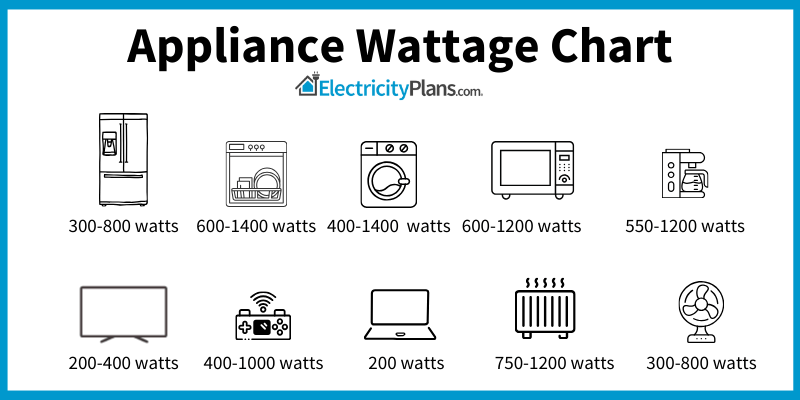
Alright, no more beating around the bush. You want numbers, and I'm here to deliver. Keep in mind these are averages, and your specific fridge might vary. Always check your appliance's label!
- Mini-Fridge (dorm room style): These little guys are pretty light on the power, usually ranging from 50 to 150 running watts, with a starting wattage around 300-400 watts. Adorable, and relatively cheap to run.
- Standard Top-Freezer/Bottom-Freezer Fridge: This is your classic kitchen workhorse. You're typically looking at 100 to 250 running watts. Their starting wattage can hit anywhere from 800 to 1200 watts. Not insignificant, right?
- Side-by-Side or French Door Fridge: Often larger and packed with more features (ice makers, water dispensers, fancy displays), these tend to be a bit more power-hungry. Expect 150 to 400 running watts, with surge watts easily jumping to 1000-2000 watts.
Remember, newer, Energy Star certified models are generally much more efficient than their older counterparts. That ancient beast in your garage? It might be costing you a pretty penny!
It's Not Just Watts, It's Hours (Enter kWh!)
While watts tell you how much power your fridge uses at any given moment, your electricity bill is calculated based on kilowatt-hours (kWh). One kWh is 1,000 watts used for one hour. Since your fridge isn't running its compressor 24/7 (it cycles on and off to maintain temperature), calculating exact daily usage can be tricky. But understanding kWh helps you grasp the actual cost.

For example, a fridge that averages 150 running watts and runs for, say, 8 hours a day (over various cycles) would use: 150 watts * 8 hours = 1200 watt-hours = 1.2 kWh per day.
Multiply that by your local electricity rate, and boom – you’ve got a daily cost. Then multiply by 30 for the monthly cost. See? It adds up!
The Great Fridge Power Sucks: Factors Affecting Usage
Your fridge's actual power consumption isn't just about its listed specs. Several factors play a role:
- Age: Older fridges are notorious energy guzzlers. Their insulation degrades, and their compressors are less efficient.
- Door Opening Habits: Every time you open that door, warm air rushes in, and your fridge has to work harder to cool down. Stop staring at the contents like a deer in headlights!
- Temperature Setting: Colder settings mean more work for the compressor. Do you really need it set to near-freezing?
- Ambient Temperature: A fridge in a hot garage works much, much harder than one in a cool kitchen.
- Fullness: A mostly full fridge (but not overstuffed!) is more efficient, as the items inside help retain the cold.
- Coil Cleanliness: Dusty coils restrict heat exchange, making the compressor strain. Give 'em a vacuum once in a while!
How to Find Your Fridge's True Power Personality
Want to know exactly what your fridge is doing? Here's how:
- Check the EnergyGuide Label: That bright yellow sticker usually found on new appliances gives you estimated annual energy consumption in kWh. It's a great starting point!
- Consult the Manual: Your fridge's user manual often lists the wattage.
- Use a Kill-A-Watt Meter: This is my personal favorite for the truly curious. You plug it into an outlet, then plug your appliance into the meter. It will show you real-time watts, peak watts, and even cumulative kWh over time. It's like a Fitbit for your appliances, and honestly, it’s super satisfying to watch.
So, there you have it. Your fridge isn't just a big, cold box; it's a dynamic energy user with its own quirks. Understanding its wattage and how it operates can help you make smarter choices, whether you're battling a blackout, going off-grid, or just trying to shave a few bucks off that monthly utility bill. Now, if you'll excuse me, I think I hear my mini-fridge in the garage calling – I should probably go check its coils.