
How Many Watts Is Ac Unit
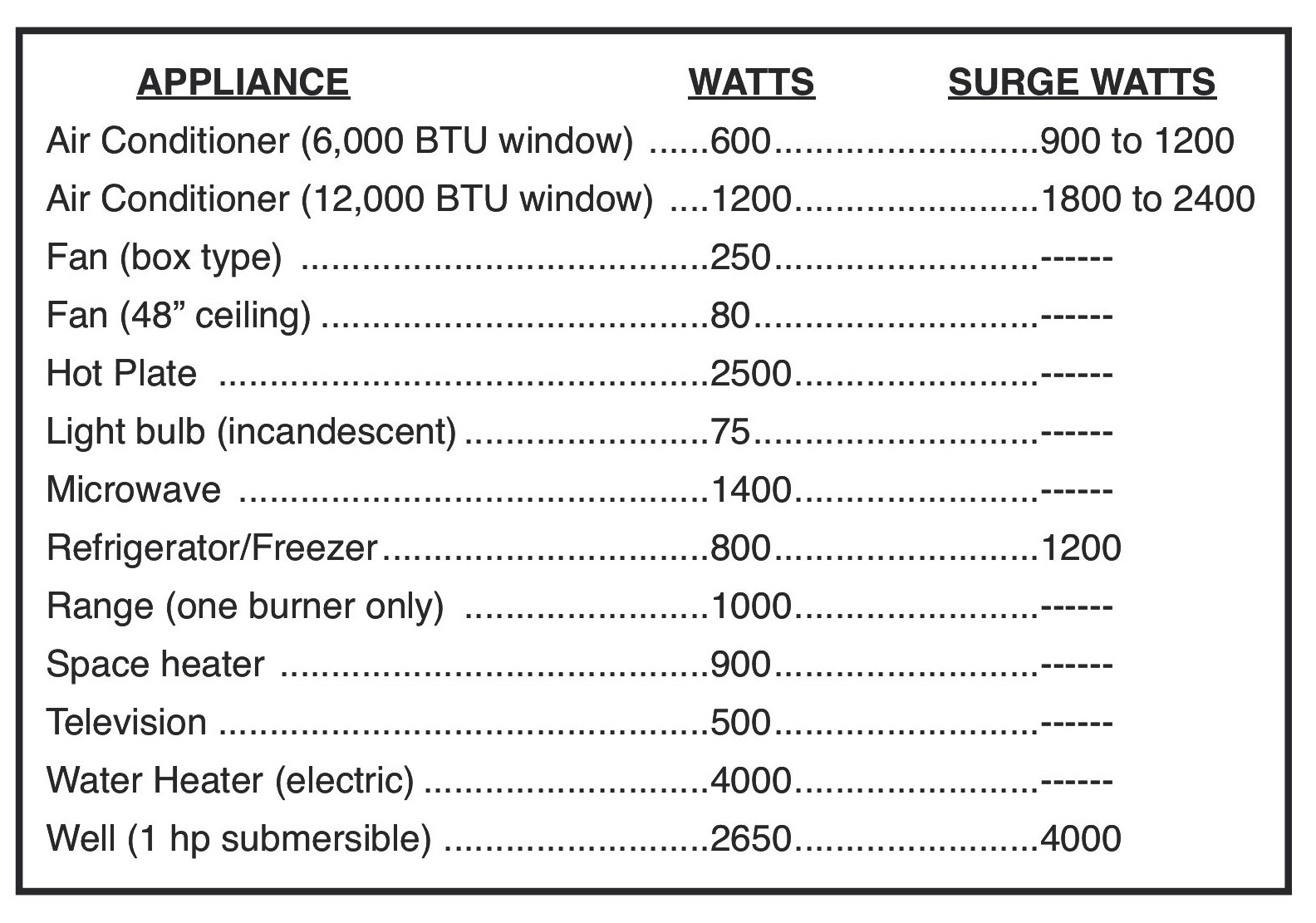
Ever had one of those scorching summer days where even your ice cubes are sweating? You know the drill: you crawl inside, make a beeline for the thermostat, and crank that bad boy down like it owes you money. Ah, the sweet, sweet sound of the AC kicking in! But then, a little voice in the back of your head (the one that also reminds you about looming deadlines and that thing you forgot at the grocery store) whispers, “Hey, how much juice is this thing actually sucking down?”
That, my friends, is the million-dollar question – or rather, the “how many watts is my AC unit” question, which usually leads to the “how much will my electricity bill make me cry” question. Let’s dive into the wonderfully complex, yet surprisingly relatable world of AC wattage without needing an engineering degree or a stiff drink.
What's a Watt, Anyway? (And Why Does My AC Love Them So Much?)
Think of watts as the AC unit's hunger for electricity. A tiny night light sips a few watts like a fancy espresso. Your microwave? It gulps down a thousand or so, especially when it’s trying to resurrect last night’s pizza. An AC unit, bless its heart, is more like a competitive eater at an all-you-can-eat buffet. It needs a good chunk of power to turn your sauna-like living room into a frosty oasis.
Must Read
The more watts an AC unit devours, the more power it’s using, and yes, the more your utility meter spins like a hamster on a caffeine buzz. It’s all about how much oomph it takes to cool down your space.
The Window Rattler: Your Trusty Companion
Let's start with the classic: the window AC unit. This is the guy you wrestle into position every spring, often with a little help from a neighbor and a lot of grunting. These come in all shapes and sizes, much like humans after a long winter.
A small window unit, perfect for a cozy bedroom or a tiny office, might pull anywhere from 500 to 900 watts. Think of it as a small economy car. A medium-sized one, good for a living room, could be in the 900 to 1,500-watt range. And if you’re trying to cool a mini-ballroom with one of these bad boys, you’re looking at larger units that can hit 1,500 to 2,500 watts. That’s more like a sturdy SUV, chugging along.
They’re efficient for their designated space, but don’t ask a small one to cool a mansion! That's like asking a kitten to guard your house – cute, but not quite up to the task.
The Nomadic Cooler: Portable ACs
Then there are portable AC units. These are the versatile, somewhat clunky friends you can roll from room to room. They often require a bit more energy for the same cooling power as a window unit, because they're essentially an AC unit and a fan and exhaust hose all rolled into one. It’s like carrying your own personal weather station everywhere you go.

You’ll usually find these guys needing anywhere from 1,000 to 2,000 watts. They’re handy, sure, but sometimes their wattage makes your wallet feel a little less portable.
The Whole-House Hero: Central AC
Now, for the big kahuna: central air conditioning. This is the invisible guardian angel that keeps your entire castle cool. Since it’s tackling multiple rooms, it's naturally going to be the heaviest hitter on your electrical panel. We usually measure central AC in "tons" – no, not literal tons of weight, but a measurement of its cooling capacity (1 ton = 12,000 BTUs).
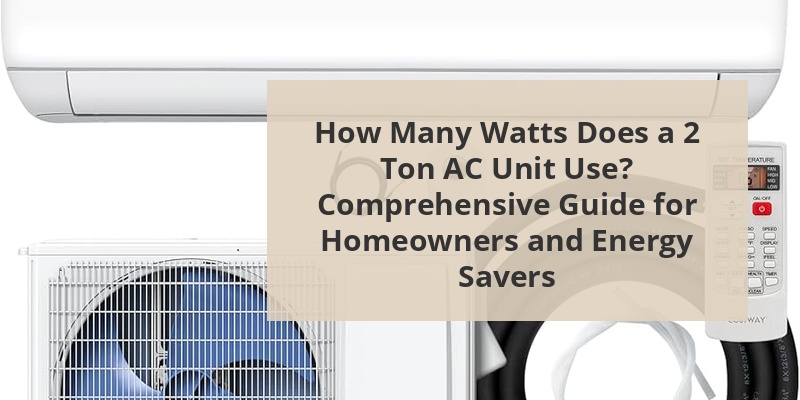
A typical 2-ton central AC unit might draw between 2,500 to 4,000 watts. A larger 4-ton unit, cooling a bigger home, could easily hit 5,000 to 8,000 watts, or even more. Think of it as a whole fleet of vehicles working together, rather than just one. This is why your central AC often has its very own dedicated circuit breaker – it’s a power hog, and it doesn't want to share its snacks.

Trying to figure out the exact wattage? Often, your HVAC technician or the unit's nameplate will list it, or you can do some simple math based on its Amps and Voltage. But for most of us, knowing it’s a lot is usually sufficient!
The Sleek Whisperer: Mini-Splits
Finally, we have the increasingly popular mini-split (or ductless) AC units. These are the sleek, quiet ninjas of the cooling world. They're often more energy-efficient than their window or portable counterparts because they deliver targeted cooling without the energy loss associated with ducts.
A single-zone mini-split might use anywhere from 600 to 1,500 watts, depending on its size. Multi-zone systems will, of course, use more, but their efficiency often means they're not gulping as aggressively as older systems. They're like the hybrid cars of the AC world – powerful but thoughtful about their fuel consumption.

Why Does It Matter? And What Makes the Watts Wobble?
Understanding these wattages matters because it’s directly linked to your electricity bill. An AC unit is often the biggest energy user in a home during summer. Factors like the unit's efficiency rating (SEER or EER), its age, how well it's maintained (clean filters are your AC's best friend!), and even the outside temperature can all make those watts fluctuate.
When it’s hotter than the surface of the sun outside, your AC has to work harder, pulling more watts to keep things chill. It’s like asking someone to run a marathon in a heatwave versus a cool autumn day – same person, but a lot more effort and energy expended on the hot day!
So, the next time you hear that glorious hum of your AC unit, you'll know it's not just making cool air, it's also orchestrating a symphony of watts. And while the exact number might be a bit fuzzy, the general idea is clear: the more you ask of it, the more it demands from your home's electrical grid. So choose wisely, clean those filters, and enjoy that sweet, sweet cool air!