
How Many Watts Does A Refrigerator Use Per Day

Ever wondered how much juice your refrigerator is slurping up? We're talking about electricity, of course! That cool box keeping your ice cream frozen and your veggies crisp is a silent but significant energy consumer.
Decoding the Wattage Mystery
Let’s dive into the nitty-gritty, but fear not, it won't be a physics lecture! We're tackling the question: just how many watts does that fridge use per day?
Imagine your refrigerator as a sleepy dragon. It doesn't breathe fire constantly, but it needs to stir every now and then to keep its icy breath going. That "stirring" is the compressor kicking in, which is when it uses the most power.
Must Read
Think of watts like tiny electric ants. The more ants working, the more power is being used.
The Wattage Range: A Fridge Family Affair
Refrigerators aren't one-size-fits-all. A tiny dorm fridge sips energy like a hummingbird, while a giant side-by-side guzzles it down like a thirsty elephant after a marathon!
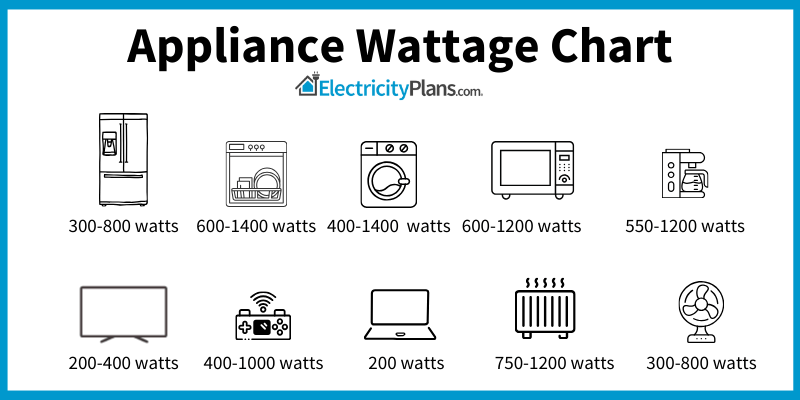
Generally, refrigerators range from about 100 watts to 400 watts. That's a pretty big spread, isn't it? Factors like size, age, and efficiency rating all play a part.
A compact mini-fridge might only use 100-150 watts. That's like powering a bright light bulb! On the other hand, a large, older model could easily reach 300-400 watts, maybe even more if it's feeling particularly power-hungry.
From Watts to Daily Consumption: Doing the Math (Without the Tears!)
Okay, math time! Don't worry, it's easier than splitting an atom. We're going to turn those watts into a daily energy usage figure.
Here's the secret: wattage x hours used per day / 1000 = kilowatt-hours (kWh) per day. kWh is how your electricity bill usually measures usage.

But wait, there's a catch! Your fridge doesn't run constantly. Remember our sleepy dragon? It takes naps! Typically, a fridge runs about 8-12 hours per day, maintaining the optimal temperature.
An Example: Let's Crunch Some Numbers!
Let's say your refrigerator uses 200 watts and runs for 10 hours a day. Using our formula: 200 watts x 10 hours / 1000 = 2 kWh per day.
So, that fridge is using 2 kilowatt-hours of electricity every single day! Seems simple enough, right?
Now, if your electricity costs, say, $0.20 per kWh, that fridge costs you $0.40 per day to run. Multiply that by 30 days, and you're looking at $12 per month.
The Age Factor: Is Your Fridge a Vintage Villain?
Older refrigerators are often less energy-efficient than their modern counterparts. They're like vintage cars – charming, but not exactly known for their fuel economy!
A fridge from the 1990s might use twice as much energy as a new, Energy Star certified model. It's like comparing a bicycle to a rocket ship in terms of energy efficiency.
If your fridge is older than your teenage child, it might be time to consider an upgrade. You could save a significant amount on your electricity bill in the long run!

Energy Star to the Rescue!
Look for the Energy Star label when buying a new refrigerator. It's like a superhero badge for appliances, guaranteeing they meet strict energy efficiency guidelines.
Energy Star refrigerators use significantly less energy than standard models. They're like the sprinters of the fridge world – efficient and powerful!
Choosing an Energy Star fridge is not only good for your wallet, but also for the environment. You'll be reducing your carbon footprint while keeping your food perfectly chilled. It's a win-win!
Refrigerator Efficiency: Little Things That Make a Big Difference
Even if you have a newer fridge, there are things you can do to maximize its efficiency. It's like fine-tuning a race car to get every last drop of performance.
First, make sure the door seals are tight. A leaky seal lets cold air escape, forcing the fridge to work harder. Imagine trying to cool a room with the window open – not very effective!
Second, keep the refrigerator clean. Dust on the coils can reduce efficiency. A quick vacuuming every few months can make a surprisingly big difference.
Temperature Tango: Finding the Sweet Spot
Setting the right temperature is crucial. Too cold, and you're wasting energy. Too warm, and your food might spoil.
The ideal refrigerator temperature is between 37°F (3°C) and 40°F (4°C). The freezer should be at 0°F (-18°C).
Use a thermometer to check the temperature. Don't rely solely on the dial settings. Sometimes, they can be a little off.
Location, Location, Location! Fridge Real Estate Matters
Where you place your refrigerator can also affect its energy consumption. Avoid putting it next to heat sources like ovens or dishwashers. It's like putting an ice sculpture next to a bonfire – it's going to melt!
Give your refrigerator some breathing room. Make sure there's enough space around it for proper ventilation. This allows the heat from the coils to dissipate efficiently.
A well-ventilated fridge is a happy fridge, and a happy fridge is an efficient fridge!
The Bottom Line: Knowledge is Power (and Saves You Money!)
Understanding how much energy your refrigerator uses can empower you to make smarter choices. Whether it's upgrading to an Energy Star model or simply adjusting the temperature, every little bit helps.
Knowing your fridge's wattage and calculating its daily consumption is like having a secret weapon against high electricity bills. You can now confidently estimate how much that icy friend is costing you.
So, next time you open your refrigerator, take a moment to appreciate its hard work. And maybe give it a little check-up to make sure it's running efficiently! After all, it's a vital member of your household, keeping your food fresh and your energy bills manageable.
Bonus Tip: Unplugging a Spare Fridge
Do you have a second refrigerator lurking in the garage, filled with… well, who knows what? If it's not being used regularly, consider unplugging it. It's like retiring a marathon runner – they deserve a rest!
An empty refrigerator still consumes a significant amount of energy. Unplugging it can save you a surprising amount of money over time. Think of it as a mini-windfall!
Just be sure to clean it out thoroughly before unplugging it to prevent any unpleasant surprises later. No one wants to open a forgotten fridge full of… well, let's not go there.
In Conclusion: Be Fridge-Wise!
So there you have it! The mystery of refrigerator wattage, daily consumption, and energy efficiency is no longer a secret.
Armed with this knowledge, you can make informed decisions about your refrigerator and your energy usage. You're now a fridge-efficiency guru!
Go forth and conquer those electricity bills! And remember, a little bit of awareness can make a big difference in your wallet and the environment. Now, go enjoy a nice, cold beverage from your efficiently running refrigerator!