How Many Watts Does A Full Size Refrigerator Use

Okay, let's talk refrigerators. That big, cold box humming in your kitchen, the one that silently judges your late-night snack choices and keeps your leftovers from becoming science experiments. We rely on them so much, but have you ever stopped to think about how much power these things actually guzzle?
Figuring out how many watts your fridge uses isn't exactly thrilling stuff, I know. It's not like binge-watching your favorite show or discovering a hidden talent for competitive thumb wrestling. But stick with me! Understanding your fridge's power consumption can help you save money and be a little kinder to the planet. Think of it as being a responsible adult...with perks!
The Watt's Up (Literally)
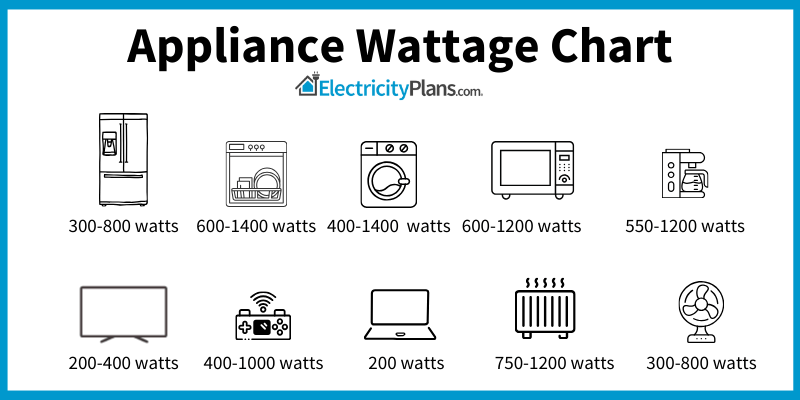
So, how many watts does a full-size refrigerator typically use? The answer, like most things in life, is: it depends. Generally, a standard full-size fridge uses anywhere from 100 to 400 watts while it's running. But here's the kicker: it's not running all the time. Imagine a marathon runner sprinting non-stop for 24 hours. They'd collapse, right? Your fridge is smarter than that (hopefully!).
Must Read
It cycles on and off to maintain the desired temperature. That "on" cycle, when the compressor is kicking in and doing its cooling magic, is when it uses the most power. Then, it chills out (pun intended!) for a bit, using very little power, before needing to cool down again.
Think of it like this: your fridge is like a teenager who occasionally does chores. They might put in some serious effort vacuuming for 15 minutes, then collapse on the couch for an hour, scrolling through TikTok. The vacuuming is the high-wattage part, the TikTok scrolling is the low-wattage part.
Factors That Affect Wattage
Several things can influence how many watts your fridge sucks up. Here are a few key culprits:
- Age: Older fridges are notorious energy hogs. They're like those classic cars that look cool but guzzle gas like it's going out of style. Newer models, especially those with the Energy Star label, are designed to be much more efficient.
- Size: A massive, double-door fridge with all the bells and whistles will naturally use more power than a smaller, more basic model. It's just physics, baby!
- Features: Ice makers, water dispensers, and automatic defrost features all add to the power consumption. Those conveniences come at a price, and that price is reflected on your electricity bill.
- Usage: How often you open the door matters. Every time you open that door, warm air rushes in, and the fridge has to work harder to cool things back down. It's like trying to keep a room cold with the windows open in the middle of summer.
- Maintenance: Dirty condenser coils can make your fridge work harder and use more energy. Cleaning them regularly is like giving your fridge a spa day – it'll thank you (in the form of lower electricity bills!).
I remember one time, my fridge was acting up. It was making weird noises and seemed to be running constantly. Turns out, the condenser coils were covered in dust bunnies. A quick vacuuming fixed the problem, and my electricity bill magically dropped the following month. Lesson learned: a clean fridge is a happy, energy-efficient fridge!

How to Figure Out Your Fridge's Exact Wattage
Want to know exactly how many watts your fridge is using? Here are a few options:
- Check the Energy Guide label: Most appliances have a yellow Energy Guide label that estimates annual energy consumption. This is a good starting point.
- Look for the wattage on the appliance itself: Sometimes, the wattage is listed on a sticker inside the fridge or on the back.
- Use a Kill-A-Watt meter: These handy gadgets plug into an outlet and measure the actual power consumption of whatever is plugged into them. You can find them online or at most hardware stores.
Once you know the wattage, you can use a simple formula to calculate how much electricity your fridge uses per day, month, or year. But honestly, unless you're a math whiz or really, really bored, the Energy Guide label is probably good enough.

Ultimately, understanding how many watts your fridge uses is about making informed choices. By being mindful of your usage and keeping your fridge in good working order, you can save money, reduce your environmental impact, and maybe even impress your friends with your newfound appliance knowledge. Who knew refrigerators could be so fascinating?
So, go forth and conquer the world of refrigerator energy consumption! And remember, a little bit of knowledge can go a long way, especially when it comes to keeping your food cold and your wallet happy.