How Many Solar Panels To Run A House Off Grid

Imagine this: the sun is shining, birds are chirping, and your electricity bill is... zero. Sounds pretty good, right? More and more people are dreaming of, and achieving, energy independence by powering their homes with the sun. Going off-grid with solar panels isn't just a trendy thing to do; it's a way to take control of your energy future, reduce your environmental impact, and even increase your home's value.
But how many solar panels does it actually take to sever the cord and bask in the glory of self-sufficient solar power? That's the million-dollar question, and the answer, unfortunately, isn't a simple number. It's more like a carefully crafted recipe, with a dash of sunshine, a pinch of energy needs, and a healthy dose of calculation.
The core benefit of using solar panels to power your home is the potential to eliminate your reliance on the traditional power grid. This translates to significant savings on your electricity bills over the long term. Think of all the things you could do with that extra cash! Beyond the financial advantages, going solar is a huge win for the environment. By utilizing clean, renewable energy, you're reducing your carbon footprint and contributing to a more sustainable future. Many people also appreciate the increased property value that comes with a solar panel system.
Must Read
Solar panels are becoming increasingly common in a variety of applications. Of course, you see them on rooftops of homes and businesses, silently converting sunlight into usable electricity. But they're also used in smaller-scale applications, like powering garden lights, charging portable devices while camping, and even running entire off-grid communities. The flexibility and scalability of solar power are truly remarkable.
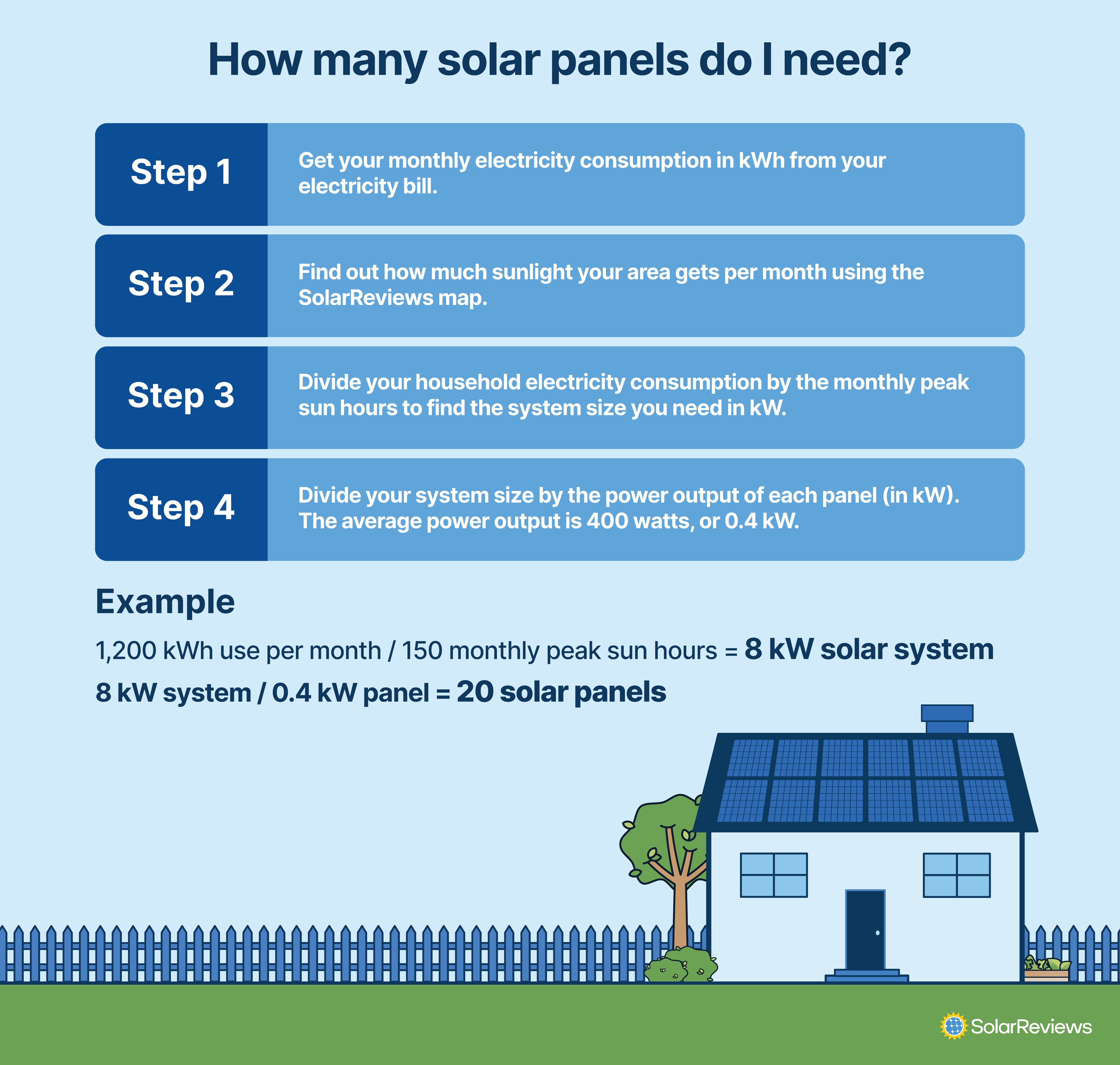
So, how do you determine the right number of panels for your home? Here are a few practical tips to help you on your journey to energy independence:
- Calculate Your Energy Consumption: This is step one. Review your past electricity bills to determine your average monthly energy usage in kilowatt-hours (kWh). The higher your energy consumption, the more solar panels you'll need.
- Consider Your Location: The amount of sunlight your area receives directly impacts how much energy your solar panels can generate. Areas with more sunshine hours will require fewer panels than those with less. Look into your area's solar irradiance data.
- Panel Wattage Matters: Solar panels come in different wattage ratings, typically ranging from 300 to 400 watts per panel. Higher wattage panels will generate more electricity per panel, meaning you'll need fewer overall.
- Factor in Inverter Efficiency: The inverter converts the direct current (DC) electricity generated by the solar panels into alternating current (AC) electricity that your home can use. Inverters aren't 100% efficient, so you'll need to account for some energy loss during the conversion process.
- Don't Forget Battery Storage: If you want true off-grid independence, you'll need batteries to store excess solar energy for use during cloudy days or at night. The size and number of batteries will depend on your energy consumption patterns.
Ultimately, the best way to determine the exact number of solar panels you need is to consult with a qualified solar installer. They can assess your specific energy needs, evaluate your location's solar potential, and recommend the right system for your home. Going off-grid is a significant investment, so it's crucial to get it right. With careful planning and the right equipment, you can harness the power of the sun and enjoy a future of clean, sustainable, and independent energy. Happy sun shining!