
How Many Gallons In A Hot Water Heater
Ever stood in the shower, blissful, singing off-key, only for the water to betray you with a sudden, icy blast? Yeah, we’ve all been there. It’s like a jump scare, but for your soul. And in that chilling moment, one question screams louder than your chattering teeth: “How many gallons are in this thing, anyway?!”
It’s a question that plagues many a shivering homeowner, often only considered when the crisis hits. Your hot water heater, that big, often forgotten metal cylinder lurking in the basement or utility closet, is like the unsung hero of your daily comfort. But how much hot goodness does it actually hold?
Well, lean in close, because I’m about to spill the tea (hot, of course). The answer isn't a single, definitive number that applies to every single hot water heater in existence. That would be too easy, wouldn't it? Instead, it’s a range, a delightful spectrum of capacities designed to fit different households, just like socks come in different sizes for different feet. Only, you know, for water.
Must Read
The Usual Suspects: Common Gallon Sizes
Most residential hot water heaters fall into a few common categories. Think of them as the standard menu options at your favorite café, but for gallons of joy.
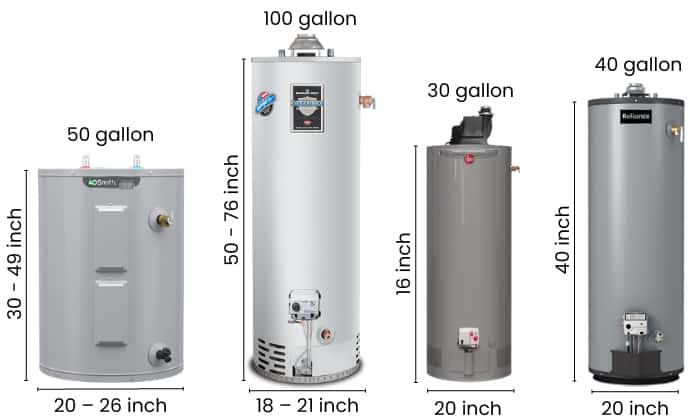
30 Gallons: This is often the compact model, ideal for a single person or a very, very disciplined couple. It's enough for a quick shower, maybe a load of dishes, but don't even think about running the dishwasher and taking a long, contemplative shower at the same time. That’s just asking for trouble (and cold water).

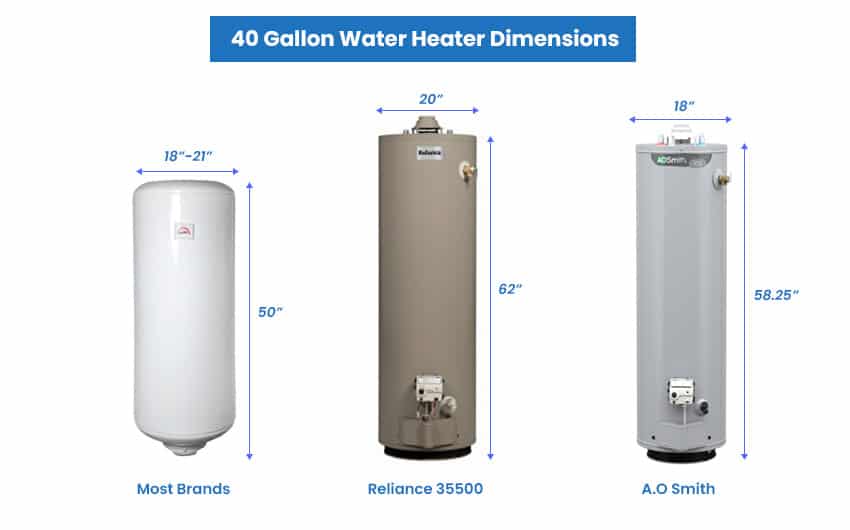
40 Gallons: Ah, the workhorse! This is probably the most common size for a small family (1-2 people) or a couple who enjoy a bit more flexibility. You can probably get two showers in, maybe even three if everyone is quick and efficient. But a teenage daughter’s "five-minute" shower? That might still push it.
50 Gallons: Now we’re talking! This is a popular choice for medium-sized families (2-4 people). It offers a good balance, giving you more hot water for consecutive showers, laundry, and dishwashing without too much stress. It’s like the Goldilocks zone for many homes – not too small, not too big, but just right.
60-80 Gallons: Stepping up to the big leagues! If you’ve got a large family, multiple bathrooms, or a serious love for soaking in a gigantic tub, these larger tanks are your best friends. They can handle high demand, ensuring everyone gets their hot water fix without feeling like they’re racing against the clock. Imagine a small kiddie pool full of glorious hot water – that’s roughly what we’re talking about with an 80-gallon tank!

The Sneaky Truth: It's Not Always What It Seems!
Here’s where it gets interesting, and a little bit surprising. Your hot water heater’s stated capacity, say 50 gallons, doesn’t mean you get 50 gallons of pure, unadulterated, consistently hot water ready to go at a moment's notice. Nope!
First, there's the First Hour Rating (FHR). This is arguably more important than the tank size itself! The FHR tells you how many gallons of hot water the heater can deliver in an hour, starting with a full tank of hot water. It takes into account both the tank's capacity and how quickly the unit can reheat water. So, a 40-gallon tank with a great FHR might outperform a 50-gallon tank with a sluggish FHR. It's like comparing a sprinter to a marathon runner; one delivers a burst, the other sustains. For hot water, you often want a good sprinter and a good sustainer!

Then, there's the matter of sediment. Over time, minerals from your water (calcium, magnesium, etc.) settle at the bottom of your tank, forming a muddy layer. This sediment actually takes up space, effectively shrinking your tank’s capacity! It also makes your heater less efficient, meaning it has to work harder and longer to heat water, like trying to cook pasta in a pot with a thick layer of sludge at the bottom. Yuck! Regular flushing can help keep those sneaky sediment monsters at bay.
And let's not forget the simple fact that when you pull hot water from the top, cold water rushes in at the bottom. This mixes, inevitably cooling down the overall tank. So, you’re not getting 50 gallons of 120-degree water, more like 50 gallons that progressively gets cooler as you use it. It’s a cruel mistress, thermodynamics.
Choosing Your Hot Water Champion
So, how do you decide what size is right for you? It’s not just about the number of people, although that’s a big factor. Consider your habits:
- Do you love long, luxurious showers?
- Do you often run the washing machine and dishwasher simultaneously?
- Do you have a jetted tub that practically drains a small pond?
If you're a hot water guzzler, err on the side of larger. If you're a minimalist water user, a smaller, more efficient model might be perfect.
And then there’s the rebellious younger sibling of hot water heaters: the tankless water heater. This sleek, wall-mounted marvel doesn't store any water. It heats it on demand! Infinite hot water, no big tank taking up space. It’s like magic, but with more gas lines or electrical wiring. They’re a whole different ballgame, but definitely worth considering if you're tired of guessing how many gallons you have left.
Ultimately, your hot water heater is more than just a metal cylinder; it’s the silent guardian of your morning routine and your evening unwind. Knowing its capacity, and understanding how it actually works, can save you from those shocking, soul-chilling cold shower moments. So go forth, armed with this knowledge, and may your showers always be wonderfully, blissfully hot!