
How Many Amps In A 100 Watts

Ever wondered why some gadgets draw more power than others, or what those numbers on your appliance labels actually mean? Diving into the world of electricity can seem a bit intimidating at first, but it's actually super
Understanding the relationship between watts and amps, along with volts, is a bit like learning the basic ingredients in your favorite recipe. For beginners, it takes the mystery out of those cryptic electrical terms, helping you grasp what "power" really means for your gadgets. For families, it's invaluable for safety – knowing how much power an appliance uses helps prevent overloading circuits, which means fewer tripped breakers and a safer home. It also aids in understanding energy consumption, helping you make smarter choices about which appliances to buy or use. And for the budding hobbyists or DIY enthusiasts, this knowledge is fundamental for planning projects, wiring setups, and ensuring your creations are powered correctly and safely.
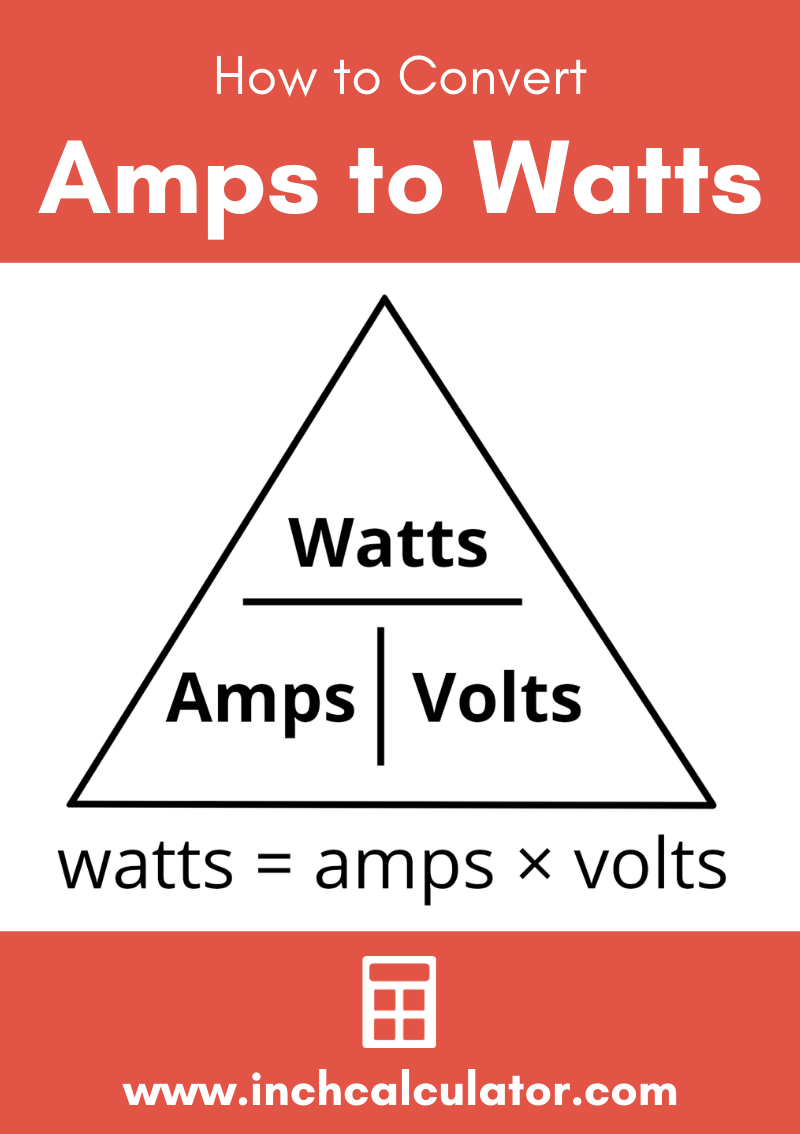
So, let's get to the nitty-gritty! The key thing to remember is that watts, amps, and volts are all interconnected. Think of it like this: Watts (W) is the total power an electrical device consumes or produces. Volts (V) is the "pressure" of the electricity, pushing it through the circuit. And Amps (A) is the "flow" or volume of that electricity. The simple formula that connects them is: Watts = Volts × Amps. This means if you want to find out how many amps are in 100 watts, you also need to know the voltage!
Must Read
Let's take our 100 watts example. If you're in North America, where standard household voltage is typically around 120 Volts, then to find the amps, you'd calculate: Amps = Watts / Volts = 100W / 120V = approximately 0.83 Amps. However, if you're in Europe, Australia, or many other parts of the world where the standard voltage is around 230 Volts, the calculation changes: Amps = Watts / Volts = 100W / 230V = approximately 0.43 Amps. See? The same 100 watts draws different amounts of current (amps) depending on the voltage! A 100-watt device could be anything from a bright old incandescent light bulb to a typical laptop charger or a small audio amplifier.
Ready to put this knowledge into practice? Here are some simple, practical tips: First, always check the labels on your appliances. Most devices clearly state their wattage (W) and operating voltage (V). With these two numbers, you can easily calculate the amperage (Amps = Watts / Volts) if it's not already listed. This is super handy for deciding if you can safely plug multiple devices into a single extension cord without risking an overload. Second, remember that
Understanding these fundamental electrical concepts, like the relationship between watts and amps, empowers you to make smarter decisions around your home and with your gadgets. It’s not just about numbers; it's about gaining a little bit of control and confidence in our increasingly electrified world. So go ahead, peek at those appliance labels – you might just find your new favorite conversation starter!


