
How Many Amps Does Window Air Conditioner Use
Ah, summer! That glorious time of year filled with sunshine, barbecues, and the sweet, sweet sound of... a window air conditioner humming away. If you're anything like me, a hot day quickly turns your thoughts to how to stay cool without breaking the bank or, even worse, tripping a breaker in the middle of your favorite show. And that, my friends, is where our little chat about amps comes in!
Now, before your eyes glaze over thinking this is going to be a scary science lesson, let me promise you: it's not! We're just going to have a friendly natter about how much "juice" your window AC sips (or sometimes gulps!) and why knowing this can make your summer a whole lot smoother and cooler.
What in the World are Amps, Anyway?
Think of electricity like water flowing through a pipe. The voltage is like the water pressure – how hard it’s pushing. And the amps? Well, that's the amount of water actually flowing through that pipe at any given moment. So, when we talk about how many amps a window air conditioner uses, we’re asking: "How much electricity does it need to do its job?"
Must Read
It's like comparing a garden hose to a fire hose. Both carry water, but a fire hose carries a lot more of it, right? Your toaster might be a garden hose, but your AC is definitely more in the fire hose territory!
Why Should I Even Care About This Amps Business?
This is where the fun (and practical) stuff comes in! Knowing about amps is like having a secret superpower for your home’s electrical system. Here’s why it matters:
First, there's safety. Imagine trying to cram too many cars onto a small road. Traffic jam, right? Same with electricity. Each electrical circuit in your home (think of them as different roads) has a limit to how much electricity it can handle. If you plug in too many things, or something that's too powerful, you can overload the circuit. That's when your breaker trips, plunging you into temporary darkness. It's like your house's internal "party pooper" saying, "Nope, too much fun!" Overloading circuits isn't just annoying; it can be dangerous.
Second, it’s about your wallet. Generally, the more amps an AC unit draws, the more energy it's consuming, and often, the more it costs to run. Understanding this helps you choose an efficient unit and use it wisely, keeping those electricity bills a little friendlier.
And third, it helps you pick the right AC unit for your specific spot. No one wants to buy a shiny new AC only to find out it keeps tripping the breaker every 20 minutes because their circuit can't handle it. Or, conversely, getting one that's too small and runs all day long without truly cooling the room.
So, How Many Amps Do They Actually Use?
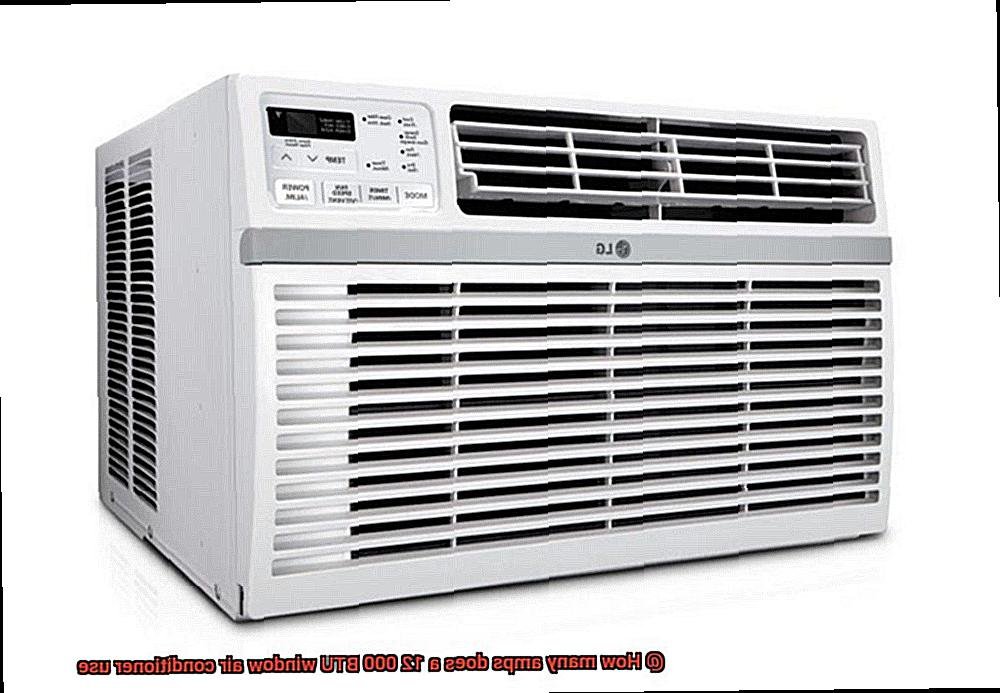
Alright, let's get down to the nitty-gritty numbers, but still with a smile! Most residential window air conditioners fall into a pretty common range. You'll typically see them drawing anywhere from 5 to 15 amps when they're running. But here's the catch – just like people, not all ACs are created equal!
The biggest factor is the unit's cooling capacity, measured in BTUs (British Thermal Units). Think of BTUs like the horsepower of your AC. A smaller 5,000 BTU unit that's perfect for a small bedroom might only draw around 4-5 amps. Meanwhile, a beefier 12,000 BTU unit designed to chill a larger living room could easily pull 9-12 amps or more.
There's also a little something called startup current. When your AC first kicks on, its compressor needs a quick burst of extra energy to get going, kind of like your car needing more gas to accelerate from a stop. This initial surge can briefly draw more amps than its running average, but it usually lasts for just a second or two.
Modern units are often more energy-efficient, too, thanks to technologies like "inverter" compressors. An efficient unit might provide the same cooling power as an older one but use fewer amps to do it. Always look for that EER or SEER rating – higher numbers mean better efficiency!
Practical Tips for a Cool, Amp-Smart Summer
Now that you're an amp-savvy guru, here are a few simple tips to keep things running smoothly:
- Check the Label! Every air conditioner has a label, usually on the side or back, that tells you exactly how many amps it draws. It’s like its ID card!
- Know Your Circuit. If you're plugging a larger AC into an outlet, it's wise to know what else is on that circuit. Is it just the AC? Or is it also powering your TV, gaming console, and that amazing popcorn maker? If it's a shared circuit, a larger AC might be too much.
- Avoid Extension Cords (mostly!). This is a big one. AC units need a lot of power, and most regular extension cords aren't designed to handle that kind of load. Using the wrong extension cord is like trying to drink a thick milkshake through a tiny coffee stirrer – it just doesn't work well and can even overheat, becoming a fire hazard. If you absolutely MUST use one, make sure it's a very specific, heavy-duty outdoor-rated appliance extension cord with a low gauge number (meaning thicker wire).
- Dedicated Circuit for Big Units. For very large window units (say, 15,000 BTUs or more), or if you frequently trip a breaker, you might want to consider having an electrician install a dedicated circuit just for that AC. It's like giving your AC its very own private highway for electricity!
So there you have it! Understanding a little bit about how many amps your window air conditioner uses isn't just for electricians; it's for all of us who want to enjoy a cool, safe, and bill-friendly summer. Stay cool, my friends!