
How Many Amps Does A Typical Refrigerator Draw

Ever wondered how much juice your trusty refrigerator is actually slurping up? We often take it for granted – that constant hum keeping our milk cold and our leftovers fresh. But understanding its power consumption, measured in amps, is surprisingly useful. Think of it like understanding how much gas your car drinks; it helps you budget and potentially save money!
So, how many amps does a typical refrigerator draw? Let's dive in, without getting too technical, and make it as clear as a glass of freshly squeezed orange juice (that's been chilling in your fridge, of course!).
The Amp Lowdown: Starting vs. Running
The first thing to understand is that a refrigerator's amp draw isn't constant. It has two main modes: starting and running. Starting requires a much bigger jolt of energy to get the motor going, kind of like pushing a swing really hard to get it moving initially.
Must Read
Starting Amps: This is the big number. When your refrigerator first kicks on (compressor starts), it needs a surge of power. This can be anywhere from 4 to 12 amps, or even higher for older models. This surge only lasts for a second or two, but it's important to consider if you're running your fridge on a generator or a circuit with other appliances.
Running Amps: Once the refrigerator is running and maintaining temperature, the amp draw drops significantly. A typical refrigerator, in its running state, usually pulls between 1 and 4 amps. Think of it like the swing continuing its gentle back and forth after you've given it that initial push.
Factors Affecting Amp Draw
Just like no two snowflakes are alike, no two refrigerators have the exact same energy needs. Several factors influence how many amps your fridge draws:
- Size and Type: A massive side-by-side refrigerator with all the bells and whistles will naturally draw more amps than a compact mini-fridge designed for a dorm room.
- Age: Older refrigerators tend to be less energy-efficient than newer models. They might have worn-out components or less efficient compressors. Think of it like an old car – it might still get you from A to B, but it's likely burning more gas than a newer, more efficient model.
- Energy Efficiency: Look for the Energy Star label! Refrigerators with this certification are designed to use less energy, which translates to lower amp draw.
- Condition and Maintenance: A dirty refrigerator with dusty coils will have to work harder to cool, increasing its amp draw. Regularly cleaning the coils (the grates usually on the back or bottom) can make a surprising difference!
- Temperature Settings: If you've cranked the temperature way down to "arctic chill," your refrigerator will be working overtime and drawing more amps.
- How Often You Open the Door: Every time you open the door, cold air escapes, and the refrigerator has to work to restore the temperature. Less browsing, less energy consumption!
Why Should You Care About Amps?
Okay, so we've talked about amps. But why should you even bother knowing this stuff?
Generator Power: Planning a camping trip or preparing for a power outage? Knowing your refrigerator's amp draw is crucial for choosing the right size generator. You don't want to overload the generator and end up with spoiled food!
Circuit Overload: If you're constantly tripping breakers when you plug in multiple appliances, your refrigerator's amp draw might be a contributing factor. Overloading circuits can be dangerous, so it's important to be mindful of power consumption.
![Mini Fridge Amps Revealed [1494+ Units | Startup & Lowest Draw]](https://ecocostsavings.com/wp-content/uploads/2023/04/mini-fridge-amperage-and-start-up-amps-example.jpg)
Energy Savings: While the amp draw itself might not directly translate to your electricity bill, understanding it helps you make informed choices. Choosing an energy-efficient refrigerator, keeping it well-maintained, and adjusting the temperature can all lead to significant savings over time.
Peace of Mind: Simply knowing how your appliances work can give you a sense of control and preparedness. Plus, you can impress your friends at the next barbecue with your newfound refrigerator knowledge!

Finding Your Refrigerator's Amp Draw
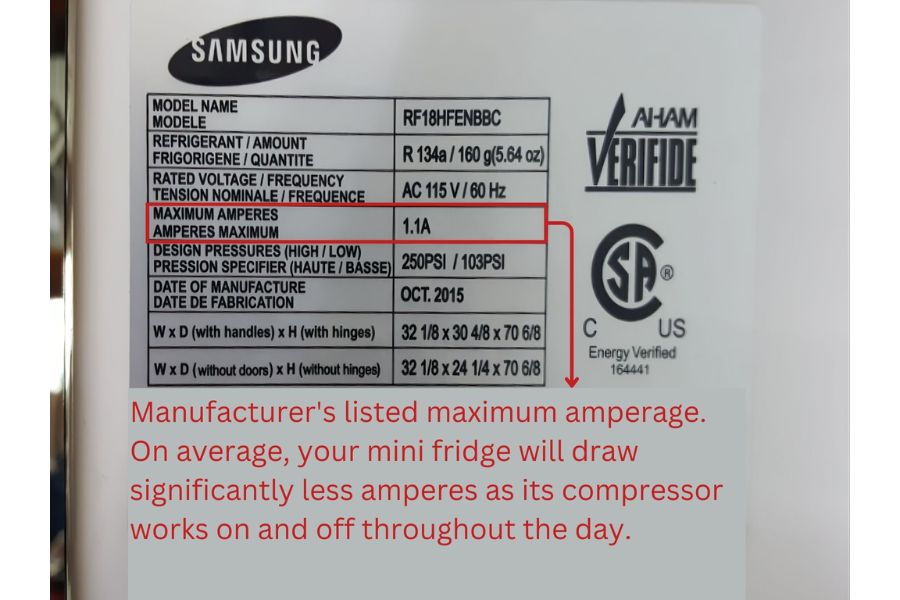
The easiest way to find out how many amps your refrigerator draws is to check the manufacturer's label. This label is usually located inside the refrigerator, on the back, or in the owner's manual. It will list the voltage (usually 120V in the US) and the amperage.
You can also use a multimeter or a Kill-A-Watt meter to measure the actual amp draw of your refrigerator. These devices plug into the outlet and show you the real-time power consumption. This can be helpful if you suspect your refrigerator is drawing more amps than it should be.
Ultimately, understanding your refrigerator's amp draw is a small but valuable piece of the puzzle when it comes to energy management and home safety. So next time you grab a cold drink, take a moment to appreciate the humming hero that keeps it all chilled – and maybe check its amp draw while you're at it!