
How Many Amps Does A Dryer Use
Oh, hey there! Grab another cup of coffee, or maybe something sparkly, because we're about to dive into one of those household mysteries that you probably didn't even know you were curious about. We're talking about your dryer. Specifically, how many amps does that clothes-fluffing marvel actually gobble up?
Sounds super technical, right? Like something only electricians with cool tool belts discuss? Nah, not really! It's actually pretty straightforward, and knowing a little bit about it can be surprisingly useful. Or, at the very least, make you sound super smart at your next dinner party. (You're welcome!)
First Things First: What's an Amp, Anyway?
Okay, let's get the nerdy bit out of the way, but keep it super chill. Imagine electricity flowing through wires like water through a pipe. An amp (short for ampere, fancy, right?) is basically the volume of water flowing. It's the measure of electrical current. The more amps something uses, the more "oomph" it's pulling from your electrical system. Simple as that! No need for physics textbooks here.
Must Read
Gas vs. Electric: The Plot Twist!
Before we go any further, we gotta make a crucial distinction, because this is where the amp story takes a dramatic turn. Do you have a gas dryer or an electric dryer? This is the key difference!
If you've got a gas dryer, pat yourself on the back for being efficient in this one particular area. Gas dryers primarily use, well, gas, to generate heat. The electricity they do use is mostly for tiny things like the motor, the drum light, and the control panel. So, they typically only pull about 6 to 8 amps. That's practically a whisper compared to its electric cousin. They usually just plug into a standard 120-volt outlet, just like your toaster!
Now, if you have an electric dryer... dramatic music plays... this is where things get interesting (and pull more amps!).

Electric Dryers: The Power Hogs (But We Love Them Anyway)
Alright, so your electric dryer is the star of the show when it comes to amp consumption. Why? Because it uses electricity to generate all that heat. And making things hot takes a surprising amount of juice!
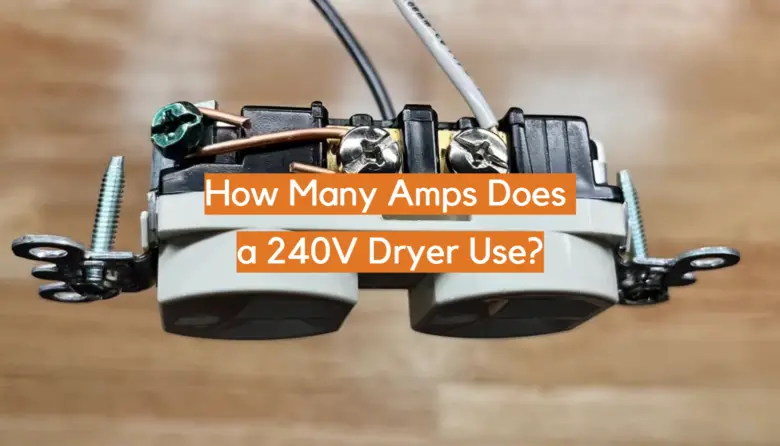
Most electric dryers are designed to run on a 240-volt circuit. This isn't your standard wall outlet, folks. You know that big, chunky plug with three or four prongs? That's it! It's like a superhighway for electricity, just for your dryer.
So, how many amps does it typically use? Drumroll, please... most electric dryers will pull around 20 to 30 amps. Yes, that's a pretty big jump from the gas version!
- A lot of them will sit comfortably at the 25-amp mark.
- But the vast majority of circuits for electric dryers are rated for 30 amps. This gives it a little wiggle room, so your breaker doesn't trip every time it starts up.
Think of it this way: your dryer needs a lot of power to get those clothes bone-dry in a reasonable amount of time. It's working hard for you!
Why Does This Even Matter, You Ask?
Good question! I'm glad you're participating. It matters for a few reasons, mostly revolving around safety and functionality:
1. Preventing Tripped Breakers: Ever had the lights go out in just one part of your house? That's usually a tripped circuit breaker. If your dryer tries to pull more amps than its dedicated circuit is designed for, pop goes the breaker! Knowing its amp draw helps ensure it's on the right circuit.
2. Proper Wiring: You absolutely, positively want the wiring in your walls to match the appliance's needs. Trying to run a 30-amp dryer on a circuit designed for, say, 15 amps is a recipe for disaster. We're talking overheating wires, fire hazards... yikes! So, always make sure your dryer's circuit is up to snuff.

3. Appliance Compatibility: If you're moving into a new place, or just installing a brand-new dryer, it's good to know if your home's electrical setup can handle it. Most modern homes are built with these higher amp circuits for electric dryers, but older homes might need an upgrade.
How to Check Your Own Dryer's Amp Draw (The Detective Work!)
Wanna know for sure how many amps your specific dryer uses? It's usually super easy to find!
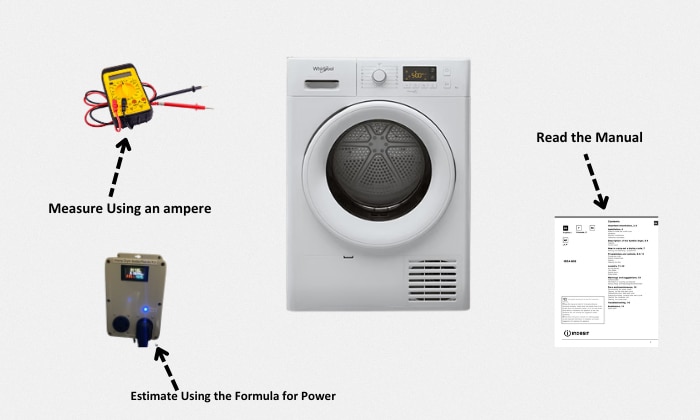
Look for the nameplate or label, usually on the back of the dryer, near the bottom, or sometimes inside the door opening. It'll list all sorts of specs, including voltage (V) and amperage (A). It might say something like "240V, 25A" or "240V, 5500W" (you can calculate amps from watts, but let's not overcomplicate our coffee chat).
And if all else fails, the owner's manual is your best friend! They always spill the beans on all the technical deets.
The Bottom Line & A Friendly Warning
So, in a nutshell: gas dryers use very few amps (6-8A), plugging into a regular outlet. Electric dryers are the amp champions (20-30A), requiring a special 240V, often 30-amp circuit.
This little bit of knowledge is mainly for peace of mind and understanding. But here's my friendly, absolutely-not-joking warning: if you're ever in doubt about electrical wiring, circuit capacity, or anything that involves poking around with wires, please, please call a qualified electrician! Seriously, they're the pros, and messing with electricity isn't worth the risk.
Now you know! You're officially a dryer amp expert. Go forth and impress your friends, or just enjoy the quiet satisfaction of understanding a little more about the amazing machines that make our lives easier. High-five!