
How Long Does Water Take To Freeze
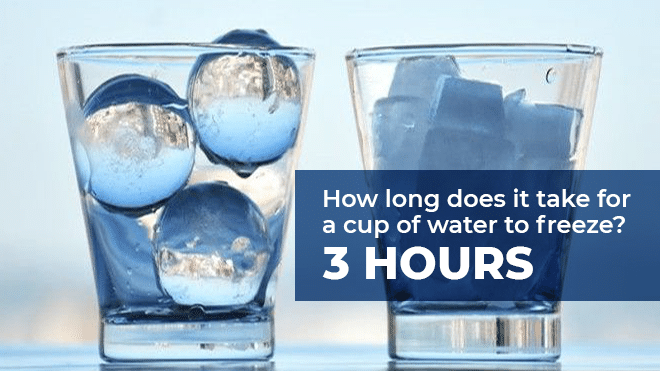
Ever wondered how long it takes water to freeze? It's a surprisingly complex question! More than just sticking a tray in the freezer, you know?
The Big Freeze: It's Complicated!
Okay, so you want a straight answer. Fine. Expect anywhere from 30 minutes to several hours. Annoying, right? But wait, it gets more interesting.
Lots of factors play a role. We’re talking water volume, temperature, your freezer's mood… even the type of water you’re using!
Must Read
Think of it like making cookies. Same recipe, different oven, results vary. Freezing water is the same. Except colder.
Volume Matters (Duh!)
A tiny ice cube? Quick freeze. A huge block of ice for your super-sized cocktail? Pack a lunch. It'll be a while.
The more water you have, the longer it takes. Seems obvious, but it's super important.
Imagine trying to cool down a kiddie pool versus a shot glass of water. Which one gets frosty faster? Exactly!
Temperature Tantrums: Freezer Edition
Is your freezer running? Then you better catch it! (Sorry, had to.)
Seriously though, the temperature of your freezer is a HUGE deal. Aim for around 0°F (-18°C) for optimal freezing. Anything warmer, and you're just delaying the inevitable ice age in your ice cube tray.
Pro tip: Don’t overcrowd your freezer. Air needs to circulate to do its icy magic.
Water Type: Not All H2O is Created Equal
Did you know even the type of water matters? Tap water, distilled water, bottled water… they all have slightly different mineral content. This affects the freezing point!
Distilled water, being purer, theoretically freezes faster. But honestly? In a home freezer, you probably won't notice a massive difference.
Unless you're running a scientific experiment comparing glacial meltwater with tap water from your questionable pipes (please don’t), don’t sweat it too much.

The Mpemba Effect: Water's Weirdest Trick
Okay, this is where things get truly bizarre. Prepare to have your mind blown.
The Mpemba effect suggests that, under certain (and still debated) conditions, hot water can freeze faster than cold water.
Whoa. Seriously? Yes! Scientists are still trying to figure out exactly why this happens. Something about convection currents, dissolved gases, and perhaps a little bit of magic.
Try it at home! (With supervision, of course. Hot water + clumsy = not fun.) Just don't expect consistent results. The Mpemba effect is notoriously finicky.
Practical Freezing Tips (Because We Should Be Useful Sometimes)
Alright, enough theory. Let’s get practical. Want faster ice?
- Use cold water to start. (Even if the Mpemba effect is tempting.)
- Spread the water thinly. Think ice cubes, not icebergs.
- Make sure your freezer is cold enough. Duh.
- Don't put hot food in the freezer at the same time. It warms everything up!
- Have patience! It'll freeze eventually. Go watch a movie.
Freezing Fun Facts (For Your Next Party!)
Need some conversation starters? Impress your friends with these gems:
- Ice floats because it's less dense than liquid water. Mind. Blown.
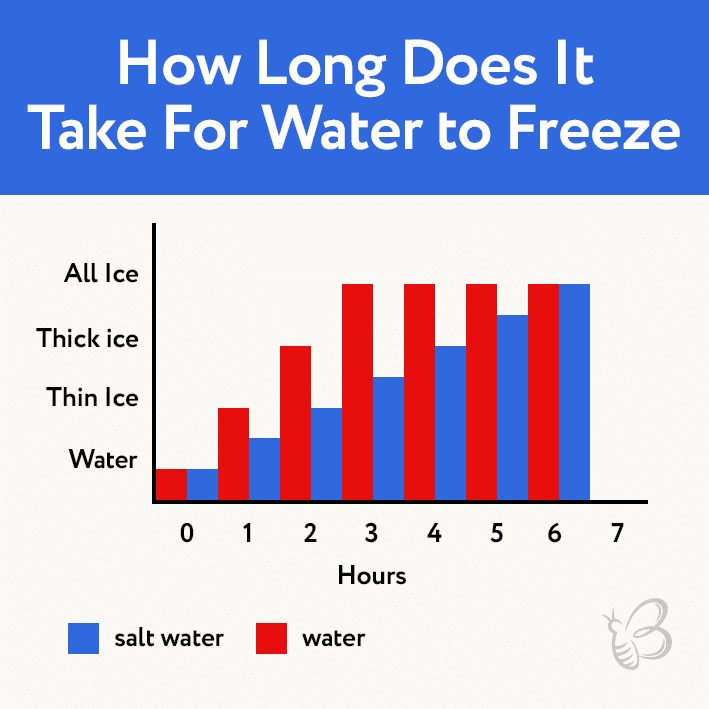
- Salt lowers the freezing point of water. That’s why we salt roads in winter!
- Glaciers are actually moving rivers of ice. Slow, but moving!
So, next time you’re waiting impatiently for your ice to freeze, remember: it’s a scientific marvel happening right before your eyes. Embrace the chill!
Now, if you'll excuse me, I need to go check on my ice cubes. I'm pretty sure they're plotting something...