
How Long Does It Take For Natural Gas To Form

Ever wondered where that cozy warmth in your home comes from? Or how your favorite dishes get cooked so quickly on a gas stove? Chances are, you’re using natural gas! But have you ever stopped to think about how this amazing energy source actually forms? It's a story that's both super long and surprisingly cool. Get ready for a journey through geological time!
The Deep Time Recipe for Natural Gas
Alright, let's get down to brass tacks: How long does it really take for natural gas to form? The answer, my friends, is… a very long time. We're talking millions upon millions of years! Yeah, you read that right.
Think of it like this: Imagine a slow-cooker recipe, but instead of taking 8 hours, it takes longer than all your past birthdays combined...by a lot! What’s the main ingredient? Ancient organic matter, of course! (Don't worry, it's not as gross as it sounds!).
Must Read
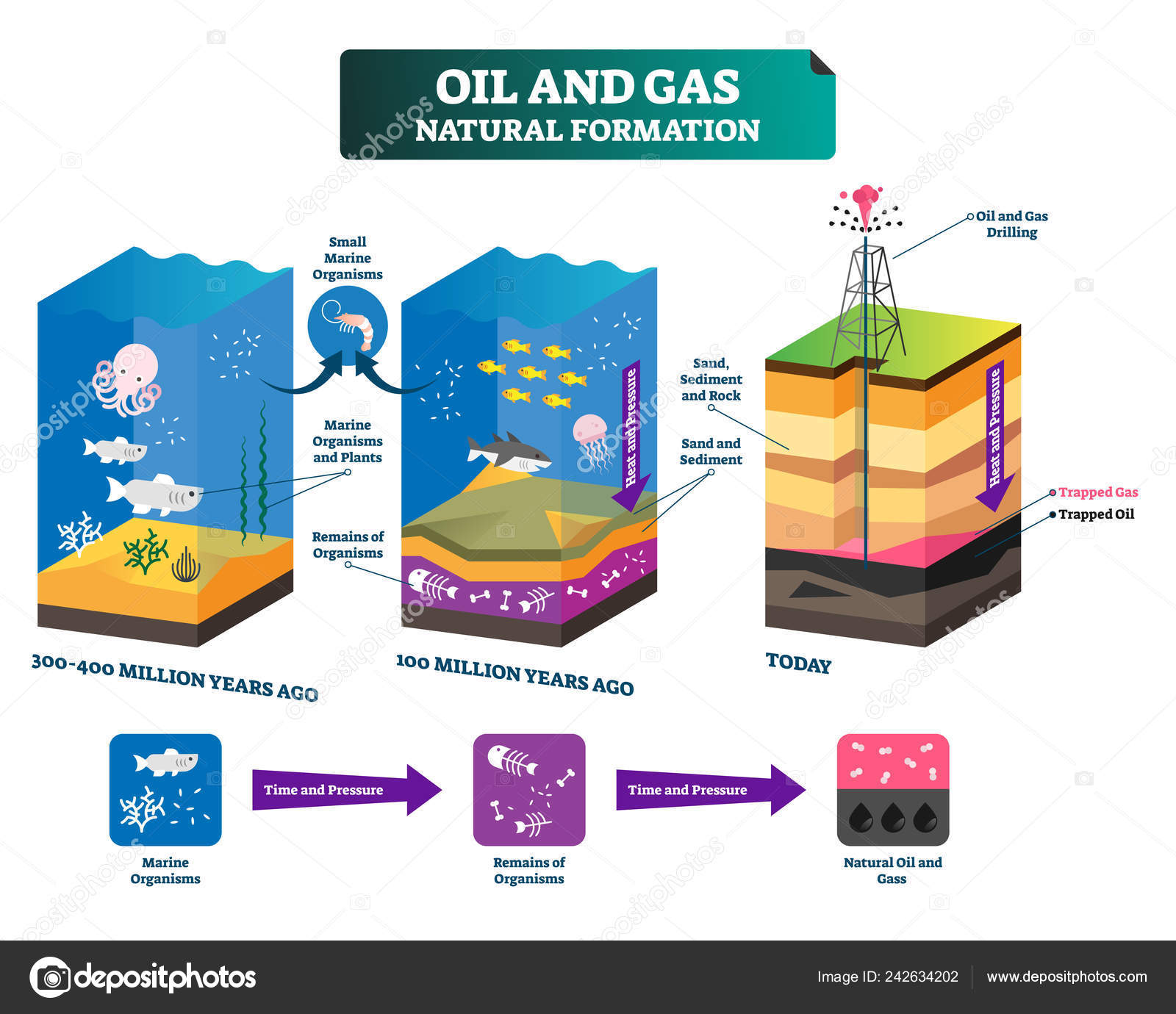
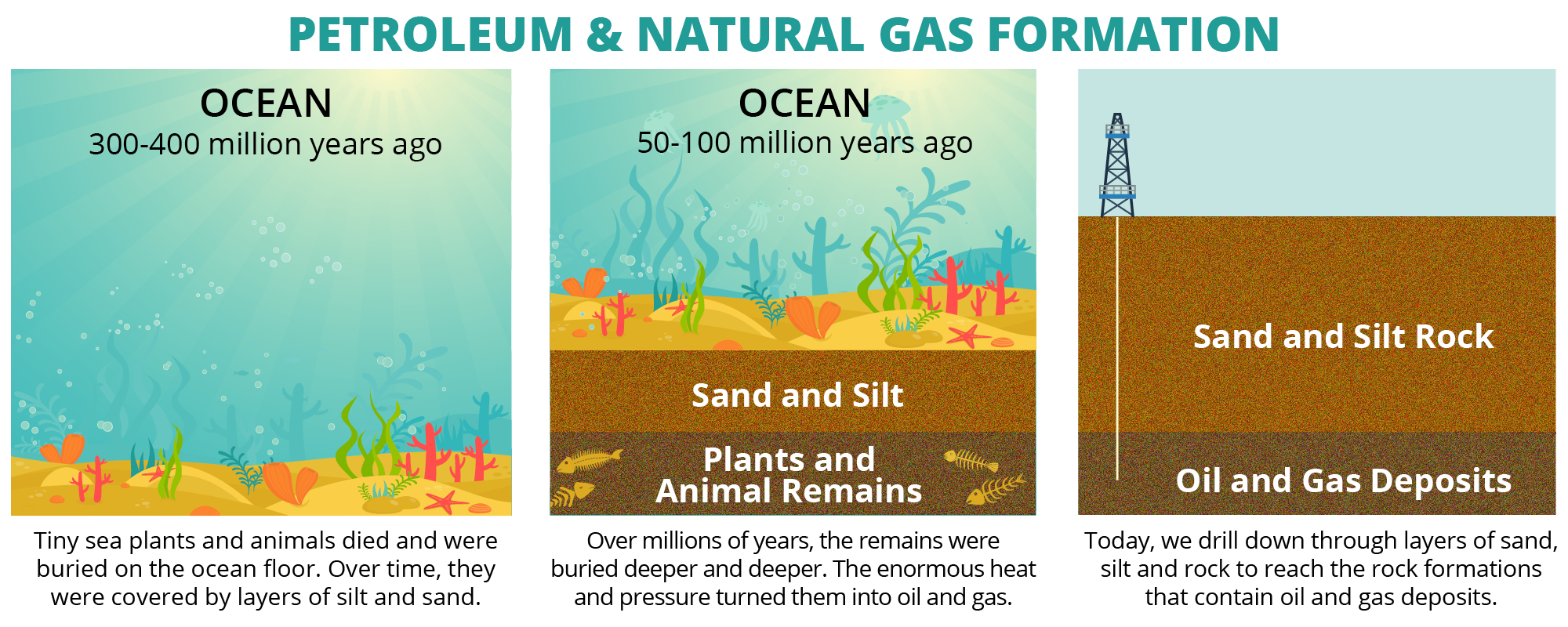
The main ingredients are tiny little organisms like algae and plankton that lived in ancient seas and swamps millions of years ago. When these little guys died, they sank to the bottom and got buried under layers and layers of sediment (think sand, mud, and rock).
Over eons, the weight of all that sediment created immense pressure and heat. This pressure cooker effect, along with the help of some awesome bacteria, slowly transformed that organic matter into what we know as natural gas (primarily methane).
Pressure, Heat, and Time: The Magic Trio
So, what are the key players in this incredibly slow natural gas formation process? You guessed it: pressure, heat, and time! Let’s break it down:
Pressure: The immense weight of overlying sediments squeezes the organic matter, compacting it and forcing out water and other impurities. Think of it like squeezing a sponge—you're getting rid of the excess stuff.
Heat: As the organic matter gets buried deeper and deeper, the Earth's internal heat cooks it, breaking down complex molecules into simpler ones. This is where the magic really happens! The temperature needs to be just right – not too hot (or it turns into something else entirely) and not too cold (or nothing happens at all).
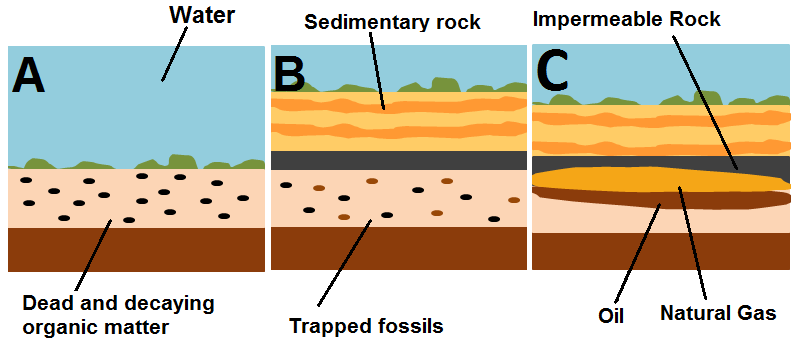
Time: This is perhaps the most crucial ingredient. You can’t rush the process! It takes millions of years for pressure and heat to work their magic and transform organic matter into natural gas. It's a geological timescale, folks, not a microwave meal!
The Natural Gas Timeline (A Really, Really Long One!)
Let's put this into perspective. If we're talking about millions of years, we're way back in the age of dinosaurs and beyond! Imagine the Jurassic period – giant reptiles roaming the Earth, while down below, the building blocks of today's natural gas are just starting to form.
The gas we use today could have started forming hundreds of millions of years ago, during the Paleozoic Era! That’s seriously mind-blowing, isn't it? It makes you appreciate the incredible forces of nature at play, and the vastness of geological time.
It's not an overnight process, that's for sure. So, next time you flip on your gas stove, take a moment to appreciate the incredible journey that gas has taken – from ancient organisms to your dinner plate!
Why Should You Care? (Besides Being Totally Awesome!)
Okay, so maybe you’re thinking, “Why do I need to know this stuff?” Well, for starters, it's just plain fascinating! Understanding how natural gas forms gives you a deeper appreciation for the Earth's processes and the amazing resources it provides.
But it's also important for understanding energy resources, conservation, and the environmental impact of using fossil fuels. Knowing that natural gas takes millions of years to form highlights the importance of using it responsibly and exploring renewable energy sources.

Plus, it’s a great conversation starter! Imagine telling your friends at your next dinner party that the gas powering their meal is older than the dinosaurs. You'll instantly become the most interesting person in the room (or at least, the most geologically informed!).
Fuel Your Curiosity!
So, there you have it! The formation of natural gas is a long, slow, and utterly captivating process. It's a reminder of the Earth's incredible power and the deep history that lies beneath our feet. The more we understand these processes, the better equipped we are to make informed decisions about our energy future.
Hopefully, this has sparked your curiosity and inspired you to learn more. There's a whole world of geology, energy science, and environmental studies out there just waiting to be explored. Go forth and fuel your passion for knowledge! You never know what amazing discoveries await you!