How Long Does Coal Take To Form
Ever wondered about things that take a ridiculously long time? Like, how long it takes for your teenager to clean their room, or for that online order to finally show up? Well, let me tell you, those are mere blips on the radar compared to nature's ultimate slow-motion project: making coal. If patience is a virtue, then coal formation is a saint of patience.
Nature's Very Slow Cooker
Think about your compost bin. All those banana peels and coffee grounds slowly turning into rich, dark soil. Now, imagine that, but on a scale so vast it makes your garden look like a teacup, and instead of a few months, we're talking about a timeline that would make even the most dedicated procrastinator blush. Coal starts its life as lush, vibrant plants – trees, ferns, mosses – that lived millions of years ago in swampy, waterlogged environments.
When these plants died, they didn't just rot away like your forgotten lettuce at the back of the fridge. Because they were in these oxygen-deprived swamps, decomposition was super slow. It's like putting a lid on a pot to keep things from spoiling – but for eons. This initial stage turns all that leafy goodness into something called peat. If you've ever gardened with peat moss, you've essentially held the first baby step of coal in your hands!
Must Read
Now, peat is basically squishy, brown, slightly smelly compressed plant matter. It's like a really ancient, very damp fruitcake. It's not coal yet, not by a long shot. This is where the real geological magic – and the really long wait – kicks in.
The Big Squeeze: From Peat to Power
Imagine layers and layers of sediment – mud, sand, more dead plants – piling up on top of that peat. We're talking about immense amounts of material, pressing down with an unimaginable force. It’s like being at the bottom of a really, really crowded human pyramid, where the top person just keeps adding more people. The weight is colossal.
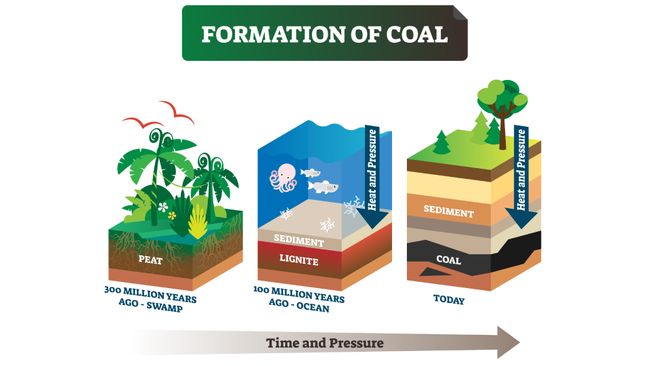
This pressure does two main things: it compacts the peat, squeezing out all the water, and it generates heat. Not oven-hot heat, but a slow, steady, deep-earth kind of warmth. Over time, this combination of pressure and heat transforms the peat. It gradually loses more moisture, becomes denser, and its carbon content increases.
First, it becomes lignite, which is like coal's awkward teenage phase – still a bit soft and brown. Then, with even more time and pressure, it turns into bituminous coal, the stuff often burned in power plants. And if it's really, really lucky (or rather, unlucky, depending on how you look at it!), it gets squished and baked for even longer, eventually becoming anthracite – the hardest, shiniest, and most carbon-rich form of coal. It's the diamond of the coal world, having endured the most extreme geological spa treatment.
So, How Long Are We Talking?
Alright, let's get to the juicy bit. How long does this whole magnificent process take? Are we talking a few centuries? A millennium? Try adding about six zeroes to that thought.

To go from lush swamp plants to a decent chunk of coal, you're looking at anywhere from 30 to 400 million years. Yes, you read that right. Million. Years.
To put that into perspective, the dinosaurs only hung around for about 165 million years. Humans, in their modern form, have been on Earth for a mere 300,000 years. The pyramids were built a measly 4,500 years ago. So, by the time you're holding a piece of coal, you're literally touching something that started its journey before mountains existed in their current form, before continents drifted to their present locations, and before pretty much anything we recognise was even a twinkle in geological time's eye.
It’s like waiting for that sequel to your favorite movie, but the director keeps saying, "It'll be out in a few million years, maybe." You'd be long gone, your great-great-great-great-great-great-great-great-great-great-grandkids would be long gone, and possibly even the language you speak might have changed!
A Timeless Nugget of Patience
So, the next time you hear about coal, remember its incredible backstory. It's not just a rock; it's a testament to nature's astounding patience and the incredibly slow, powerful forces that shape our planet. It took millions of years, endless layers of pressure, and just the right conditions for those ancient swamp plants to become the energy source we know today.
It's enough to make you appreciate the instant gratification of your morning coffee, isn't it? Because if coffee took 300 million years to brew, well, we'd all be very, very tired.