How Long Does A Tornado Last For
There's something uniquely captivating about tornadoes, isn't there? These incredible, swirling columns of wind are nature's raw power made visible, tearing across landscapes with an awe-inspiring, yet terrifying, grace. From the dramatic footage we see to the cautionary tales we hear, tornadoes are a constant source of fascination. One of the most common questions that sparks curiosity (and a little bit of nervous wonder) is: How long does a tornado actually last? It’s a fantastic question, not just because it taps into our primal interest in extreme weather, but because understanding the answer offers crucial insights into these powerful phenomena.
Knowing the typical lifespan of a tornado isn't just trivia for weather enthusiasts; it has real-world benefits. For meteorologists, it helps in predicting behavior and issuing timely warnings. For communities in tornado-prone areas, it informs emergency preparedness, allowing folks to better understand the window of danger and the urgency of seeking shelter. It helps us appreciate the fleeting, yet intense, nature of these storms, providing a clearer picture of the risks involved and fostering a healthy respect for the forces of nature. So, let’s unravel the mystery of tornado duration!
The straightforward answer is: it varies wildly. Much like snowflakes, no two tornadoes are exactly alike, and their lifespans can range from mere seconds to several hours. However, to give you a clearer picture, the vast majority of tornadoes are quite short-lived events. Many touch down for only a few moments, perhaps a minute or two, causing localized damage before dissipating.
Must Read
A typical tornado might last anywhere from 5 to 10 minutes. These are the more common occurrences that many of us envision when we think of a tornado's destructive path. They form, do their terrifying dance, and then vanish as quickly as they appeared. The duration is often influenced by the parent thunderstorm's structure and the atmospheric conditions feeding it. If the storm system is disorganized or the environmental factors aren't quite right, the tornado struggles to sustain itself.
But then there are the outliers – the long-track tornadoes. These are the truly exceptional events that can persist for an hour or more, sometimes even several hours, cutting a path of devastation that stretches for dozens, or even hundreds, of miles. The infamous Tri-State Tornado of 1925, for instance, lasted for approximately 3.5 hours, traversing over 200 miles across Missouri, Illinois, and Indiana. These long-lived tornadoes are often associated with powerful, supercell thunderstorms that are incredibly efficient at sustaining the conditions necessary for tornadogenesis.
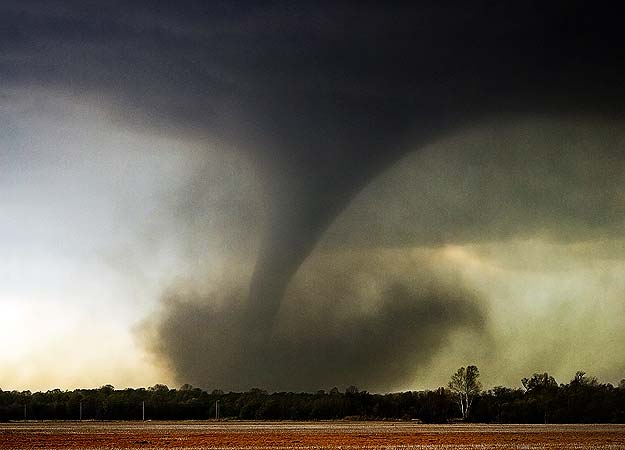
So, while the average tornado is a brief, intense burst of energy, remember that the spectrum is incredibly broad. The important takeaway is that even a short-lived tornado can cause immense destruction in its path. Understanding this variability helps us better comprehend the power and unpredictability of these incredible natural phenomena, making us all a little more weather-wise and prepared.
The straightforward answer is: it varies wildly. Much like snowflakes, no two tornadoes are exactly alike, and their lifespans can range from mere seconds to several hours. However, to give you a clearer picture, the vast majority of tornadoes are quite short-lived events. Many touch down for only a few moments, perhaps a minute or two, causing localized damage before dissipating.

A typical tornado might last anywhere from 5 to 10 minutes. These are the more common occurrences that many of us envision when we think of a tornado's destructive path. They form, do their terrifying dance, and then vanish as quickly as they appeared. The duration is often influenced by the parent thunderstorm's structure and the atmospheric conditions feeding it. If the storm system is disorganized or the environmental factors aren't quite right, the tornado struggles to sustain itself.
But then there are the outliers – the long-track tornadoes. These are the truly exceptional events that can persist for an hour or more, sometimes even several hours, cutting a path of devastation that stretches for dozens, or even hundreds, of miles. The infamous Tri-State Tornado of 1925, for instance, lasted for approximately 3.5 hours, traversing over 200 miles across Missouri, Illinois, and Indiana. These long-lived tornadoes are often associated with powerful, supercell thunderstorms that are incredibly efficient at sustaining the conditions necessary for tornadogenesis.
So, while the average tornado is a brief, intense burst of energy, remember that the spectrum is incredibly broad. The important takeaway is that even a short-lived tornado can cause immense destruction in its path. Understanding this variability helps us better comprehend the power and unpredictability of these incredible natural phenomena, making us all a little more weather-wise and prepared.