How Long Does A 3d Printer Take
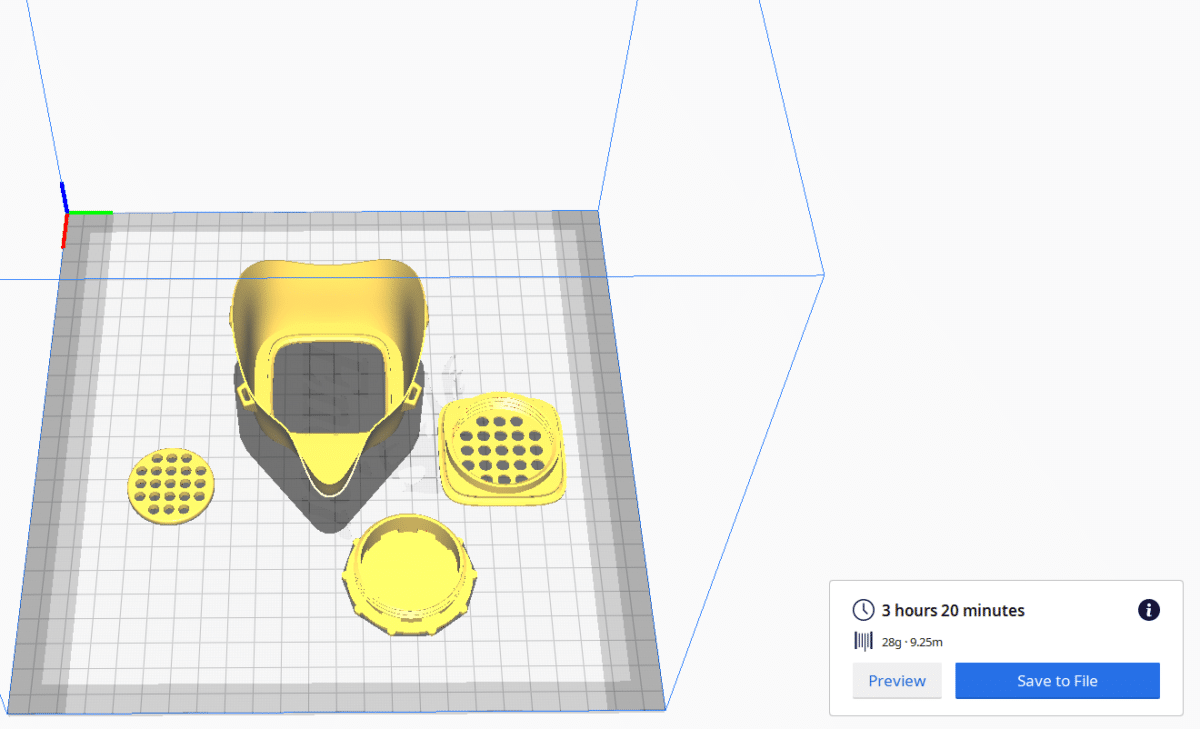
Ever gazed at a cool 3D printed gadget or artistic creation and wondered, "How long did that actually take to make?" It's a fantastic question, and one that often sparks a blend of curiosity and mild impatience in the digital age. The magic of 3D printing, watching an object literally grow from a spool of plastic or a vat of resin, is undeniably captivating. But unlike hitting "print" on a document, bringing a physical object to life involves a bit more of a journey. Let's dive into the fascinating world of 3D print times, exploring why it's rarely a quick answer, and why that's perfectly okay!
At its heart, a 3D printer is a machine that transforms digital designs into tangible objects, layer by painstaking layer. Its purpose is to offer unparalleled freedom in creation, allowing us to produce custom parts, prototypes, or purely decorative items with incredible detail. The benefits are immense: from rapid prototyping new inventions without expensive tooling, to creating personalized gifts, or even manufacturing complex medical models. It bridges the gap between our imaginations and physical reality, giving us the power to customize and innovate like never before. The excitement of holding something you designed or downloaded, minutes or hours after it was just data on a screen, is a truly unique thrill.
So, back to the big question: how long does it take? The truth is, it depends on several key factors, much like baking a cake. You wouldn't expect a cupcake and a five-tier wedding cake to take the same amount of time, right? With 3D printing, the main culprits are the size of the object – bigger almost always means longer – and its complexity. A hollow cube will print much faster than an intricately detailed figurine of the same dimensions. Then there's print quality or resolution; opting for super-fine layers for a smooth finish will inherently take more time than a rougher, faster print. Don't forget infill percentage (how solid the inside of your object is), and the printer's own speed settings. Each of these variables plays a crucial role in determining the final clock-out time.
Must Read
In education, 3D printing is a game-changer. Students can prototype designs for science projects, print anatomical models for biology, or even recreate historical artifacts for history class. A simple gear might take an hour, while a detailed architectural model could be an overnight print. In daily life, the applications are endless and incredibly practical. Need a custom phone stand? That might be a quick 2-3 hour print. A new hook for your kitchen utensils? Perhaps an hour. A replacement knob for a broken appliance? Another hour or two. More ambitious projects, like a cosplay helmet or a large decorative vase, could easily span 8 to 24 hours, or even multiple days. It truly offers a wonderful lesson in patience and the rewarding process of creation.
Curious to explore it yourself? A fantastic way to start is by looking up local makerspaces, libraries, or universities that often have 3D printers available for public use. They usually have staff who can guide you through the process. Begin with small, pre-made designs – there are countless free files online on sites like Thingiverse or Printables. These often come with estimated print times, giving you a real-world feel for the duration. Don't be afraid to ask questions, experiment with settings, and most importantly, enjoy the journey of watching your digital dreams become physical realities. It might take a little time, but the outcome is almost always worth the wait!