
How Is Energy Produced From Hydroelectric Power
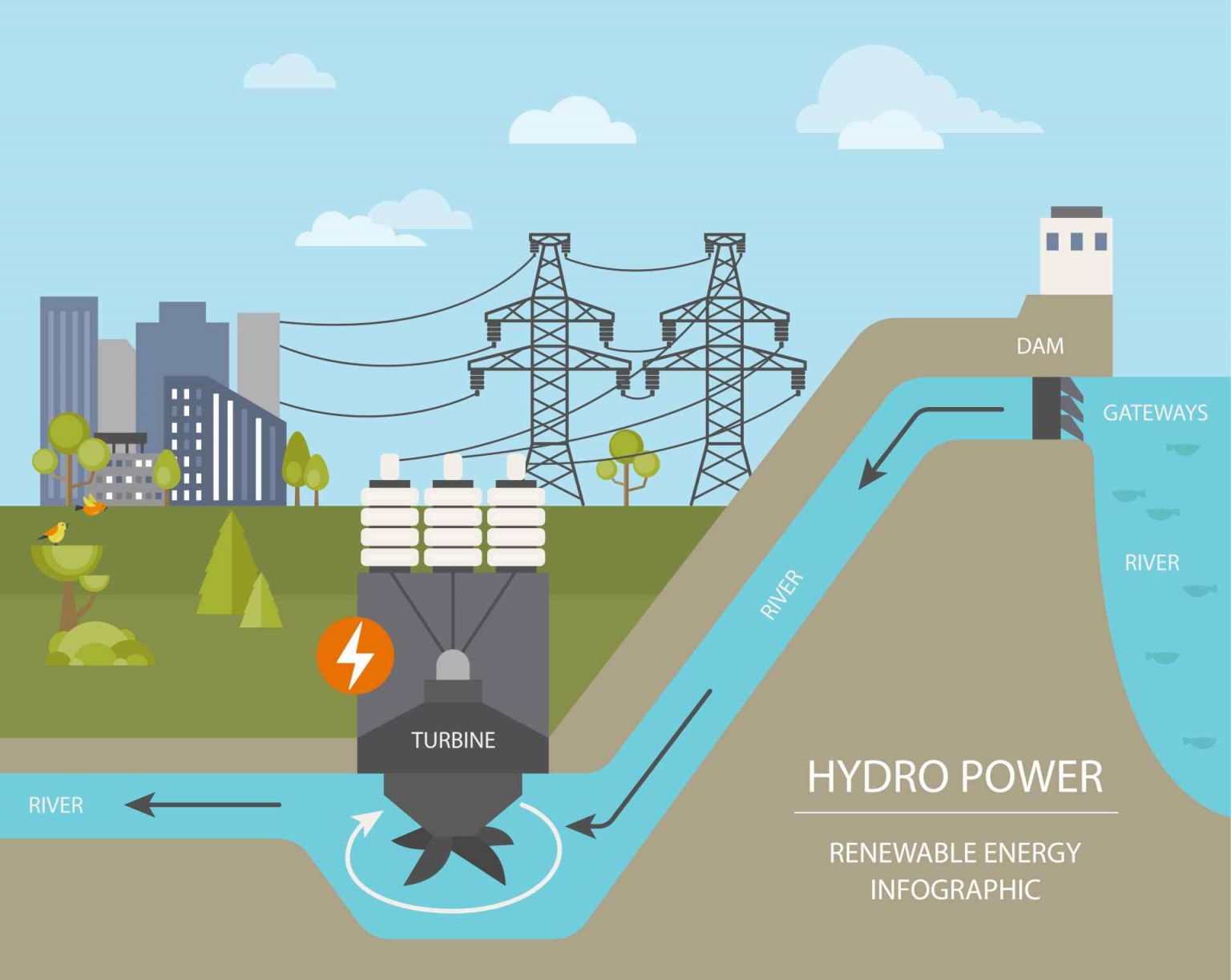
Okay, so you want to know about hydroelectric power? Cool! It's basically using the power of water to make electricity. Think of it as water doing the heavy lifting for us. Isn't that neat?
The Basic Idea: Water Makes Electricity!
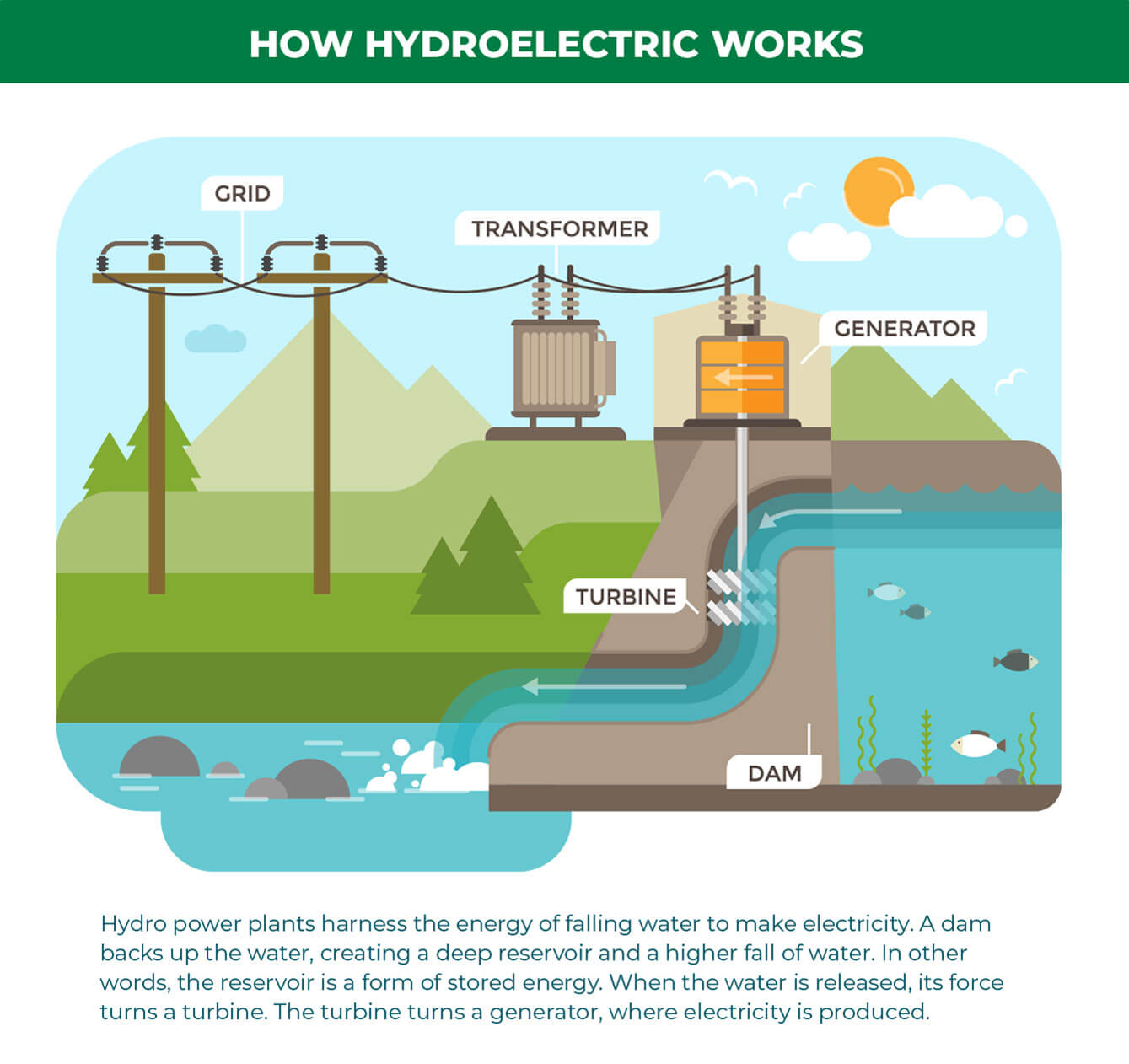
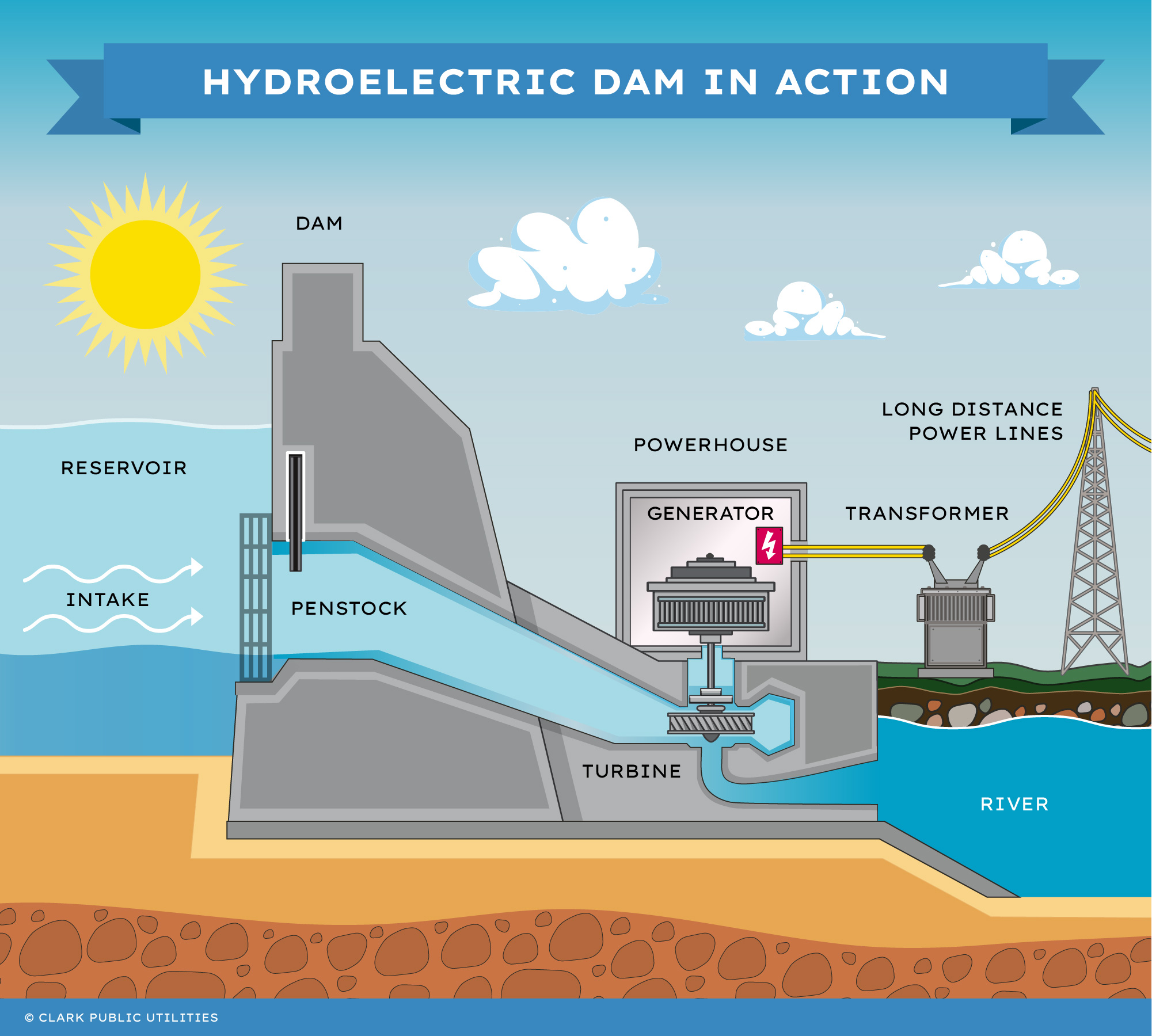
It all starts with a dam. Yep, that big concrete wall you see holding back a lake. Dams aren't just scenic, they're powerhouses. They create a huge difference in water height – water above the dam (the reservoir) and water below it.
Think of the reservoir as a giant battery, storing potential energy. This energy is just waiting for its moment to shine (literally, as electricity!). It's like a coiled spring, ready to POW unleash all that power.
Must Read
So, gravity does its thing. Water wants to go downhill, right? The dam forces it to go through a special tunnel called a penstock. Fancy, huh?
The Turbine: Where the Magic Happens
At the end of the penstock sits a turbine. Imagine a giant water wheel, but way more sophisticated. As the water rushes through, it spins the turbine blades. This is where kinetic energy comes into play!
The turbine is directly connected to a generator. The generator is the true magician here! It's a device that converts mechanical energy (the spinning of the turbine) into electrical energy. Pretty cool, right? It's like a tiny lightning factory.
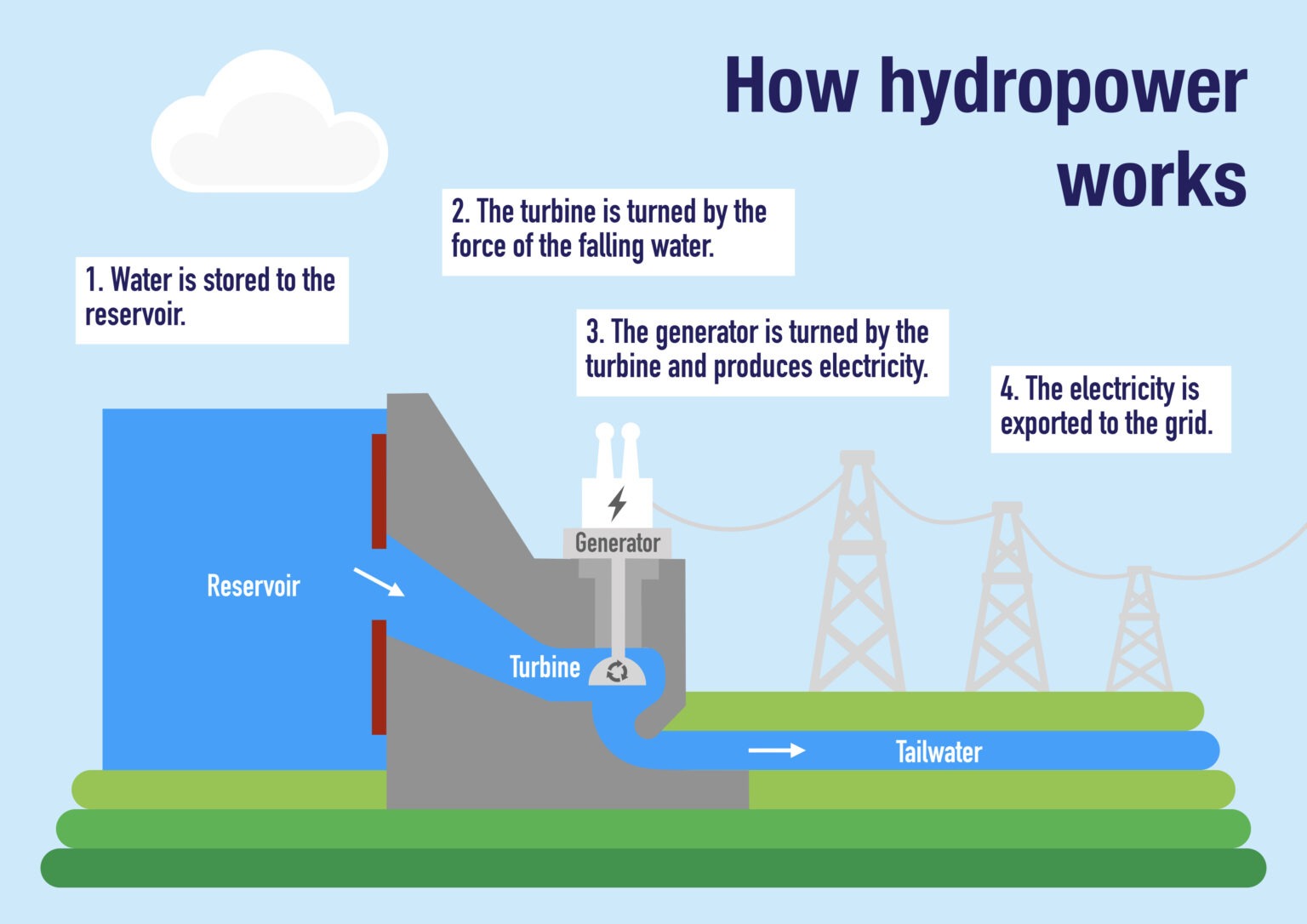
Inside the generator, coils of wire spin within a magnetic field. This movement creates an electric current. Think of it like rubbing a balloon on your hair, but instead of static electricity, you're making enough juice to power your phone (and your whole neighborhood!).
Then, BAM! Electricity! It's channeled through wires, ready to power our homes, schools, and even those ridiculously bright billboards. Thanks, water!
From Big Lake to Your Light Bulb
Now, after spinning the turbine, the water continues downstream. It's not used up or anything. It just keeps flowing, doing its river thing. Pretty eco-friendly, huh?
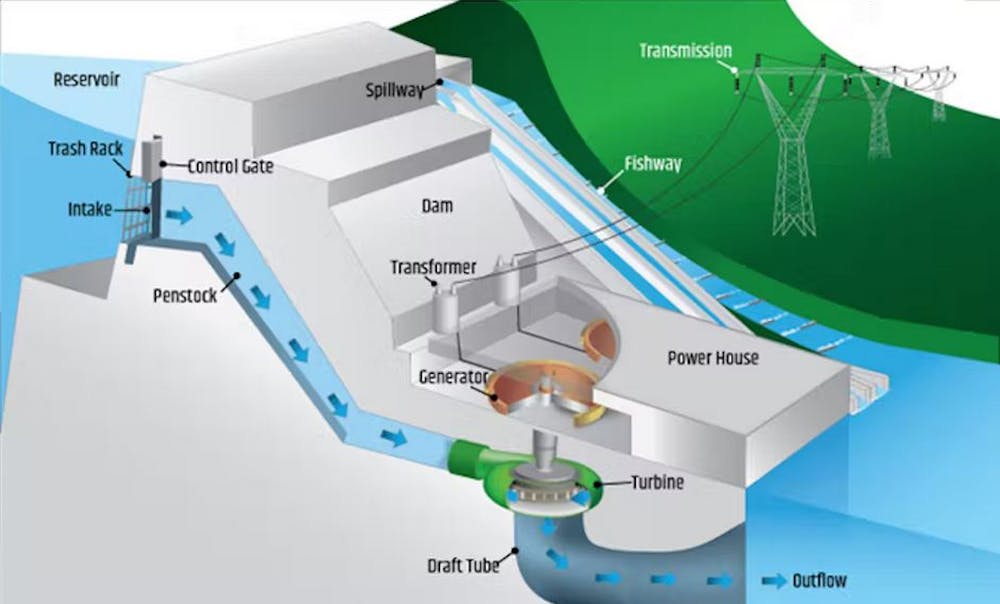
That electricity then needs to travel. It goes through a transformer to increase the voltage. This is so it can travel efficiently over long distances. Think of it like putting the electricity on a super-fast highway.
Eventually, it reaches your local substation, where the voltage is reduced again to something safe for your house. Then, voila! You flip the switch, and the lights come on. And you can thank gravity, turbines, and a whole lot of water.
Fun Facts to Impress Your Friends!
Did you know that some hydroelectric plants can start generating power in just a few minutes? That's faster than brewing a pot of coffee! Talk about instant gratification.
Also, some dams aren't just about electricity. They can also help with flood control, irrigation, and even recreation (think boating and fishing!). Talk about multitasking!
Hydroelectric power is a renewable energy source. This means we're not using up finite resources like oil or coal. The water cycle keeps on truckin', providing us with a continuous supply. Mother Nature's gift that keeps on giving.
Why is Hydro Power So Cool?
Okay, so it's clean-ish. There's less air pollution compared to burning fossil fuels. That's a win for our lungs!
Plus, it's reliable. Once the dam is built, it can generate power for decades. It's a long-term investment in a cleaner future. And dams are really cool feats of engineering!
Of course, there are also downsides. Building dams can disrupt ecosystems and displace communities. It's a complex issue with no easy answers, but we’re always learning and working to make things better.
But all in all, hydroelectric power is a fascinating example of how we can harness the power of nature to meet our energy needs. So next time you flip a light switch, remember the amazing journey that electricity takes from a rushing river to your home. And maybe give a little thanks to the water!
So, there you have it! Hydroelectric power in a nutshell (or a water droplet, perhaps?). Pretty simple, pretty cool, and pretty important for a sustainable future. Now go impress everyone with your newfound knowledge!