
How Is Electricity Made From Nuclear Energy
Alright, gather 'round, folks! Let's talk about something slightly more exciting than watching paint dry: nuclear power! I know, I know, it sounds intimidating, like something straight out of a sci-fi movie where robots are plotting world domination. But trust me, it's actually pretty straightforward, in a "splitting atoms to make toast" kind of way.
So, how do we squeeze electricity out of those tiny, temperamental atoms? Buckle up, because we're about to embark on a nuclear adventure. Think of it as a high-stakes game of atomic billiards... with really hot balls.
The Magic Ingredient: Uranium (and a Touch of Neutrons)
Our star player is uranium. Specifically, a certain type of uranium called Uranium-235. This stuff is like the diva of the element world – unstable, prone to tantrums, and full of energy (sound familiar, anyone?).
Must Read
Now, to get the party started, we need a catalyst – a tiny little subatomic troublemaker called a neutron. Think of the neutron as that friend who always instigates things at a party.
We fire this neutron at a Uranium-235 atom. POW! The uranium atom goes absolutely bonkers! It splits into two smaller atoms (fission, baby!), and – this is the crucial part – it releases more neutrons. It's like a chain reaction of atomic breakdancing!
Why is this chain reaction important? Well, those newly released neutrons then go on to smash into other Uranium-235 atoms, causing them to split, releasing even more neutrons. It's a nuclear domino effect! And with each split, they release a tiny bit of energy in the form of heat and radiation. Which leads to...
Boiling Water: The Surprisingly Crucial Step
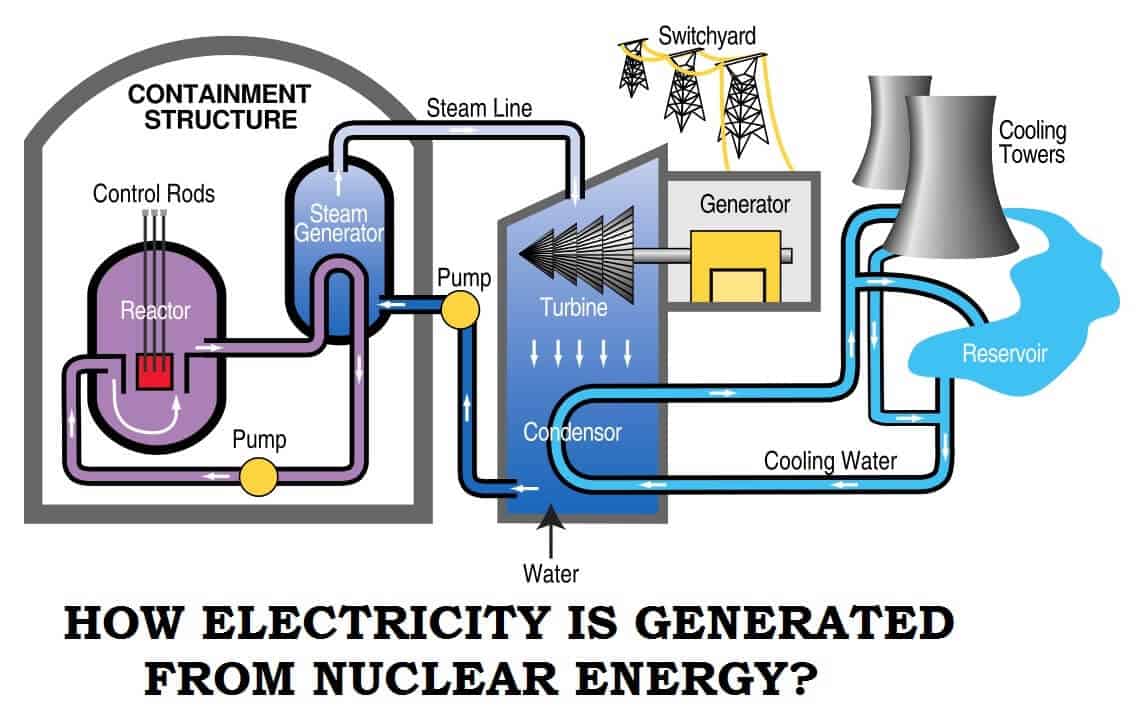
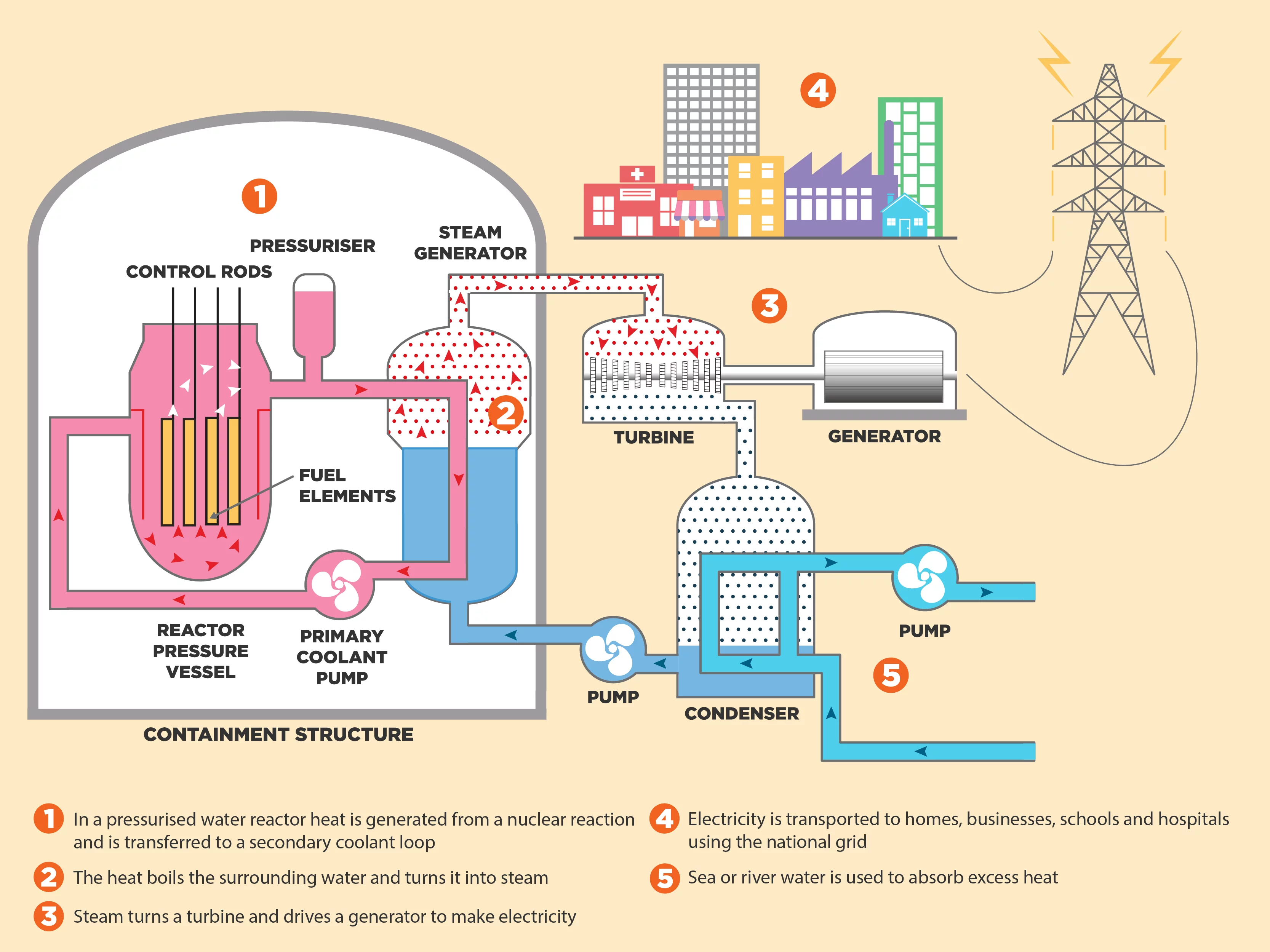
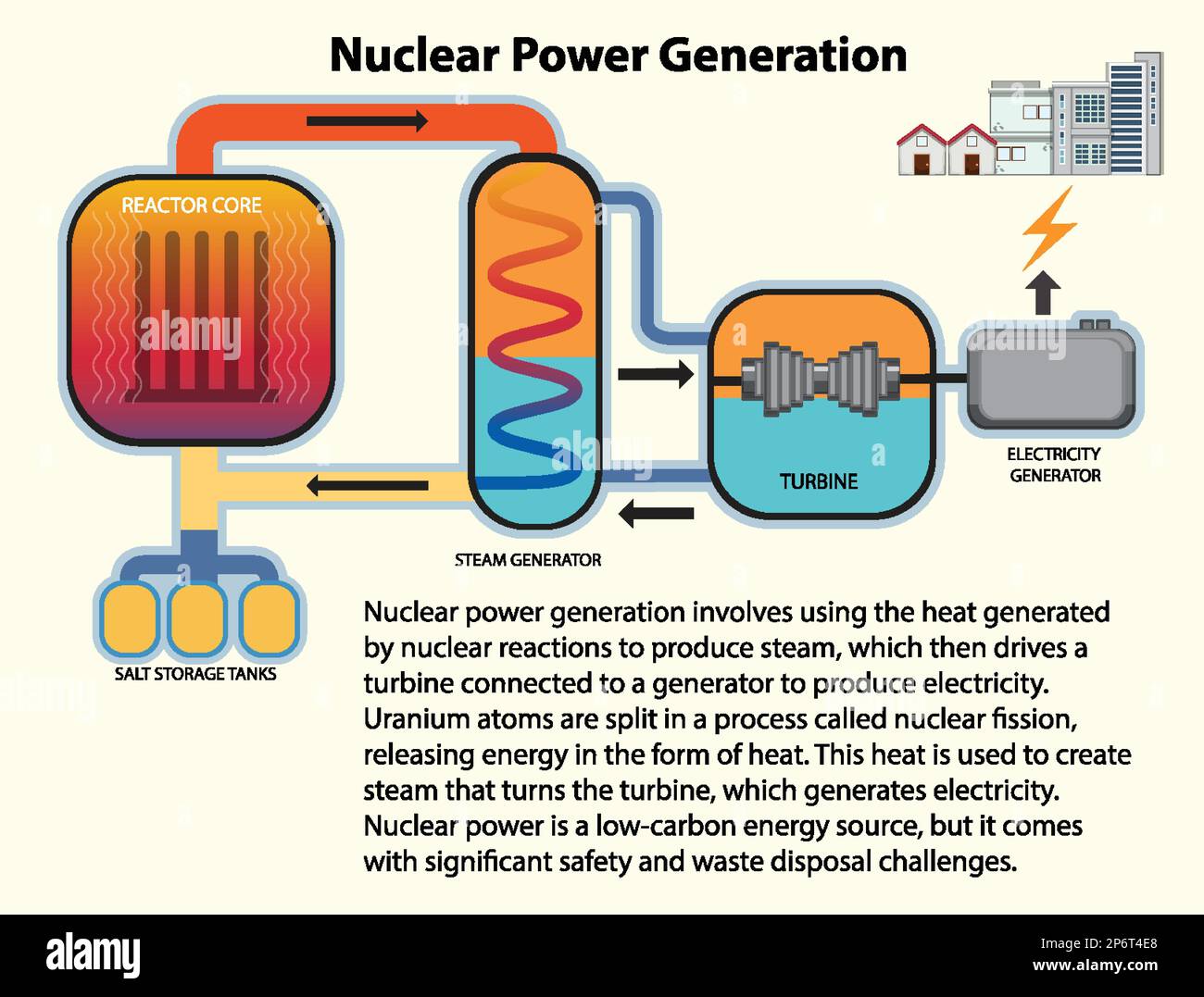
Now, all this atomic chaos is happening inside a nuclear reactor. Imagine a big, super-secure, heavily shielded pot. Inside this pot, we have the uranium fuel, carefully arranged to control the chain reaction. (We don’t want a Chernobyl situation, okay? Controlled explosions only!)
The heat generated by the splitting uranium atoms is used to heat water. Yes, plain old H2O. I know, anticlimactic, right? But think about it: we're harnessing the power of the atom...to boil water. It's like using a rocket ship to deliver pizza. Overkill? Maybe. Effective? Absolutely!
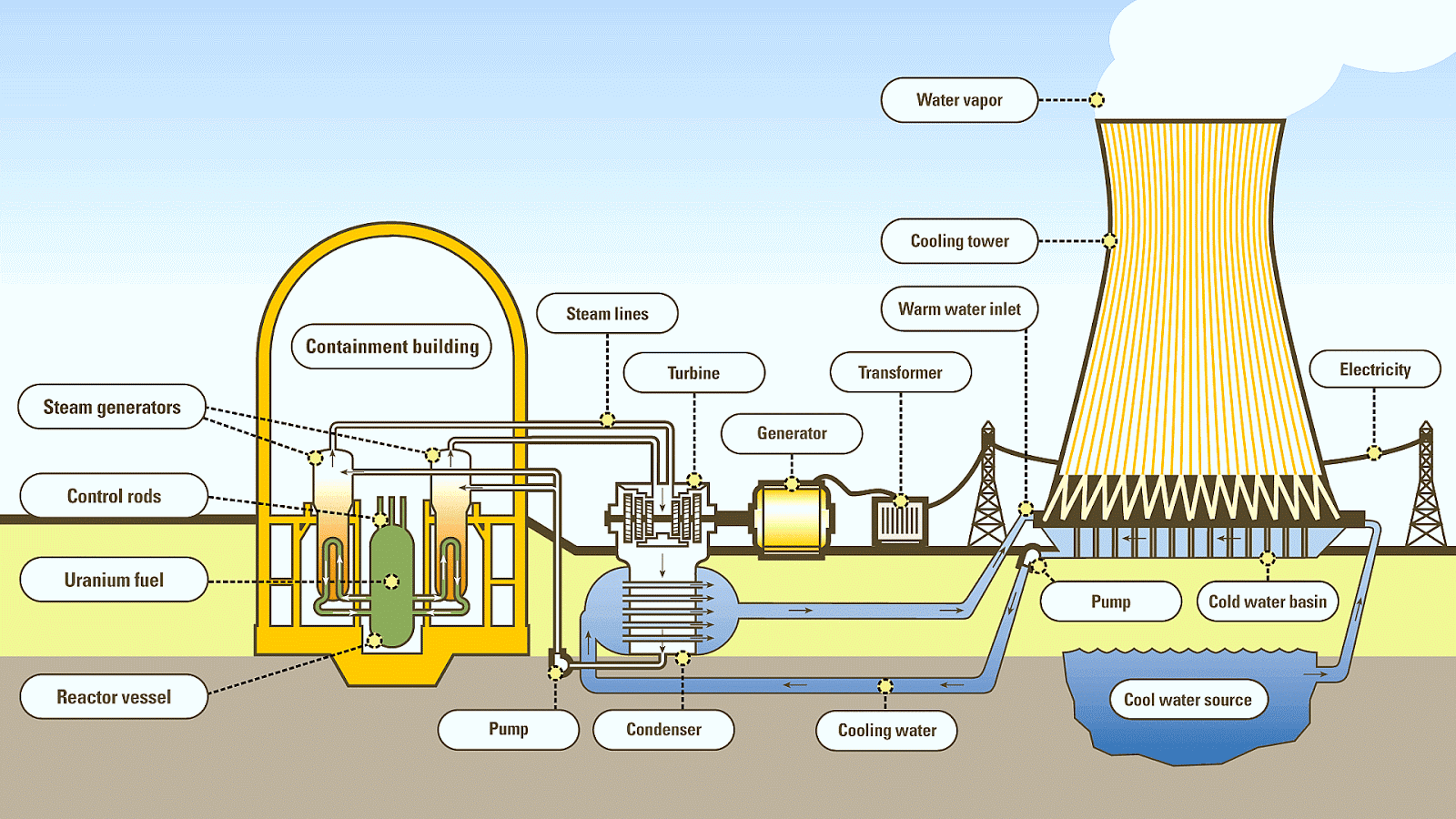
This boiling water turns into steam. And steam, my friends, is where the real magic happens. This part is, essentially, the same as a regular old power plant using coal or gas!
Spinning Turbines: The Big Finish
The steam, under immense pressure, is then directed at a turbine. Think of a turbine as a giant, super-powered pinwheel. The steam blasts against the turbine blades, causing them to spin at incredibly high speeds.
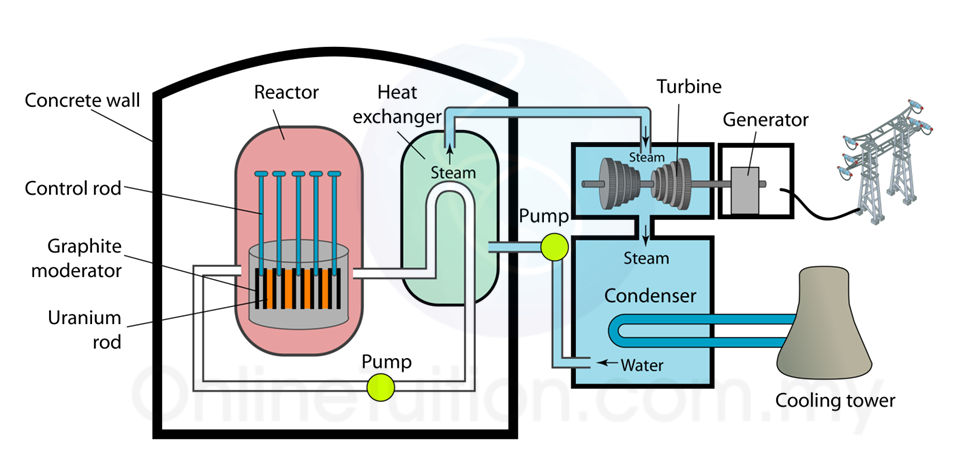
This spinning turbine is connected to a generator, which is basically a fancy magnet-powered device. As the turbine spins, it causes the generator to create electricity. Voila! We've successfully transformed atomic energy into something that can power your phone, your TV, and your oh-so-important coffee maker.
Controlling the Chaos (and Avoiding Meltdowns)
Of course, we can't just let this atomic chain reaction run wild. That's where control rods come in. These rods are made of materials that absorb neutrons, effectively slowing down or even stopping the fission process. Think of them as the brakes on our nuclear rollercoaster. Operators carefully insert or withdraw these rods to control the rate of the reaction and the amount of heat produced.
And, by the way, these nuclear reactors are built with layers and layers of safety features. Like, seriously secure. We're talking reinforced concrete, containment structures, and multiple backup systems. It's like the Fort Knox of energy production.
The Upsides (and the Downsides)
So, what's the catch? Well, nuclear power does produce radioactive waste. This waste needs to be stored safely for a long, long time. It's like having a really annoying houseguest who refuses to leave and radiates bad vibes (literally!).
However, nuclear power is also incredibly efficient and doesn't produce greenhouse gases during operation, meaning no contribution to global warming! It's like having a super-powered engine that runs clean.
Ultimately, turning nuclear energy into electricity involves splitting atoms, using the heat to boil water, creating steam, spinning a turbine, and finally generating electricity. A slightly mad scientist-esque process, but there you have it!