
How Is Electricity Generated In A Nuclear Reactor
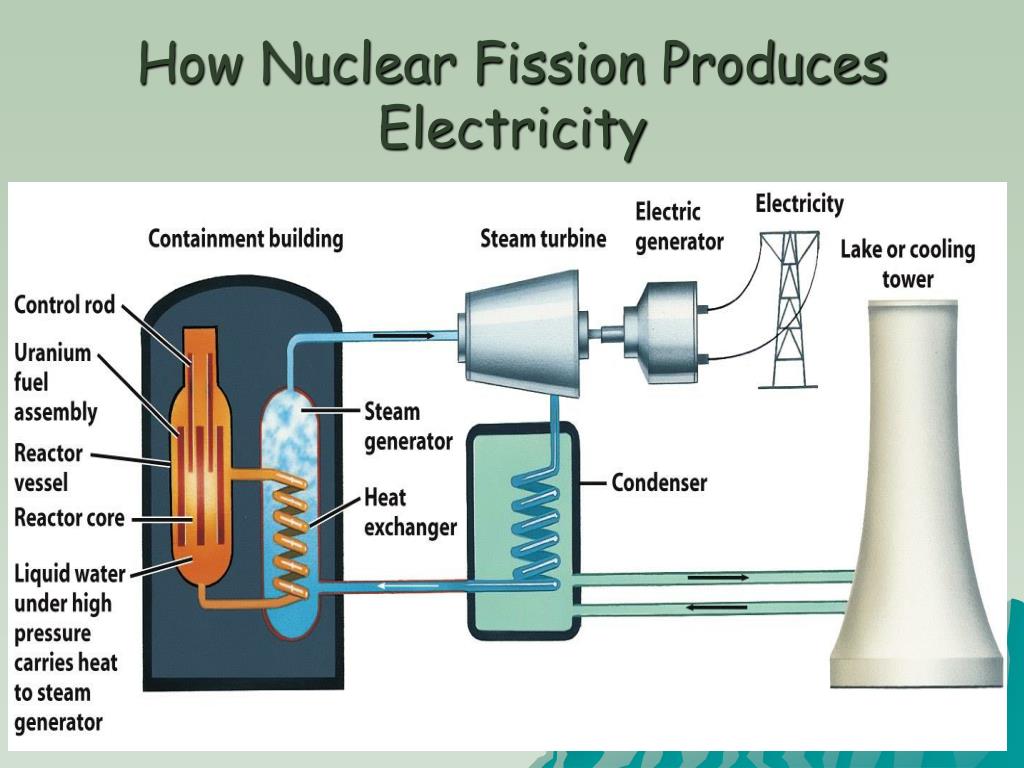
Okay, let's talk nuclear power! It's a bit like that super-powered microwave everyone secretly fears. Don't worry, we're not building a nuke here.
Splitting Hairs (and Atoms!)
At the heart of a nuclear reactor is the idea of splitting atoms. Imagine a bunch of billiard balls (those are the atoms). Now imagine smashing one with another.
Instead of just bouncing, the atom splits. This splitting, or fission, releases energy. Massive amounts of energy! More on that energy later.
Must Read
The usual suspect for atom-splitting is Uranium. It's a heavy element, like the sumo wrestler of the periodic table. And quite unstable.
Unpopular Opinion Time: Uranium is kind of a diva. It just wants to break apart.
Seriously. It just needs a little nudge. That nudge comes in the form of a neutron, a tiny atomic particle.
A neutron hits the Uranium, BAM! The Uranium atom splits and releases more neutrons. It's a chain reaction, like a nuclear domino effect!
These newly released neutrons go on to split more Uranium atoms. And so on. And so on. It’s a bit like starting a rumour, really.
From Atom Smashing to Water Heating
So, we're splitting atoms and releasing lots of energy. What now? We need to harness this atomic chaos.
This energy manifests as heat. Think of it as a really, REALLY hot campfire, but instead of logs, it's Uranium doing the burning (fissioning). That is kind of scary.
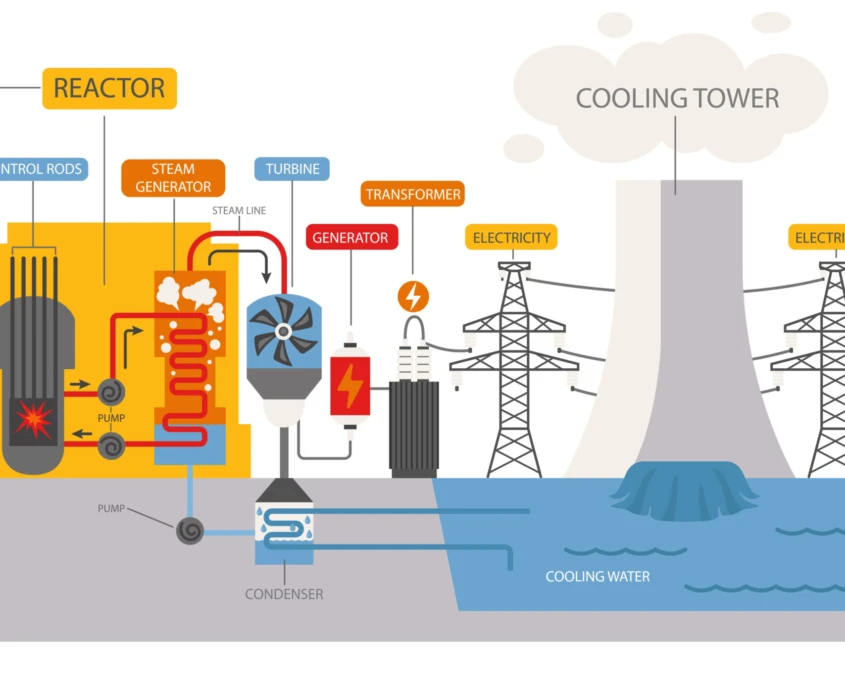
We use this heat to boil water. Yes, seriously. All that atomic wizardry just to make steam. It sounds anticlimactic, I know.
Unpopular Opinion Time: Maybe they should call it "Nuclear-Heated Water Power" for accuracy.
That superheated steam is then piped to a turbine. A turbine is basically a giant fan connected to a generator.
The steam blasts against the turbine blades, making it spin. It’s like a really intense hairdryer aimed at a windmill.
The spinning turbine turns the generator. And guess what? The generator creates electricity!
The Generator: Electricity's Best Friend
Generators are the unsung heroes of the power world. They're basically giant magnets and coils of wire.
When a magnet spins near a coil of wire, it creates an electrical current. It's electromagnetic induction, a fancy term for "magic wires making electricity".
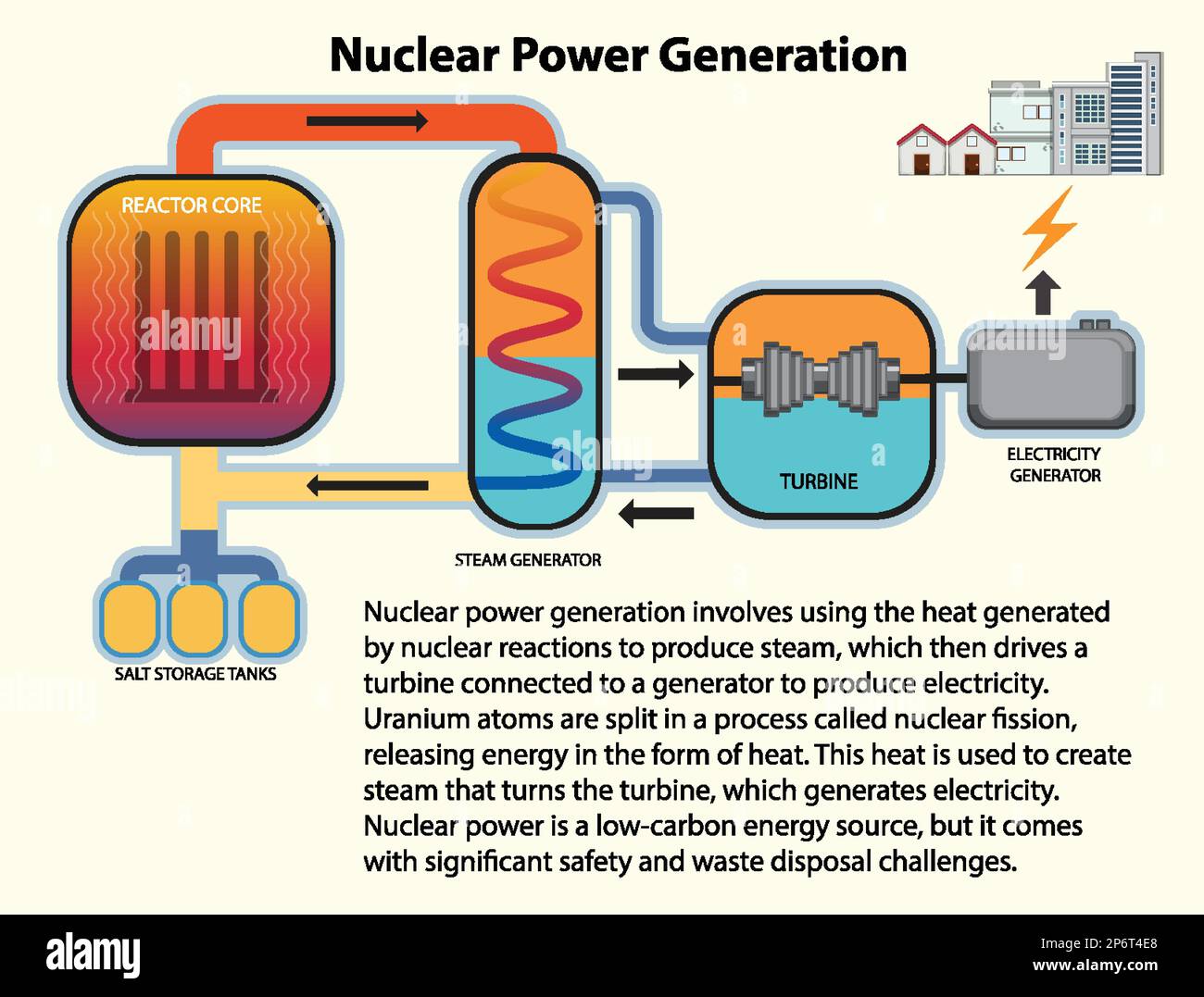
This electricity is then sent out through power lines to homes, businesses, and that evil arcade that steals all your quarters.
Controlling the Chaos (or Trying To)
All this atom splitting can get out of hand quickly. We need a way to control the chain reaction.
That's where control rods come in. These rods are made of materials that absorb neutrons. They act like sponges soaking up the neutron party crashers.
By inserting or withdrawing the control rods, we can speed up or slow down the fission process. It's like adjusting the volume on a nuclear stereo.
Unpopular Opinion Time: I bet nuclear engineers play with the control rods for fun during their breaks. Just a little bit.
If things get too hot (literally), the control rods can be fully inserted to stop the reaction entirely. That's called a "scram" or an "emergency shutdown."
Think of it as hitting the big red "STOP" button on the nuclear microwave. Safety first, kids!
Cooling Down: The Never-Ending Task
Even after the fission reaction is stopped, the reactor core still generates heat. This is due to radioactive decay.

It's like a nuclear ember, glowing long after the fire is out. This residual heat needs to be removed.
That's why nuclear power plants have elaborate cooling systems. They use water (or sometimes other coolants) to circulate through the reactor core and carry away the heat.
This heat is then released into the environment, often in the form of steam from cooling towers. Those towers are the iconic symbol of nuclear power.
Unpopular Opinion Time: The cooling towers look kind of cool, like giant, futuristic salt shakers.
The Waste Problem (Let's Be Honest)
Nuclear power does produce radioactive waste. This is the biggest drawback, let's be frank.
This waste needs to be stored safely for thousands of years. Nobody wants radioactive waste in their backyard.
There are ongoing efforts to develop better ways to store and even recycle nuclear waste. It's a challenge, but scientists are on it.
So, To Recap…
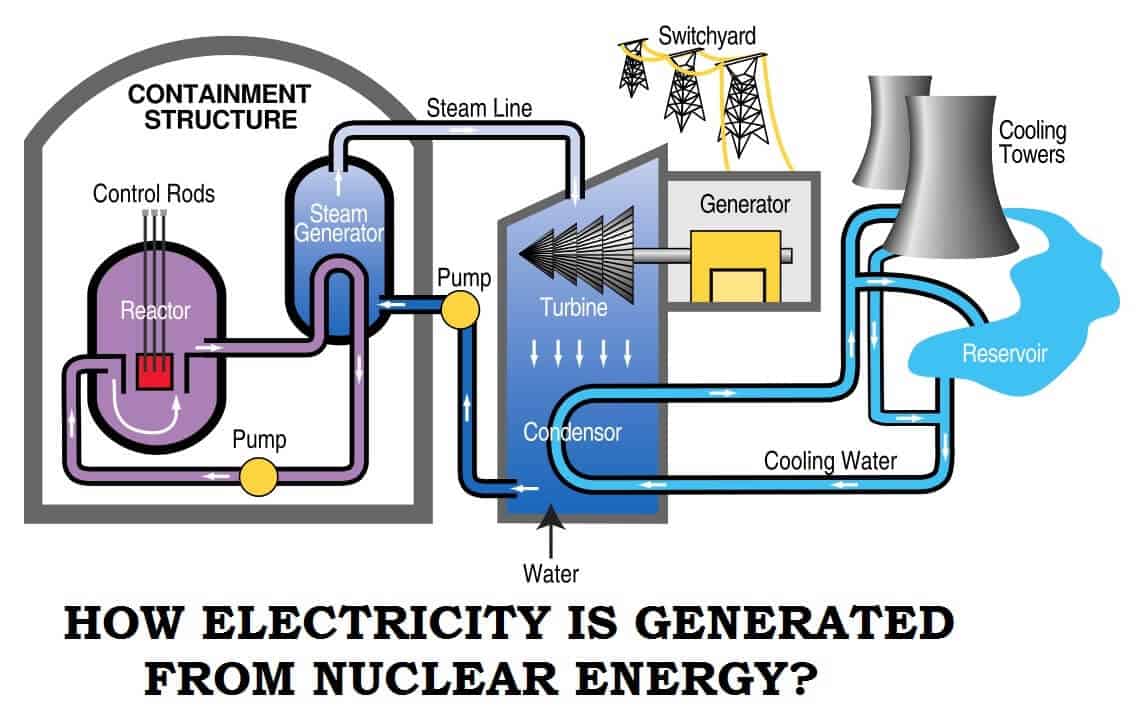
We split atoms (Uranium, the diva). This creates heat. We use that heat to boil water.
The steam turns a turbine. The turbine turns a generator. The generator makes electricity.
Control rods keep everything under control. Cooling systems prevent meltdowns. And nuclear waste… well, we're working on that.
Nuclear Power: Friend or Foe?
Nuclear power is a complex issue. It offers a low-carbon source of electricity. But it also comes with risks and challenges.
It’s important to weigh the pros and cons carefully. And to have a healthy dose of skepticism.
Ultimately, the decision of whether or not to embrace nuclear power is up to society. Let’s just hope we make an informed choice.
Unpopular Opinion Time: I secretly think nuclear power plants are just really elaborate steampunk contraptions.
Thanks for joining me on this atomic adventure! Now, if you'll excuse me, I'm going to go unplug my toaster. Just in case.