How Is Electricity Distributed And Transmitted
Ever flick a light switch and wonder how that little spark of genius gets to your bulb? It's a journey, folks, a truly epic saga of electrons traveling from power plants to your toaster, and it's more dramatic than you might think. Think of it as the Amazing Race, but instead of backpacks and passports, we've got high-voltage wires and transformers. And instead of Phil Keoghan, we've got, well, engineers – who are equally impressive in their own, quietly brilliant way.
The Power Plant: Where the Journey Begins
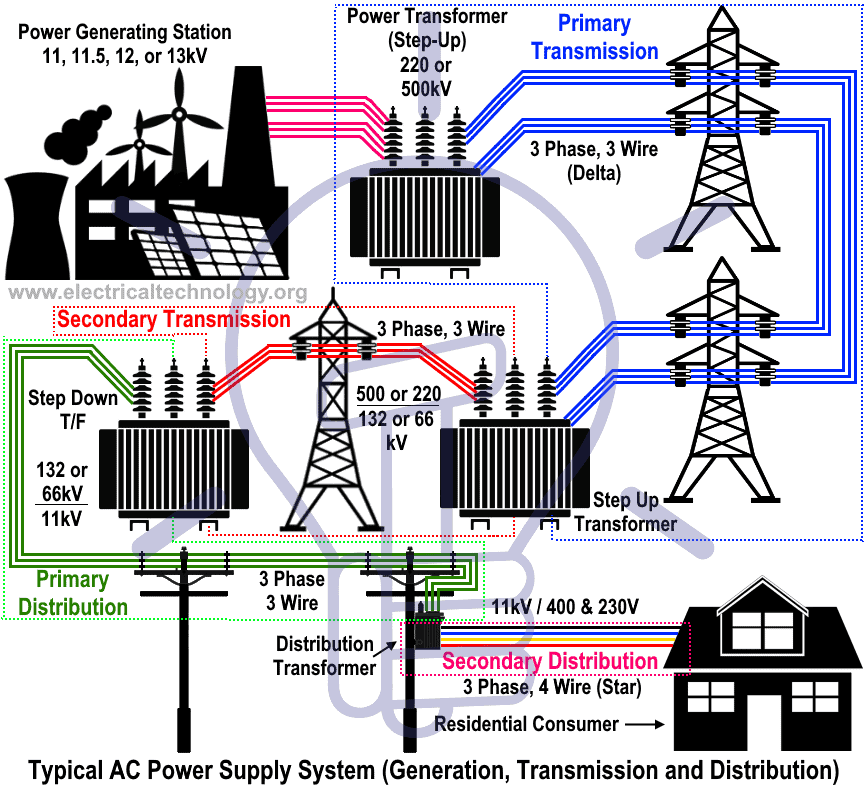
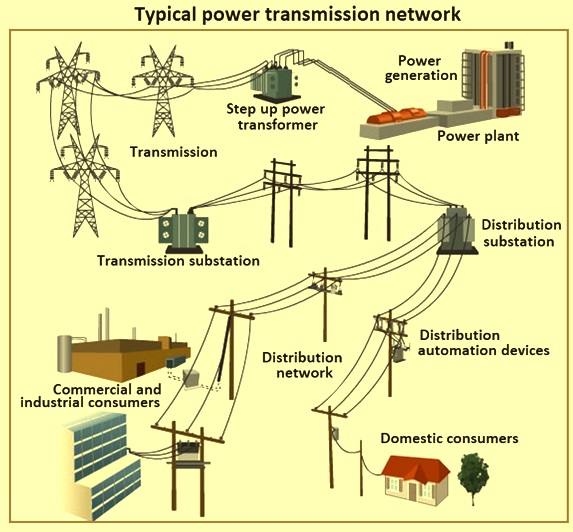
Our story kicks off at the power plant, the electron training ground. Whether it's powered by coal, natural gas, wind, or water, this is where raw energy gets transformed into electricity. Imagine a giant generator, basically a super-charged hamster wheel (though hopefully more humane). This "wheel" spins, thanks to steam, wind, or rushing water, and this spinning action magically (okay, scientifically) separates electrons, creating that electrical potential – the juice that's about to embark on its adventure.
But here's the thing: the electricity fresh out of the power plant isn't quite ready for prime time. It's like a teenager – full of potential but needs guidance and a good dose of voltage to travel long distances. This is where our next player enters the stage: the transformer.
Must Read
Transformers: The Voltage Uppers
Transformers are those big, grey, humming boxes you see near substations or sometimes perched precariously on utility poles. These unassuming metal boxes are the unsung heroes of electricity distribution. Their job is to take the raw electricity and boost its voltage. Why? Because high-voltage electricity is like a super-efficient long-distance runner. It loses less energy along the way compared to lower voltage stuff. Think of it like this: it's cheaper to build one big, strong pipe than a bunch of tiny leaky ones.
Think of the transformers like those people that you find in every neighborhood; they're the ones that always have a hand in what's going on in the neighborhood. They are the unsung hero.
The Grid: The Highway to Your Home
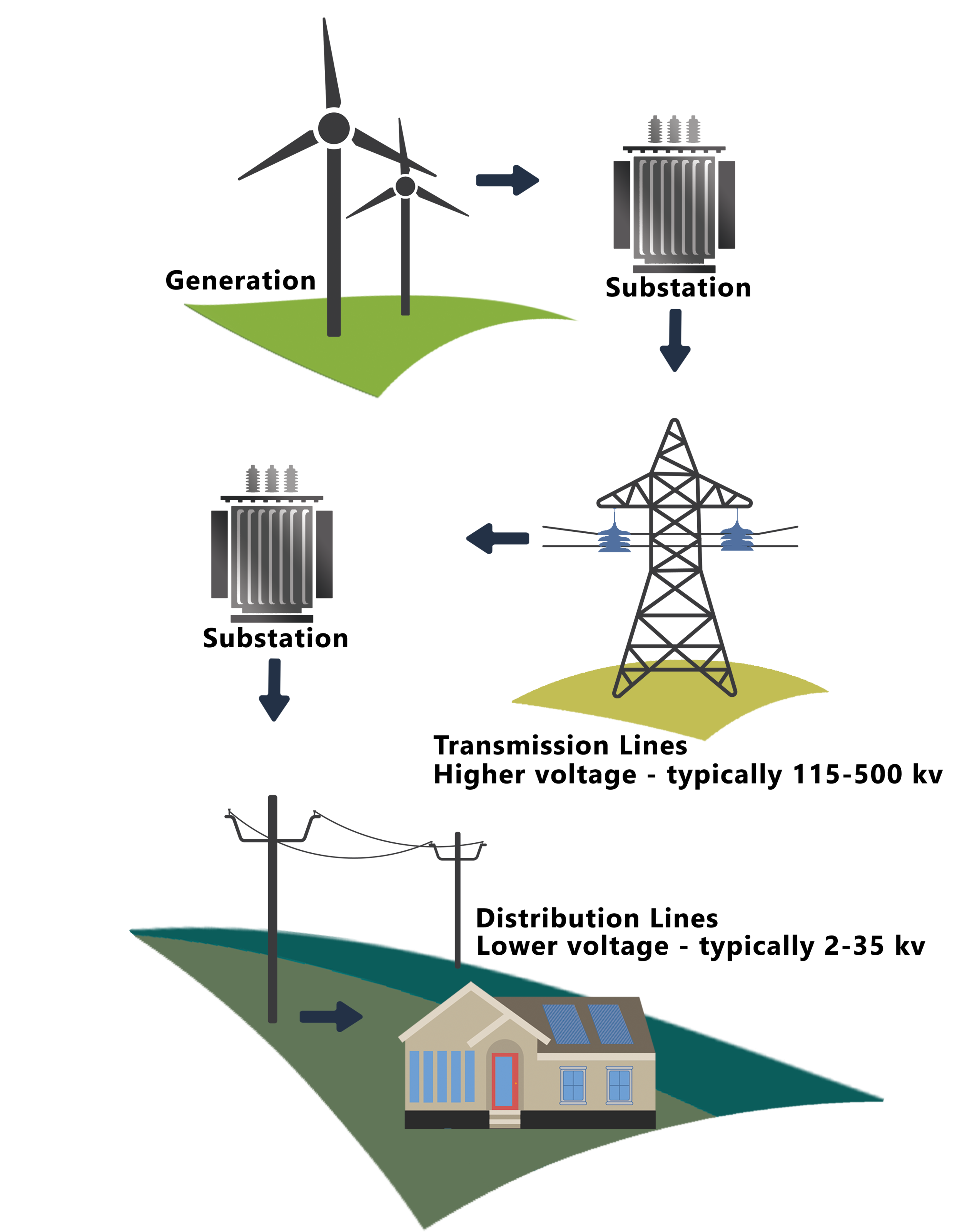
Once the electricity is "volted up," it's ready to hit the grid. The grid is the network of high-voltage transmission lines stretching across the country, connecting power plants to cities and towns. These massive towers and thick wires are like the interstate highway system for electricity, efficiently transporting electrons over vast distances.
These high-voltage lines are truly remarkable. They can carry hundreds of thousands of volts, zipping electrons along at speeds approaching the speed of light (okay, maybe not quite, but you get the idea!). It's like a constant, silent rush hour, with electrons as the commuters. You probably wouldn’t want to cut one of these lines, so be careful.
Substations: Off-Ramps to Local Areas
As the high-voltage electricity approaches your town, it arrives at a substation. Substations are like off-ramps on the electrical highway. Here, transformers do the opposite of what they did at the power plant: they step down the voltage to a level that's safe and usable for homes and businesses.

It is here at the substation where the electricity takes a breather.
Local Distribution: The Home Stretch
From the substation, the electricity travels through local distribution lines, the smaller wires you see running along streets and alleys. These lines carry the electricity to those transformers we mentioned earlier – the ones on poles or in green boxes near your house. These local transformers further reduce the voltage to the standard 120 volts (or 240 volts for appliances like stoves and dryers) that your devices use.
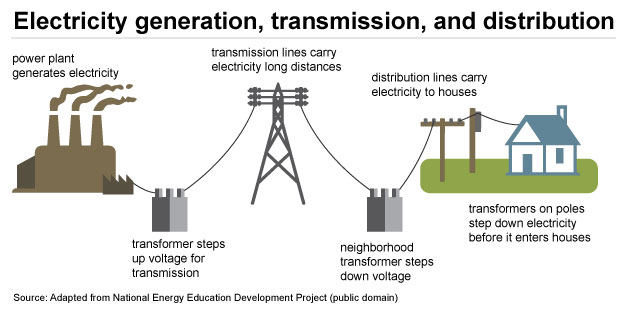
And finally, after its long and winding journey, the electricity arrives at your outlet, ready to power your lights, charge your phone, and, most importantly, make your coffee.
So, the next time you flip a switch, take a moment to appreciate the incredible journey your electricity has taken, from the heart of the power plant, across the mighty grid, and finally, into your waiting device. It's a testament to human ingenuity and a reminder that even the simplest things often have the most complex and fascinating stories behind them. Isn’t that electric?