
How Does The Nuclear Reactor Generate Electricity
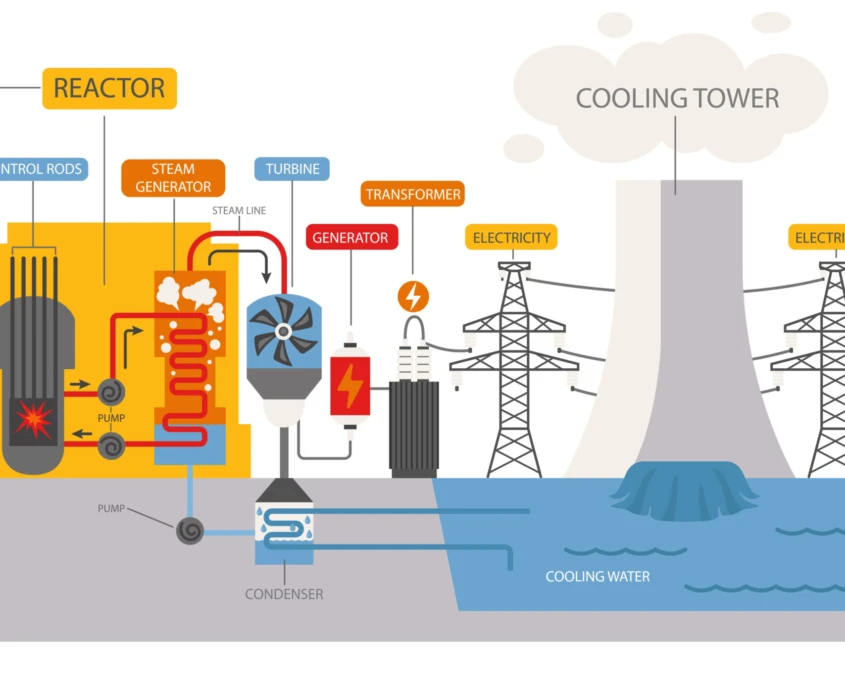
Okay, so picture this: I’m at a party, right? And I’m trying to explain to someone (who’s clearly had a few too many) how a nuclear reactor works. They just kept saying, "So, like, you smash atoms and boom! Electricity?" While that’s…kinda the gist…it’s missing, oh, about a billion steps. It’s not just about smashing atoms. It's about controlled smashing! You wouldn't want a real "boom" at a nuclear plant. Bad for business, bad for the planet.
That got me thinking. Maybe a lot of people are a bit fuzzy on the details of how a nuclear power plant actually turns atoms into the juice that powers our Netflix binges. So, let’s break it down, shall we? Think of this as "Nuclear Power for Dummies (But You're Definitely Not A Dummy)".
The Core Idea: Fission!
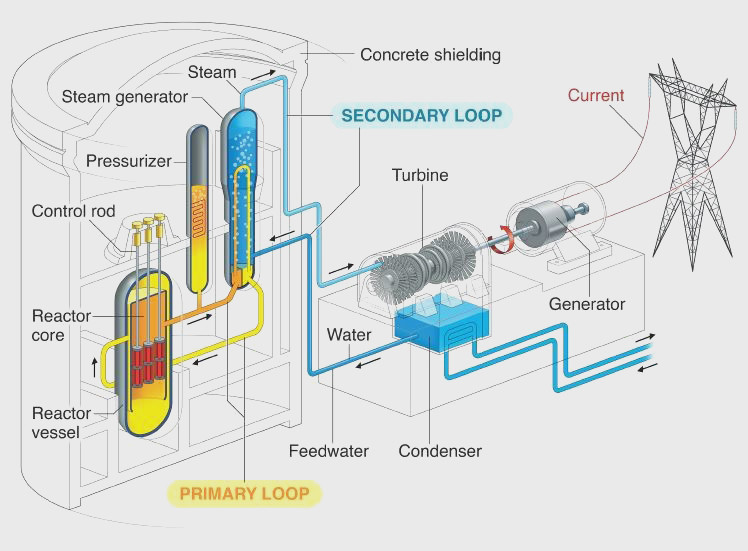
At the heart of a nuclear reactor is the reactor core. This is where the magic – or more accurately, the incredibly complex physics – happens. The core is loaded with uranium fuel, usually in the form of ceramic pellets. These pellets are stacked into fuel rods, and these rods are bundled together. You’ve essentially got a super-charged, atomic bonfire waiting to happen.
Must Read
Now, uranium is a special element because its atoms are unstable. They like to split. This splitting is called nuclear fission. When a neutron (a tiny particle found in the nucleus of an atom) bumps into a uranium atom, the uranium atom splits into two smaller atoms, releasing energy in the form of heat and radiation, and it releases more neutrons. This, my friends, is where things get interesting.
Those newly released neutrons can then go on to split more uranium atoms, and those release more neutrons, and so on. This is a chain reaction. Think of it like dominoes falling, but each domino sets off three or four more. It's a very effective use of chain reactions, unlike, say, chain emails.
Side note: Controlling this chain reaction is crucial. Without control, you'd get an uncontrolled reaction, also known as a nuclear bomb. Not ideal.
Controlling the Chaos
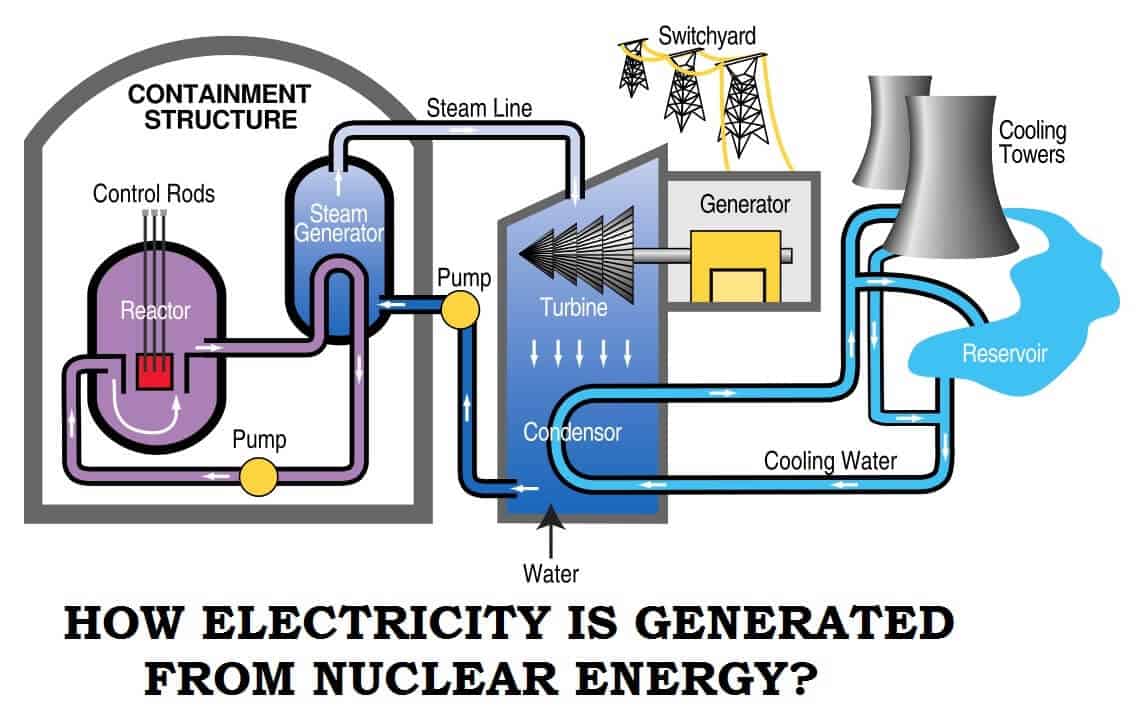
So, how do you stop the atomic dominoes from running wild? Enter: control rods. These rods are made of materials that absorb neutrons, like boron or cadmium. By inserting or withdrawing these rods from the reactor core, operators can control the speed of the chain reaction. Insert them further, and they soak up more neutrons, slowing the reaction down. Withdraw them, and the reaction speeds up.
It’s a delicate balancing act. Too little control, and the reactor overheats. Too much control, and you shut the whole thing down. Imagine driving a car where the accelerator and brake are connected, and you can only adjust them slightly. Fun, right? (Just kidding, it's incredibly complex and requires highly trained professionals.)
From Heat to Electricity: The Water Cycle (Nuclear Edition)
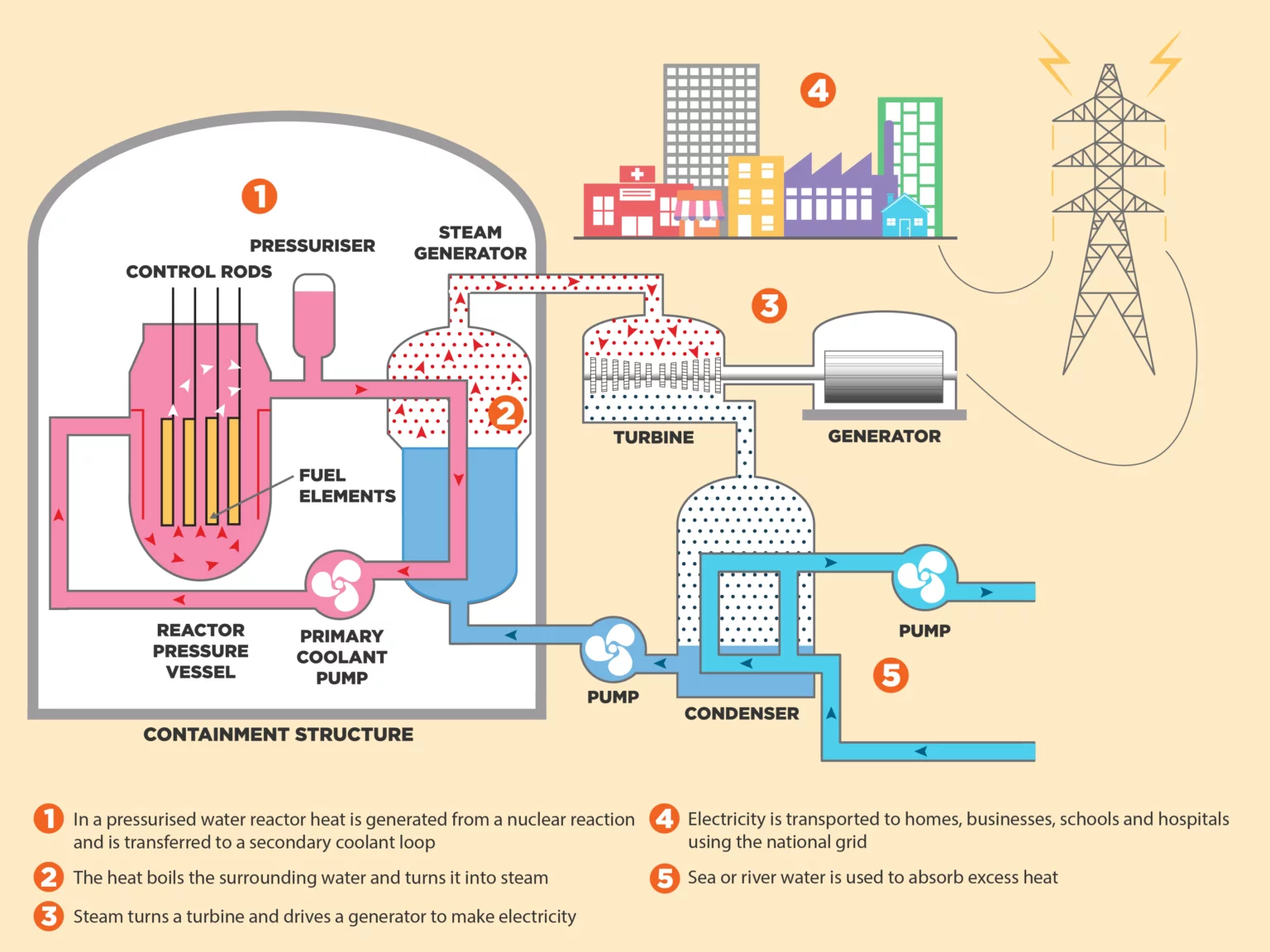
Okay, so we’ve got a controlled nuclear reaction producing a whole lot of heat. Now what? Well, this heat is used to boil water. Yep, just like boiling water in your kettle. But instead of powering your tea, this steam powers a turbine.
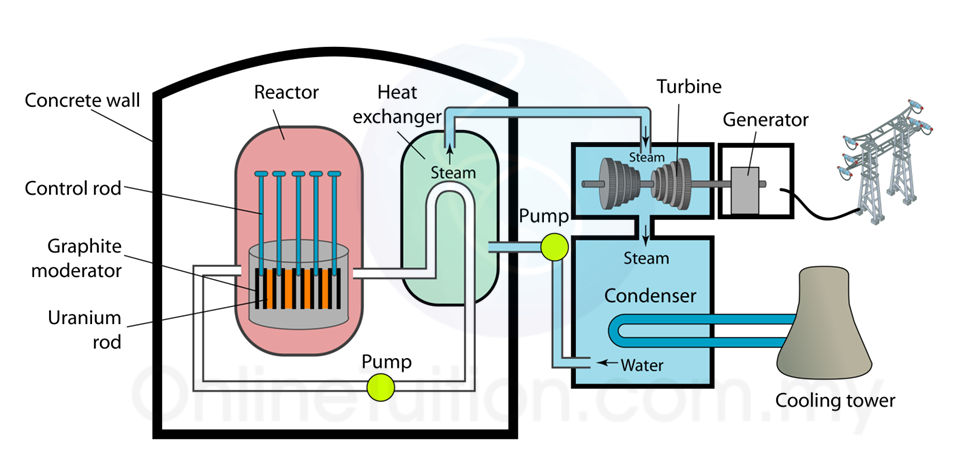
The turbine is basically a giant fan connected to a generator. The force of the steam pushes the turbine blades, which spins the generator, and voila! Electricity is generated. This whole process is remarkably similar to how coal-fired power plants work, except instead of burning coal, they're splitting atoms. Different fuel, same basic principle.
The steam is then cooled and condensed back into water, and the cycle begins again. It's a closed-loop system, designed to minimize water waste. Think of it like a giant, high-tech, atomic-powered water cycle.
The Not-So-Small Print: Safety and Waste
Of course, no discussion about nuclear power is complete without mentioning safety and waste. Nuclear power plants have multiple layers of safety features to prevent accidents, and the industry is constantly working to improve safety protocols. And let’s be honest, accidents have happened. The memory of Chernobyl and Fukushima are reminders of the potential consequences of things going wrong.
And then there's the issue of nuclear waste, which remains radioactive for thousands of years. Disposing of this waste safely is a major challenge. Scientists are exploring various solutions, including advanced reactor designs that can burn up existing waste, and deep geological repositories for long-term storage. There are still many unanswered questions about the best way to handle nuclear waste, so research is vital.
So, there you have it! A (hopefully) slightly less confusing explanation of how a nuclear reactor generates electricity. It’s a complex process, but the basic idea is pretty straightforward: split atoms, boil water, spin a turbine, generate electricity. Not quite "smash atoms and boom! Electricity!", but close enough for party conversation, I guess. Now, if you’ll excuse me, I need a drink. All this atomic talk is making me thirsty.