How Does The Energy In A Transverse Wave Move
Hey there, wave rider! Ever wondered how sound travels, or how light lets you see the world in all its glory? It's all thanks to waves, and today we're diving into the fascinating world of transverse waves and how their energy gets from point A to point B. Trust me, it's way cooler than it sounds (pun intended!).
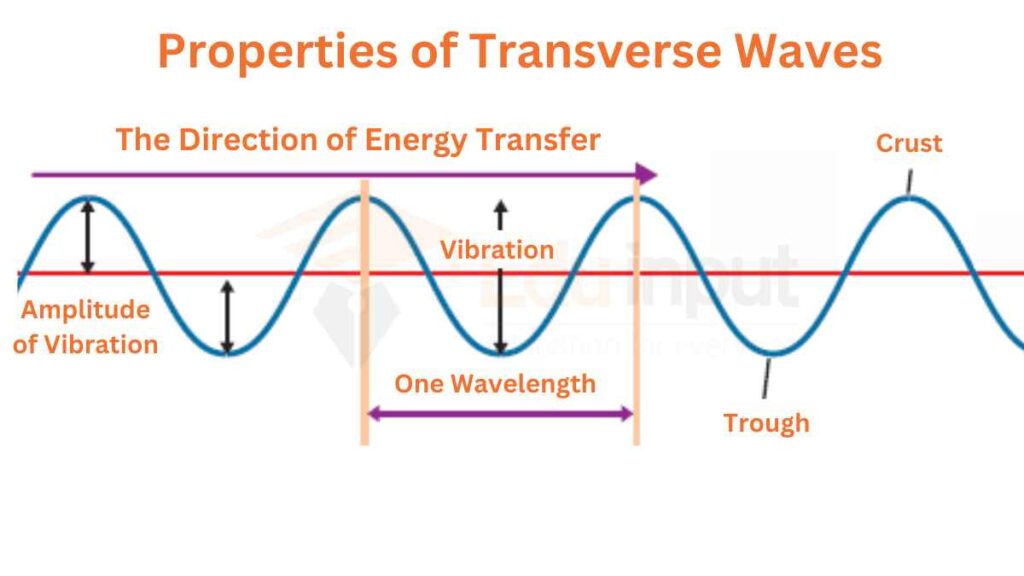
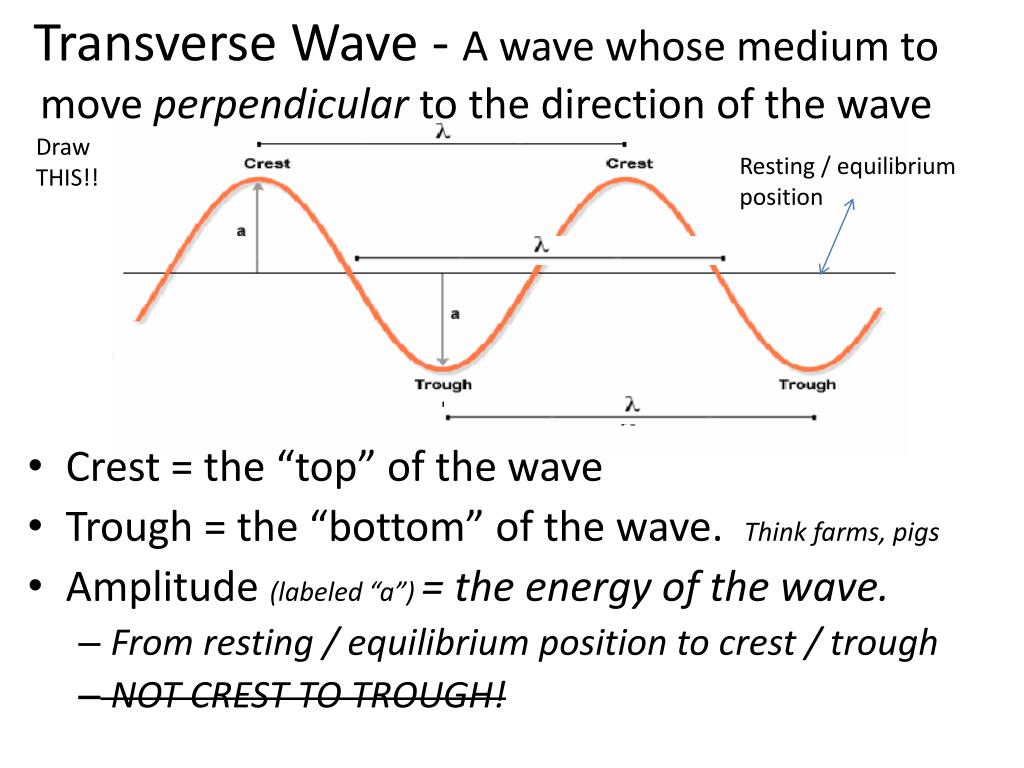
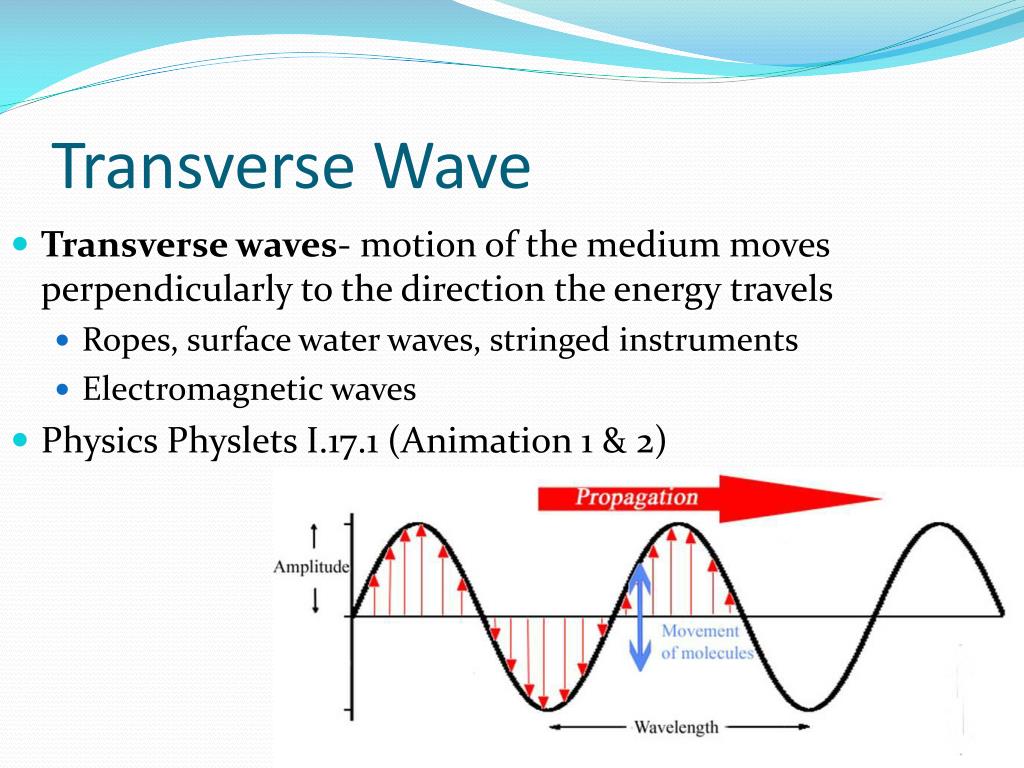
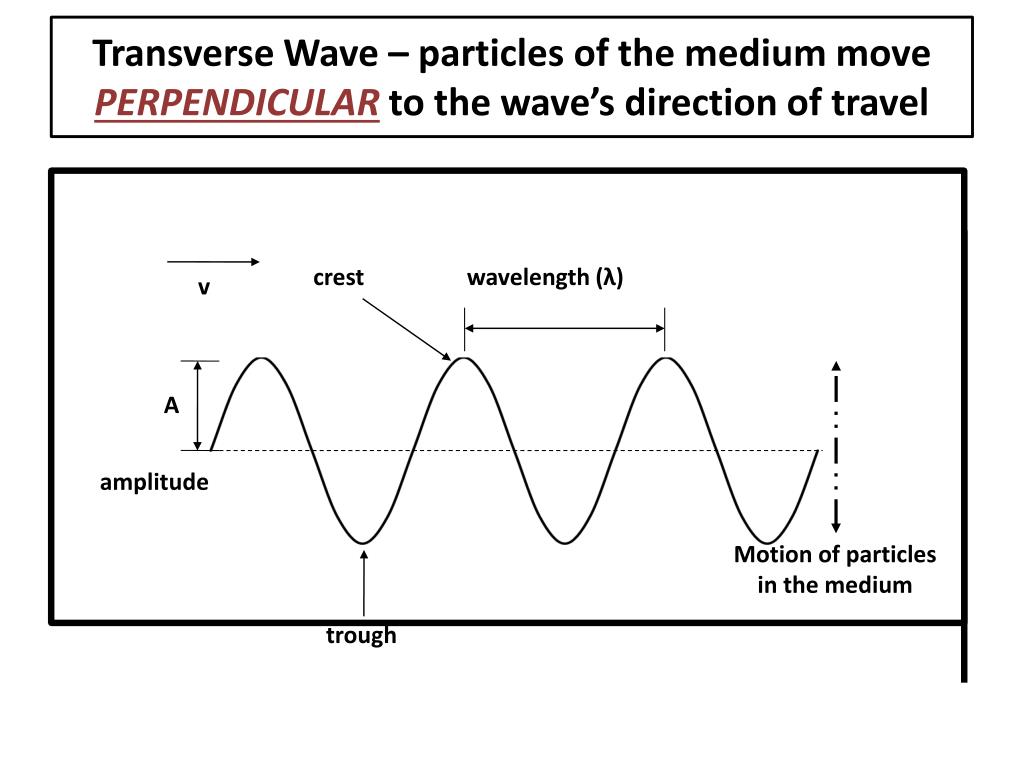
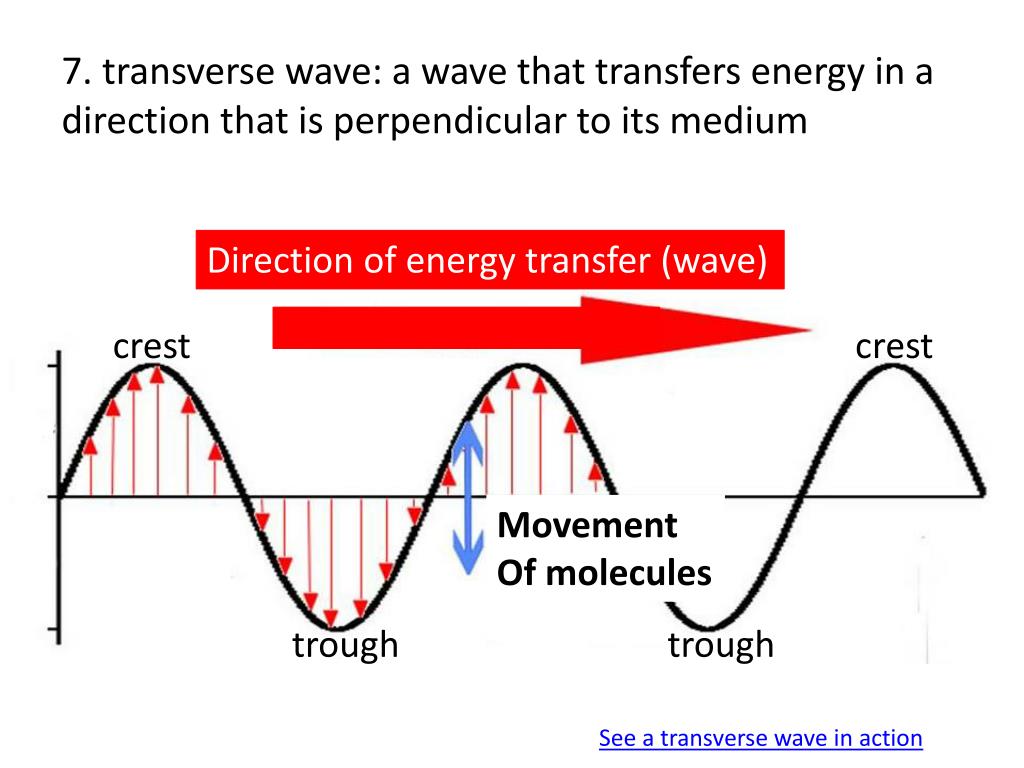
So, what exactly is a transverse wave? Imagine a rope. Got it? Now, flick your wrist and send a pulse down the rope. See how the rope moves up and down, but the pulse (the energy) moves horizontally? That’s your basic transverse wave! The key thing is that the motion of the rope (or whatever medium is carrying the wave) is perpendicular, or at right angles, to the direction the wave is traveling. Makes sense, right?
The Energy Shuffle: It's Not What You Think!
Now, here's the big question: How does the energy actually move through the transverse wave? Do the particles in the rope (or whatever is waving) actually travel all the way from the beginning to the end? Nope! That's where it gets interesting.
Must Read
Think about it. If each little piece of the rope actually moved all the way down the line, the rope would eventually unravel and end up in a tangled mess! (And nobody wants that.) So, what's really happening?
Each particle in the medium (let's stick with our rope example) only moves up and down. It's like doing the wave at a baseball game. You stand up and sit down, but you don't actually move sideways. You just pass the "wave" on to the next person. (Come to think of it, that’s a pretty good analogy!) Each particle bumps its neighbor, transferring some of its kinetic energy (energy of motion) to it. This neighbor then does the same thing, and so on, creating the illusion that the particles themselves are moving along with the wave.
Kinetic and Potential: A Dynamic Duo
The energy isn't just kinetic, though. As a particle moves up and down, it stretches and compresses the material around it. This stretching and compressing stores potential energy (energy of position or configuration). Think of a spring – when you compress it, it stores potential energy that it can release later.
So, the energy in a transverse wave is constantly switching back and forth between kinetic energy (when the particle is moving fastest) and potential energy (when the particle is at its maximum displacement from equilibrium). This continuous exchange allows the energy to propagate, or move, along the wave. It's a beautiful dance of energy!
Examples Are Everywhere (Seriously!)
Transverse waves are all around us! Light is a type of electromagnetic wave, which is a transverse wave. That's how sunlight reaches us, and how we see the world. Pretty cool, huh? Even ripples on the surface of a pond can be considered transverse waves (though they also have a longitudinal component, but let's not get too bogged down in the details!).
Earthquakes also generate transverse waves called S-waves (secondary waves). These waves can tell scientists a lot about the Earth's interior. See? Wave physics isn't just theoretical – it has real-world applications!
Why Should You Care? Because Science Is Awesome!
Okay, so maybe you're not planning on becoming a seismologist anytime soon. But understanding how energy moves in transverse waves gives you a deeper appreciation for the world around you. It's like having a secret decoder ring that lets you understand how light, sound, and even earthquakes work!
Plus, knowing a little bit about physics can be surprisingly useful in everyday life. Need to understand why your Wi-Fi signal is weak? (Hint: waves can be blocked and reflected.) Want to impress your friends with your knowledge of earthquake science? (Guaranteed conversation starter!) Physics can empower you to understand and navigate the world more effectively.
So, go forth and explore the wonderful world of waves! There's so much more to learn about transverse waves (and longitudinal waves, too!), from their wavelength and frequency to their interference and diffraction. Every new discovery is like unlocking a new level in a super fun video game!
Don't be afraid to ask questions, experiment, and get curious. The more you learn, the more you'll realize how amazing and interconnected the universe really is. Happy waving!