
How Does Geothermal Energy Generate Electricity
Ever felt the rush of hot air coming up from a subway grate on a freezing winter day? Or maybe you've dug your toes into the sand at the beach and felt that surprising warmth just a few inches down? Well, that's a tiny, tiny taste of what geothermal energy is all about. It's basically the Earth saying, "Hey, I'm a giant ball of fire, wanna borrow some heat?"
And what do we do with this borrowed heat? We turn it into electricity! Think of it like this: the Earth is a giant tea kettle, and we're just trying to plug in our toaster oven.
So, How Does This "Earth Tea Kettle" Thing Actually Work?
Okay, let's get down to the nitty-gritty, but don't worry, it's not rocket science. It's more like… uh… plumbing with volcanoes?
Must Read
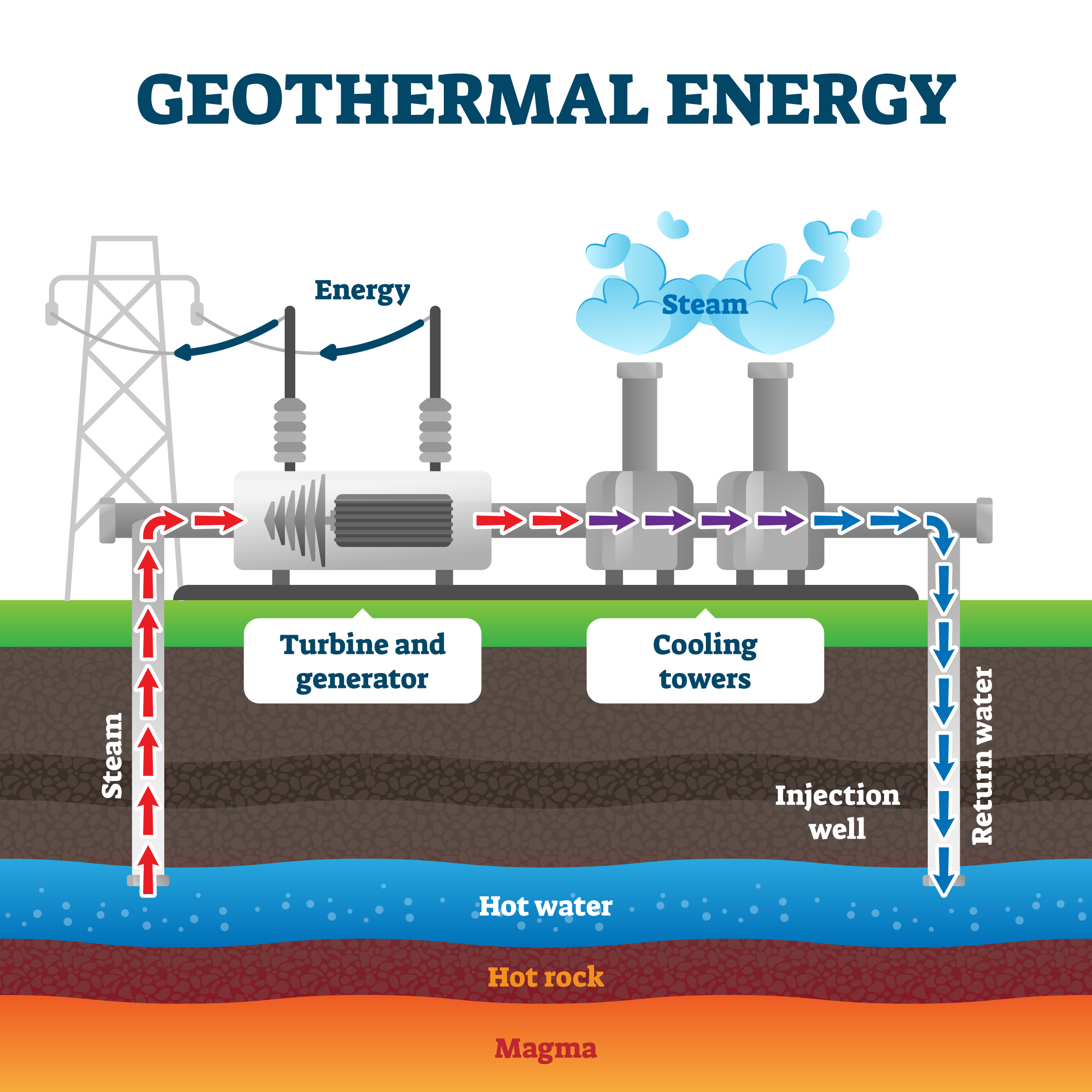
The Earth's core is insanely hot – we're talking thousands of degrees Fahrenheit. That heat radiates outwards, warming up the rocks and water beneath the surface. This heated water, often trapped in underground reservoirs, is our key ingredient. We call it geothermal reservoirs, because "underground hot spring powering our homes" is too much of a mouthful.
There are primarily three ways we tap into this geothermal goodness:

- Dry Steam Plants: Imagine the Earth’s been brewing a super-strong, super-heated coffee. In dry steam plants, we basically stick a straw directly into that coffee (the geothermal reservoir, of course!) and let the steam rush up. This steam, under immense pressure, spins the blades of a turbine, which is essentially a giant windmill connected to a generator. The generator then converts the mechanical energy into electrical energy. Voila! Electricity! It's like holding a pinwheel in front of a jet engine – you get a lot of spin!
- Flash Steam Plants: This is like taking that same super-hot coffee and pouring it into a vacuum flask. The sudden drop in pressure causes some of the hot water to instantly "flash" into steam. This steam then spins a turbine and generates electricity, just like in the dry steam plant. Think of it as the geothermal version of a dramatic instant coffee commercial.
- Binary Cycle Plants: This method is for slightly cooler geothermal resources – think lukewarm tea instead of scalding coffee. Instead of directly using the geothermal water to spin a turbine, it's used to heat a second liquid (with a lower boiling point, like isobutane). This second liquid turns into vapor, which then spins the turbine. It's like using a hot water bottle to warm up a cup of tea – indirect, but effective! These are particularly great, because they're also good with water that's not as "pure"– so you're able to generate electricity that other plants aren't able to get too.
From Earth's Core to Your Coffee Maker
Once the steam (or the vaporized second liquid) has done its job spinning the turbine, it's cooled down and condensed back into water. This water is then usually pumped back into the ground to replenish the geothermal reservoir. It's a closed loop system, like Earth giving us a cup of coffee, and we politely return the cup... albeit a slightly colder one.
The electricity generated from these plants is then fed into the power grid, which is basically a giant network of wires that delivers electricity to your home, your office, and everywhere else you need to plug in your phone.

So, the next time you flip on a light switch, remember that somewhere, deep beneath the Earth's surface, there might be a geothermal plant diligently turning Earth's internal heat into the power that lets you binge-watch your favorite show. Pretty cool, huh? Literally hot, but figuratively cool.
Is Geothermal Energy a Superpower?
Well, not quite. While geothermal energy is renewable (the Earth's core isn't going to cool down anytime soon), reliable (it works day and night, rain or shine), and relatively clean (compared to fossil fuels), it does have its drawbacks.

Building geothermal plants can be expensive, and they can only be located in areas with readily accessible geothermal resources – you can't just drill anywhere and expect to find a geyser. And, like any industrial process, there can be some environmental impacts, such as land use and potential emissions. But, with careful planning and responsible development, geothermal energy can be a valuable part of a diverse and sustainable energy future.
Think of it as the Earth’s slightly quirky, but ultimately generous, way of sharing its internal thermostat. And who wouldn't want to tap into that?
