Ever seen a video of someone cutting through thick metal like it's a birthday cake, showering sparks in a dazzling display? Chances are, you were witnessing the incredible power of a plasma torch in action! Forget your grandpa's saw; this is like equipping a superhero with a miniature lightning bolt. It's not just cool; it's a brilliant bit of science, making tough jobs look utterly effortless. So, buckle up, because we're about to dive into the fiery heart of how these amazing gadgets turn gas into pure cutting magic!
The Super-Hero Secret: What Exactly is Plasma?
Okay, before we get to the torch itself, let's talk about the star of the show: plasma. You know about solids (like ice), liquids (water), and gases (steam), right? Well, plasma is often called the fourth state of matter, and it’s basically a gas that's had too much coffee and gone a little wild! Imagine atoms and molecules, usually just chilling, suddenly getting so incredibly hot and energized that their electrons literally jump off and start their own little rave party. The gas becomes "ionized," meaning it's now a mix of free electrons and positively charged ions. Think of it as a super-charged, electrically conductive hot gas. It’s what stars are made of, what lightning bolts are, and it’s the secret sauce for our torch!
Fun Fact: Most of the visible universe (stars, nebulae) is actually made of plasma! So, a plasma torch is literally harnessing cosmic power on your workshop bench!
From Humble Gas to Fiery Inferno: The Torch's Magic Trick
So, how does a handheld device create this mini-star material? It’s surprisingly elegant! Here’s the lowdown:
Step 1: The Gas Party Prep
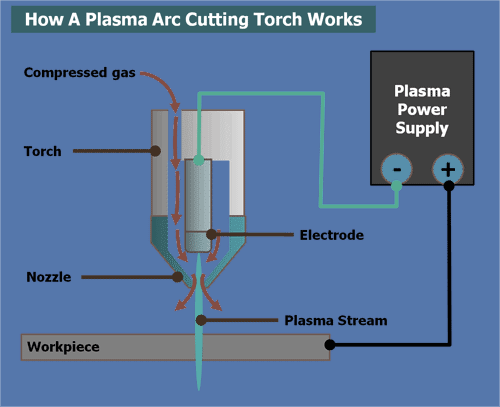
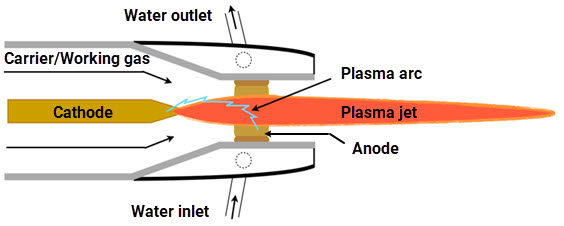
First, you feed a gas into the torch – usually compressed air, but sometimes nitrogen, oxygen, or argon. This gas is like our raw ingredient, waiting for its big transformation. It flows through a small channel inside the torch’s body, ready to be zapped into existence.
How does a Plasma torch work? - Knowcnc.com
Step 2: The Spark Plug Kicks It Off
Inside the torch, there's a tiny but mighty electrical arc – think of it like a miniature, continuous lightning strike. This arc is generated between two electrodes: a negatively charged cathode (often a tungsten tip) and a positively charged anode (the torch's nozzle itself, or sometimes a separate internal electrode). When you pull the trigger, BAM! An electrical current jumps across a small gap, creating an initial pilot arc.
Step 3: The Gas Gets Zapped and Super-Heated!
Now, here's where the magic happens! As the gas from Step 1 flows past that initial pilot arc, it gets super-duper-heated. We're talking temperatures that make the surface of the sun look like a cool breeze! This intense heat strips those electrons off the gas atoms, ionizing them and transforming the gas into that glorious, electrically conductive plasma we talked about earlier. It’s an atomic dance party, and everyone’s invited!
How Plasma Cutting Works - YouTube
Step 4: The Narrowing Nozzle: Focusing the Fury
This super-hot plasma isn’t just left to wander aimlessly. It's forced through a very small, precisely shaped opening called a nozzle. Imagine squeezing a garden hose to make the water jet more powerful and focused – it’s the same principle, but with super-heated plasma! This constriction dramatically increases the plasma’s speed and focuses its energy into an incredibly powerful, razor-thin jet. This is the plasma jet – the star of our cutting show!
Picture this: A stream of gas that started as cool air is now hotter than any flame you've ever seen, moving at supersonic speeds, and ready to slice through metal like butter!
The Plasma Torch Guide | The TMG Blog
Step 5: The Cutting Action: Meltdown!
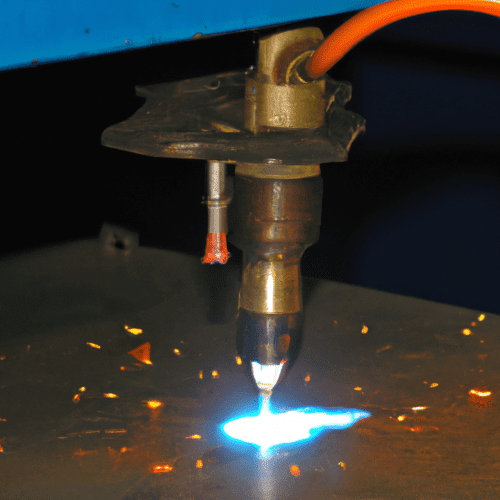
When this focused, incredibly hot, and super-fast plasma jet hits your workpiece (the metal you want to cut), it literally blasts through it. The plasma's intense heat rapidly melts the metal, and its high velocity simultaneously blows away the molten material. It’s not just melting; it’s vaporizing and blasting! This leaves behind a remarkably clean, precise cut. The electrical circuit completes itself by connecting through the plasma stream to the workpiece, and then back to the power supply, keeping the arc going continuously.
Why Plasma Torches are the Bee's Knees!
What makes these torches so utterly fantastic? They can cut through almost any electrically conductive metal – steel, stainless steel, aluminum, copper, brass – with incredible speed and precision. Unlike traditional oxy-fuel torches that only work on steel, plasma doesn't discriminate! They leave a smoother edge, often require less cleanup, and are generally safer because they don’t use explosive gas mixtures like some alternatives. It’s like having a precision laser beam that you can hold in your hand, but instead of light, it's super-charged, atomic-level hot breath!
So, the next time you see a plasma torch in action, you'll know it's not just a fancy tool; it's a mini-universe of super-heated, ionized gas, precisely engineered to make your cutting dreams come true. Pretty cool, right? Go forth and cut!