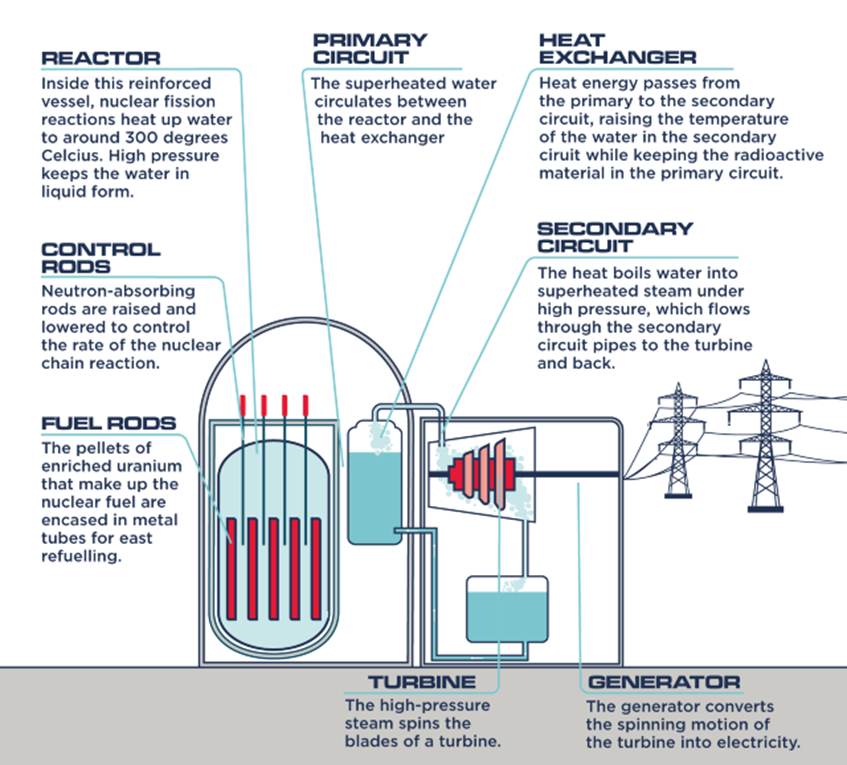
How Does A Nuclear Reactor Produce Energy
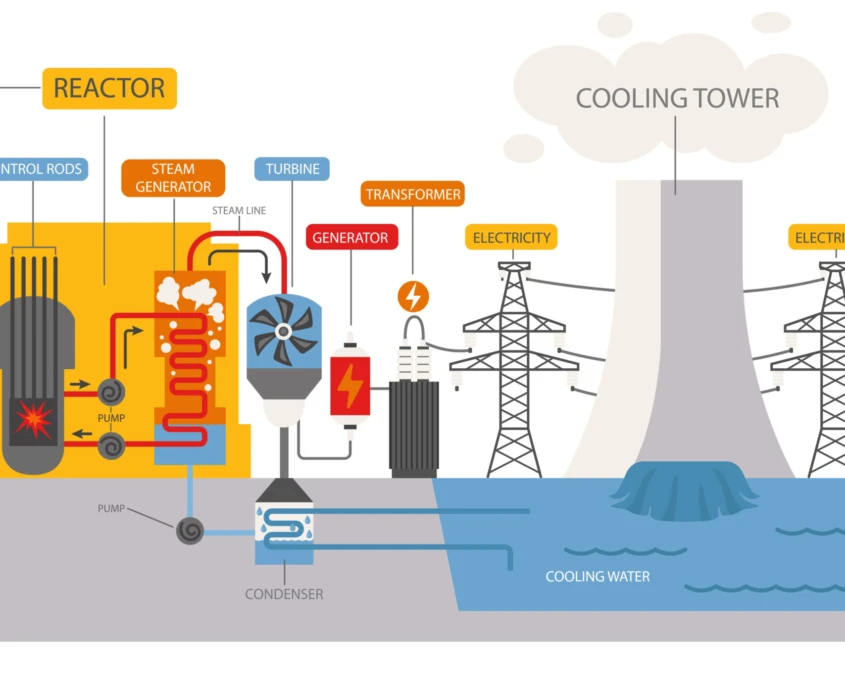
Imagine a tiny, tiny thing – smaller than a speck of dust – holding enough oomph to light up your entire city! Sounds like science fiction, right? Well, buckle up, buttercup, because we're about to dive into the astonishingly cool world of how a nuclear reactor takes those microscopic powerhouses and turns them into the electricity that charges your phone and runs your fridge. It’s not magic, it’s just incredibly clever physics, and honestly, it’s a bit like a cosmic game of billiards!
At the heart of every nuclear reactor is a special kind of fuel, usually a metal called uranium. Think of a uranium atom like a super-chunky, slightly unstable Jenga tower, packed with protons and neutrons. It’s just itching for a nudge from a tiny, invisible particle called a neutron.
The Big Split: Fission!
Here’s where the fun really begins! When a stray neutron zips along and bumps into one of those grumpy uranium atoms, it's like flicking that Jenga tower just right. KABLOOEY! (Okay, maybe not "kablooey" in a scary way, more like a gentle pop on a molecular level). The uranium atom splits into two smaller atoms, releasing a mind-boggling amount of energy, AND – here’s the kicker – it spits out a few more neutrons!
Must Read
"It's like hitting the jackpot in a microscopic pinball machine, but instead of scoring points, we're scoring pure energy!"
The Chain Reaction – Controlled Chaos!
Now, those newly released neutrons are off like tiny, excited rockets. What do they do? They go find other grumpy uranium atoms and give them the same splitting nudge. This is called a chain reaction, and it’s basically a self-sustaining atomic party! If left unchecked, this party could get a bit too wild, which is why reactors ingeniously keep it perfectly controlled.
Enter the superheroes of control: control rods! These special rods, often made of boron or cadmium, are like atomic sponges, soaking up excess neutrons. If the reaction is going too fast, the control rods dip in a bit more, absorbing more neutrons and slowing everything down. If it needs a little boost, they pull out slightly, letting more neutrons roam free and split more atoms. It's a delicate atomic ballet, choreographed by brilliant engineers!
From Atomic Pop to Boiling Pot
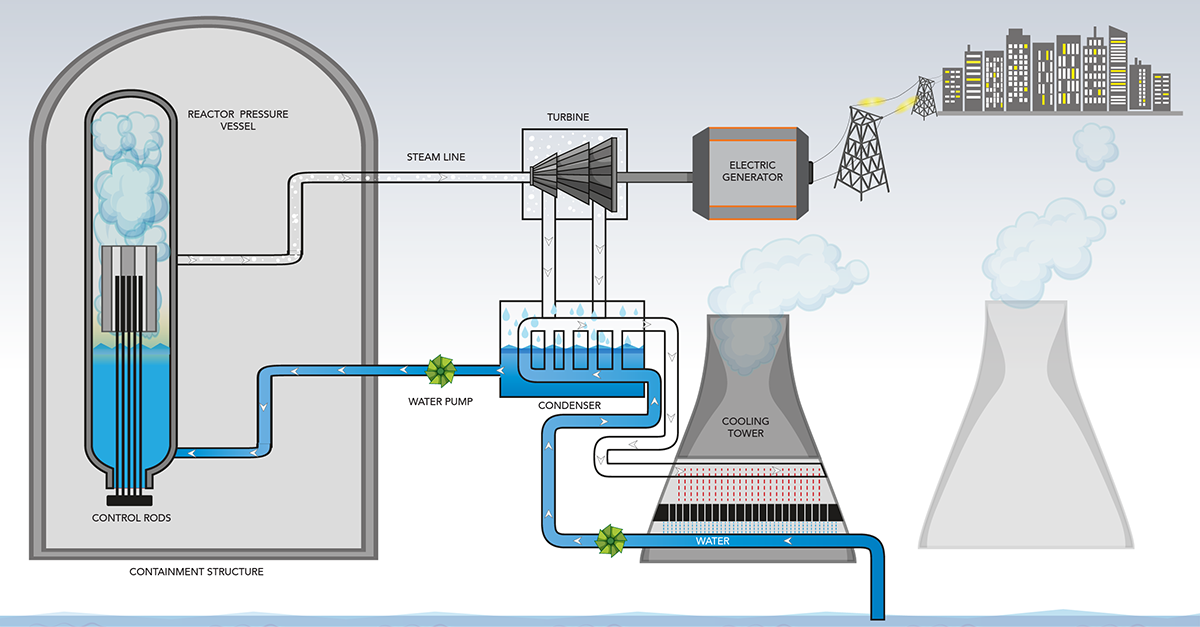
Remember that "mind-boggling amount of energy" released when uranium atoms split? It doesn't just vanish; it primarily shows up as incredible heat. Think of it like a giant, super-efficient kettle. All that atomic popping and splitting makes the reactor core incredibly hot.
This immense heat then boils water. Yep, just plain old water! This superheated water (or another coolant) flows around the reactor core, picking up all that lovely thermal energy.
The Steam Machine and the Spark of Life
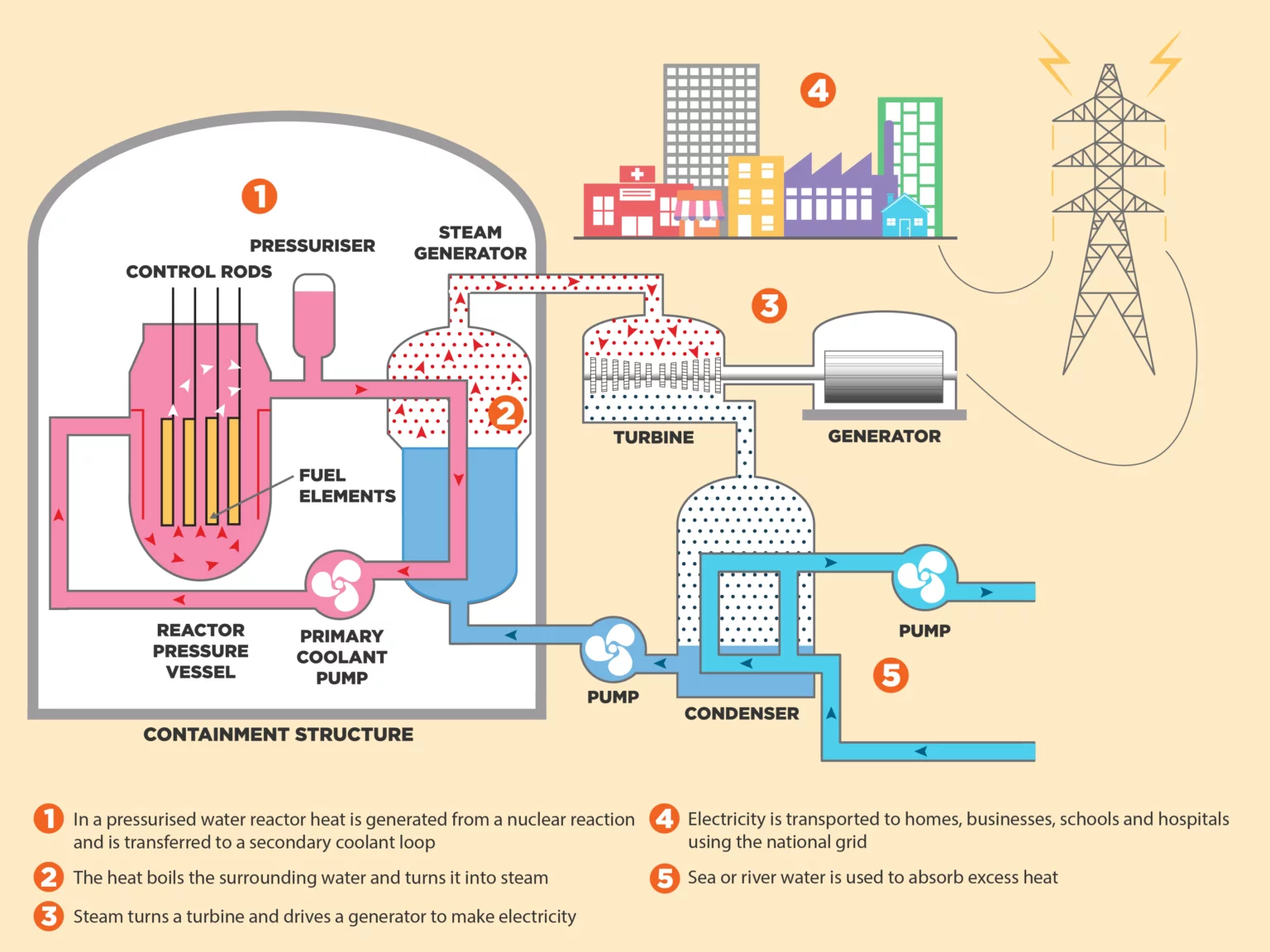
Now we’re leaving the purely atomic realm and heading into something a bit more familiar: a massive steam engine! The intensely hot water from the reactor core generates colossal amounts of steam – super-pressurized, super-hot steam.
This isn't your grandma's tea kettle steam; this is powerful stuff! High-pressure steam is then directed towards a giant fan-like device called a turbine. Imagine a colossal pinwheel, blasted by this potent steam. The steam pushes against the blades of the turbine, making it spin at incredible speeds, like a whirling dervish of industrial might.
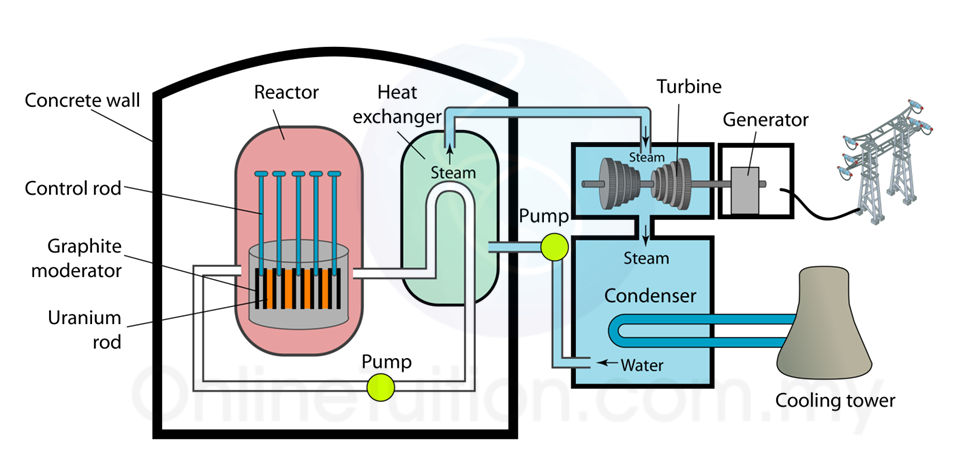
And what's attached to that spinning turbine? You guessed it: an electrical generator! This generator, a clever contraption of magnets and coils, creates an electrical current when the turbine spins its internal components. BINGO! That’s your electricity, folks! The same kind that powers your lights, laptop, and late-night Netflix binges.
Cooling Down and Round We Go Again
After the steam has done its heroic work spinning the turbine, it’s a bit tired. We need that water back! So, the spent steam is cooled down, often using water from a nearby river or a dedicated cooling tower (those big, iconic hourglass-shaped structures you often see at power plants). As it cools, the steam condenses back into liquid water, ready to be reheated and sent through the whole process again. It’s a beautifully efficient, closed-loop system!
The Grand Finale: Tiny Atoms, Gigantic Power!
So there you have it! From a microscopic nudge that splits a single uranium atom, unleashing heat, to boiling water, spinning a gigantic turbine with super-powerful steam, and finally, generating the electricity that lights up our modern world. It’s a testament to human ingenuity and the incredible power locked away in the very fabric of matter. It might sound complex, but at its heart, it’s just atoms playing a very important, very energetic game of tag, all carefully orchestrated to give us the power we need. Pretty cool, huh?